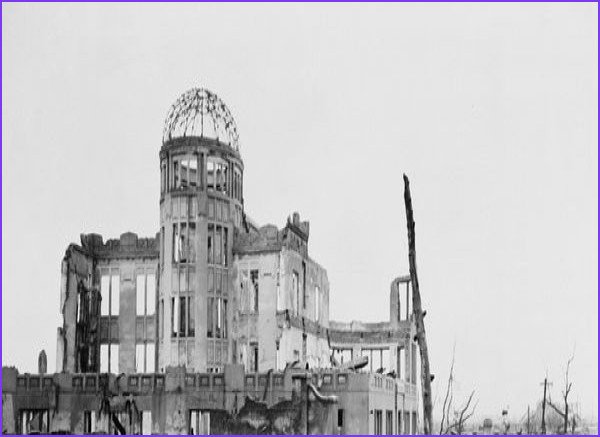
Eighty-one years after the atomic bombings of Japan, the world is witnessing the disappearance of the hibakusha—the survivors of the Hiroshima and Nagasaki blasts. Terumi Tanaka, who was 13 years old when the sky over Nagasaki turned into a blinding white glare, recalls the event as a "blazing inferno." Now 97, he remembers the flash, the thunderous impact, and the subsequent silence that left his city in ash. He described the experience as "literally hell." As of March 2026, only 91,105 survivors remain, with an average age of 87, meaning the world is fast losing the direct, first-person testimony of those who experienced nuclear devastation.
This loss of eyewitnesses coincides with a troubling geopolitical shift. For decades, the memory of Hiroshima and Nagasaki served as a moral compass, fostering a robust nuclear taboo that prioritized non-possession and non-use. Today, however, deterrence has replaced disarmament as the primary focus of international security. While the world once held 70,300 nuclear warheads in 1986, that number has dropped to 12,241, with 9,614 currently in military stockpiles. Despite this reduction from Cold War peaks, the momentum toward arms control has stalled and begun to reverse.
All nine nuclear-armed states are currently modernizing their arsenals. China’s stockpile has grown rapidly, increasing from 350 warheads in 2022 to 620 by January 2026. Meanwhile, the United States and Russia are investing heavily in next-generation delivery systems, Britain intends to raise its warhead ceiling, and France is upgrading its sea-based deterrent. Concerns are also mounting over shifting nuclear doctrines that lower the threshold for use. For instance, SIPRI reported that India has actively deployed 12 nuclear warheads as a sea-based deterrent, moving away from the previous assumption that its weapons remained de-coupled from launchers. Nuclear weapons are increasingly viewed as tools of routine statecraft rather than weapons of last resort.
This transformation signals the collapse of post-Cold War optimism regarding nuclear disarmament. Great power rivalry, intensified by the war in Ukraine, has revived the centrality of deterrence. Following the expiration of the New START Treaty on February 5, 2026, the United States and Russia lack any legally binding bilateral agreement to limit their arsenals. Furthermore, the Conference on Disarmament in Geneva remains paralyzed, and although civil society efforts have produced treaties like the Treaty on the Prohibition of Nuclear Weapons, none of the nine nuclear-armed nations have signed or ratified the accord.