Iran's leadership is increasingly confident that its strategy of asserting control over the Strait of Hormuz will ultimately compel the United States to concede to its demands, a conviction that carries significant risks. Tehran's leaders believe that sustained military pressure, coupled with a belief that time favors their position, will force the U.S. to accept their management of the vital global energy waterway.
This strategic calculus is based on several perceived U.S. vulnerabilities. Iranian officials note diminishing stockpiles of key American weapons, such as advanced missile interceptors, and the widespread unpopularity of the ongoing conflict among the American public. They also recognize that continued disruptions in the Strait of Hormuz will keep gas and other goods prices high, a factor that could influence U.S. congressional elections scheduled for November. Furthermore, they assess that any attempt by the U.S. to forcibly reopen the strait would be costly and potentially require American ground troops. The potential for Houthi allies in Yemen to expand the conflict and disrupt other major trade routes is also considered a significant lever.
From this perspective, U.S. President Donald Trump has limited options beyond capitulation. However, President Trump has highlighted successful strikes that have severely weakened Iran's top leadership, navy, and air force. These include the U.S. and Israeli strike on February 28 that killed late Iranian Supreme Leader Ayatollah Ali Khamenei and other senior officials. Trump has also oscillated between threats of escalation and assertions that talks are progressing well. Meanwhile, Iran's own economy has been severely impacted by a U.S. blockade, and the country experienced mass anti-government protests just months ago, in December, sparked by a currency crisis. These protests, the largest in the Islamic Republic's 47-year history, were met with a bloody crackdown resulting in thousands of deaths and tens of thousands of detentions. The ongoing conflict also serves as a reminder that wars often deviate from initial expectations, a point underscored by the prolonged nature of Trump's “short-term excursion” to the Middle East.
Abdolreza Davari, an analyst who previously advised former President Mahmoud Ahmadinejad, stated that Iran's effective control of the strait has provided it with significant leverage over the U.S. and regional countries, enhancing its security. Speaking from Tehran, Davari emphasized, “More than revenue from the strait, Iran wants to confirm its management and sovereignty over the strait.” Securing formal control over even a portion of the waterway would represent a clear victory for Iran and a setback for the U.S., which has struggled to achieve its evolving objectives in the conflict.
China, a major buyer of Iranian oil and an influential player, reiterated in May that “normal and safe passage” through the strait should be restored. Despite this, Iran's leadership, in a phrase echoing Trump’s own geopolitical theories, believes it holds the dominant position. Mahdi Mohammadi, an advisor to Iran’s chief negotiator, posted on social media, “They started the war, but its end was never with them. We always decide for ourselves when it ends.” Mohammadi added that Iran is pursuing “the enemy’s defeat — not an agreement.” He also cited a surprise Iranian attack on Jordan in July as having “compensated” for a drop in oil prices, which contributed to the collapse of an interim agreement reached in June. That agreement had offered substantial concessions to Iran, including a U.S. waiver to sell oil internationally and the promise of broader sanctions relief.
Iran has consistently declared that the Strait of Hormuz will not revert to an open waterway and has vowed to continue attacking ships attempting transit without its permission. The country’s joint military command has designated it an “unbreakable red line.” Mostafa Najafi, a Tehran-based security analyst, explained, “For Iran, the Strait of Hormuz has become a strategic lever for deterrence, maintaining the regional balance of power, and reshaping the security rules in the Persian Gulf.” This stance presents a major hurdle to ending the current conflict and complicates any potential resolution of the long-standing dispute over Iran’s nuclear program.
Rahman Ghahremanpour, another Iran-based analyst, noted that the conflict in the Strait of Hormuz has effectively sidelined the “atomic issue,” which he believes is in Iran’s interest. He added that control of the strait would provide Iran with significant leverage should nuclear talks eventually resume. While the economic repercussions of the war have spread globally, they are particularly severe within Iran. U.S. and Israeli strikes have devastated Iran's industrial base, and the U.S. blockade has severely curtailed its oil exports. Iranians are currently grappling with triple-digit food inflation, and President Trump has repeatedly threatened major strikes on civilian infrastructure, including water and electricity.
The December currency crisis and subsequent anti-government protests, which saw a brutal response from authorities, highlight the internal pressures on Iran. Many within Iran, including those close to its moderate President Masoud Pezeshkian, express concern that the current strategy could escalate too far. The war has already been marked by unexpected turns; after the initial U.S. and Israeli airstrikes on February 28, Trump suggested the conflict would conclude within weeks. Instead, these events have seemingly emboldened Iran’s leaders and galvanized their supporters. Ghahremanpour observed that Tehran is utilizing its position in the strait “to show that it has not been defeated” and to “increase its legitimacy at home.” Despite the severe economic hardships, Davari believes Iran can withstand the pressure, stating, “It’s unlikely, despite the difficulties of the economic situation, that Iran will retreat from its positions.”
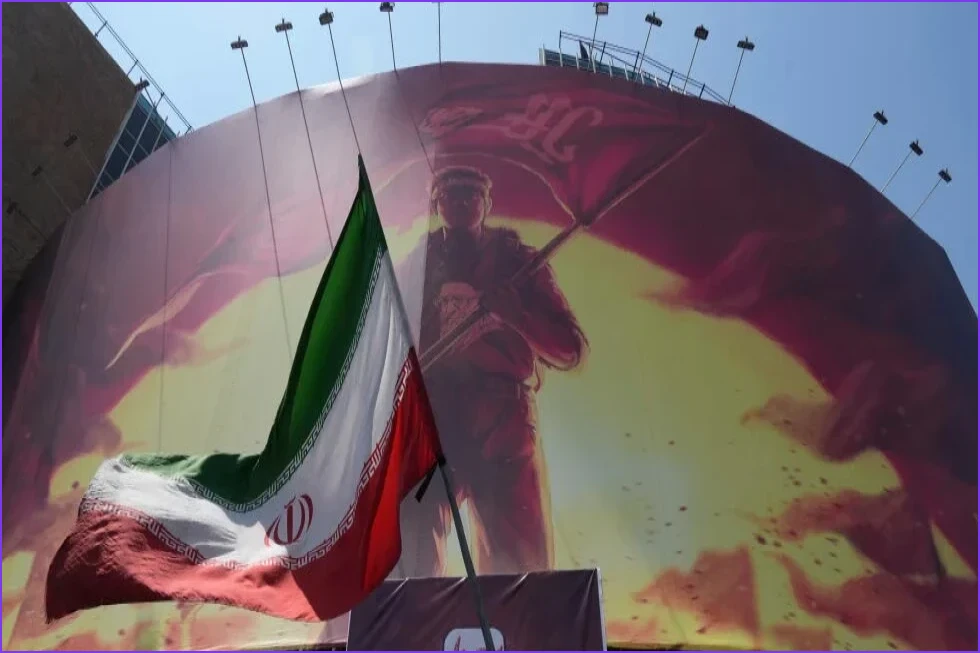
Public displays in Tehran on August 1 and 2, 2026, featured billboards and banners depicting figures like the late Iranian Supreme Leader Ayatollah Ali Khamenei, the late revolutionary founder Ayatollah Khomeini, and Supreme Leader Ayatollah Mojtaba Khamenei, alongside Iranian and Palestinian flags. Commercial vessels were seen anchored in the Strait of Hormuz off Bandar Abbas on August 5, 2026, while President Donald Trump spoke in the Oval Office in Washington on August 6, 2026.