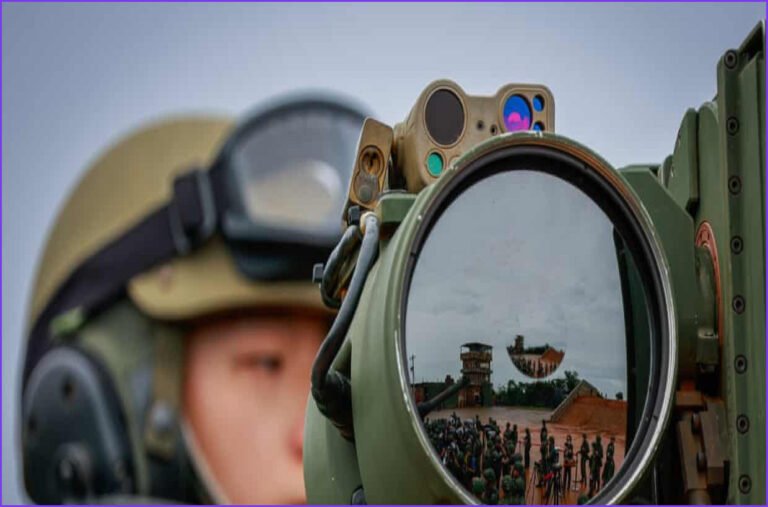
The People’s Liberation Army (PLA) Air Force has integrated an artificial intelligence system designed to orchestrate large-scale strike operations. Revealed during a CCTV documentary aired in early August to commemorate the PLA’s 99th anniversary, the technology is tasked with prioritizing targets from hundreds of options, managing dozens of formations, and assigning specific duties to over 100 tactical units. The documentary confirmed that the system has already been utilized in multiple missions.
This development aligns with recent directives from President Xi Jinping, who in late July emphasized the necessity for the PLA to strengthen the application of unmanned intelligent technologies and advance the construction of an intelligent military system. While China has pursued these goals for years, the current focus is intensified as Beijing seeks to meet modernization targets by 2027, the year marking the PLA's centennial.
The AI system is intended to manage decision volumes that would otherwise overwhelm human planners, as traditional calculation methods struggle to keep pace with high-speed aircraft and target movements. Unlike autonomous weapon systems that engage targets directly, this software functions higher in the command chain. It supports commanders by recommending how to combine air assets, electronic warfare capabilities, and support units. While the system provides these recommendations, officials maintain that humans remain responsible for final authorization.
However, this posture creates potential tension between China’s diplomatic stance—which asserts that AI should support, not replace, human judgment—and operational realities. By compressing hours of planning into mere minutes, the system risks reducing human oversight to a formal rubber stamp. This shift in speed could shrink the window for independent assessment, complicating the ability of commanders to judge proportionality, necessity, or the distinction between military and civilian targets.
Critics point out that under high-tempo operations, such as a hypothetical air offensive across the Taiwan Strait, the human role may become limited to approving AI-ranked options, a trend that mirrors concerns raised about AI usage in other global conflicts. This raises significant questions regarding accountability and automation bias, specifically whether a commander or a system designer bears responsibility for unlawful effects stemming from an AI-generated plan.
The implications of this technology extend across the Indo-Pacific. A system capable of executing complex strike packages at high speeds could alter crisis management, potentially rendering traditional diplomatic signaling and military hotlines ineffective. Consequently, nations within the AUKUS and Quad alliances face the challenge of developing strategies to counter these algorithmic shocks. As Beijing moves toward an end-to-end algorithmic command ecosystem, the global arms race in AI continues to accelerate, driven by the fear that nations failing to adopt machine-speed warfare will be left at a strategic disadvantage.
You have reached the limit of 2 free articles this month.
Under high tempo operations, like executing a coordinated air offensive across the Taiwan Strait, the human role can become little more than rapid approval of options the AI has already ranked. Indeed, this may already be happening in Israel’s strikes on Gaza. A source told reporters, “We prepare the targets automatically … We work quickly and there is no time to delve deep into the target.”