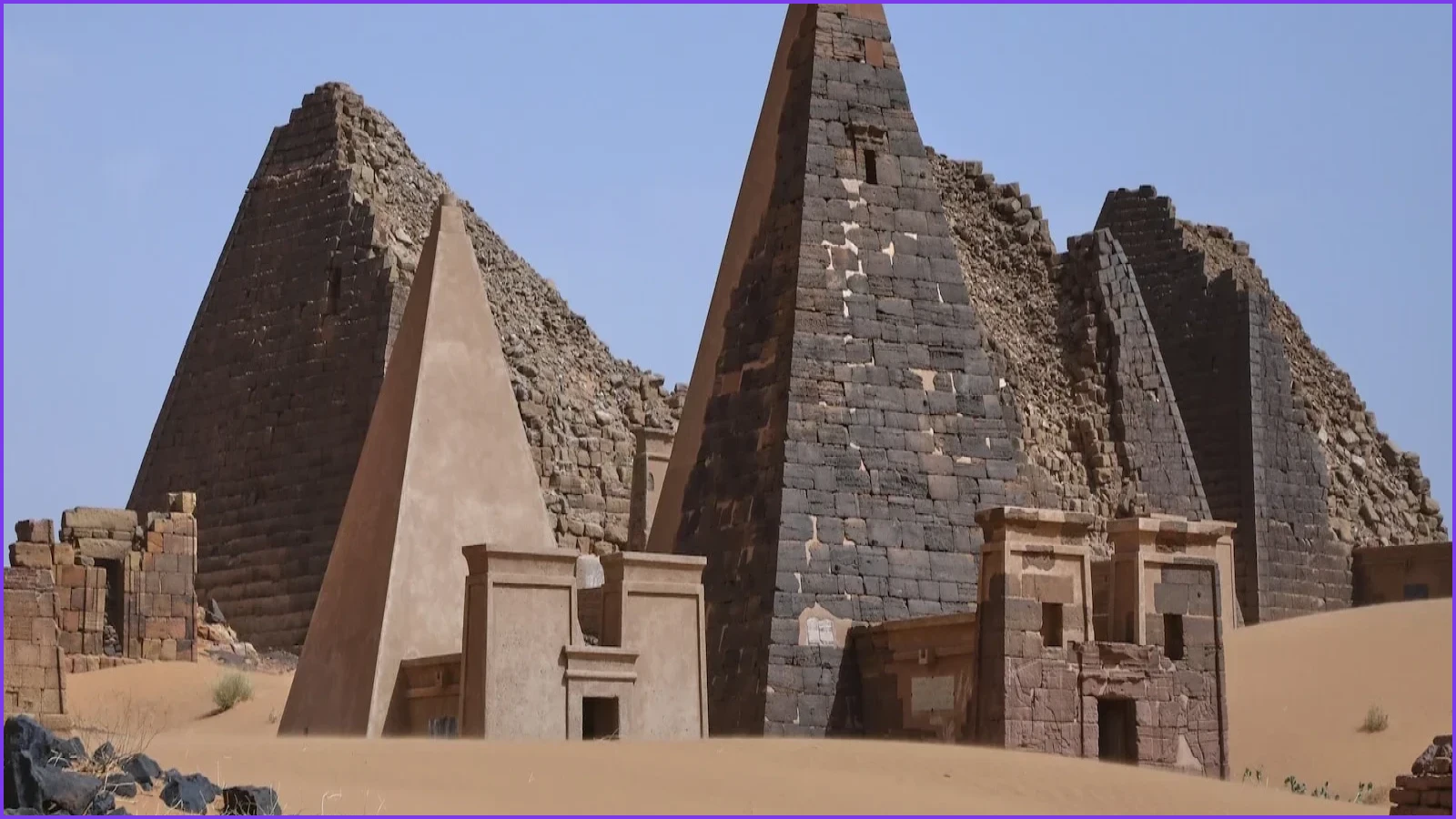
The ancient Meroe pyramids in Sudan, a UNESCO World Heritage Site, are facing a critical threat to their structural integrity as the nation’s ongoing conflict has brought all preservation efforts to a complete standstill. Archaeologist Mahmoud Suleiman has issued a stark warning, stating that the site faces a potential disaster and that the collapse of these historic structures is a distinct possibility.
Located approximately 200 kilometers, or 125 miles, north of Khartoum, the site features more than 200 pyramids constructed between 800 B.C. and 350 A.D. These served as royal tombs for the rulers of the Kingdom of Kush and are celebrated for their unique, angular architecture. However, the lack of maintenance has taken a severe toll. Site guard Mustafa Ahmed reported that sand has thickened significantly both on the exterior of the pyramids and inside the temples, while thick grass has begun to overgrow the area. Ahmed noted that the pyramids have deteriorated greatly, with stones already beginning to fall.
Antiquities inspector Mohamed Mubarak explained that the accumulated sand is releasing salt, which collects within the funerary temples. This process degrades the inherently fragile stones, threatening to erode ancient inscriptions. According to Suleiman, the combination of climate change, the displacement of the workforce due to the war, and the inability of foreign missions to operate under the current security instability has contributed to the significant decline of the site.
Sudan’s deadly conflict, which began in April 2023, has caused widespread destruction to the nation’s historical sites and museums. UNESCO reported in April that over 100 cultural sites have sustained damage, with at least 22 museums facing looting or destruction since the fighting erupted.