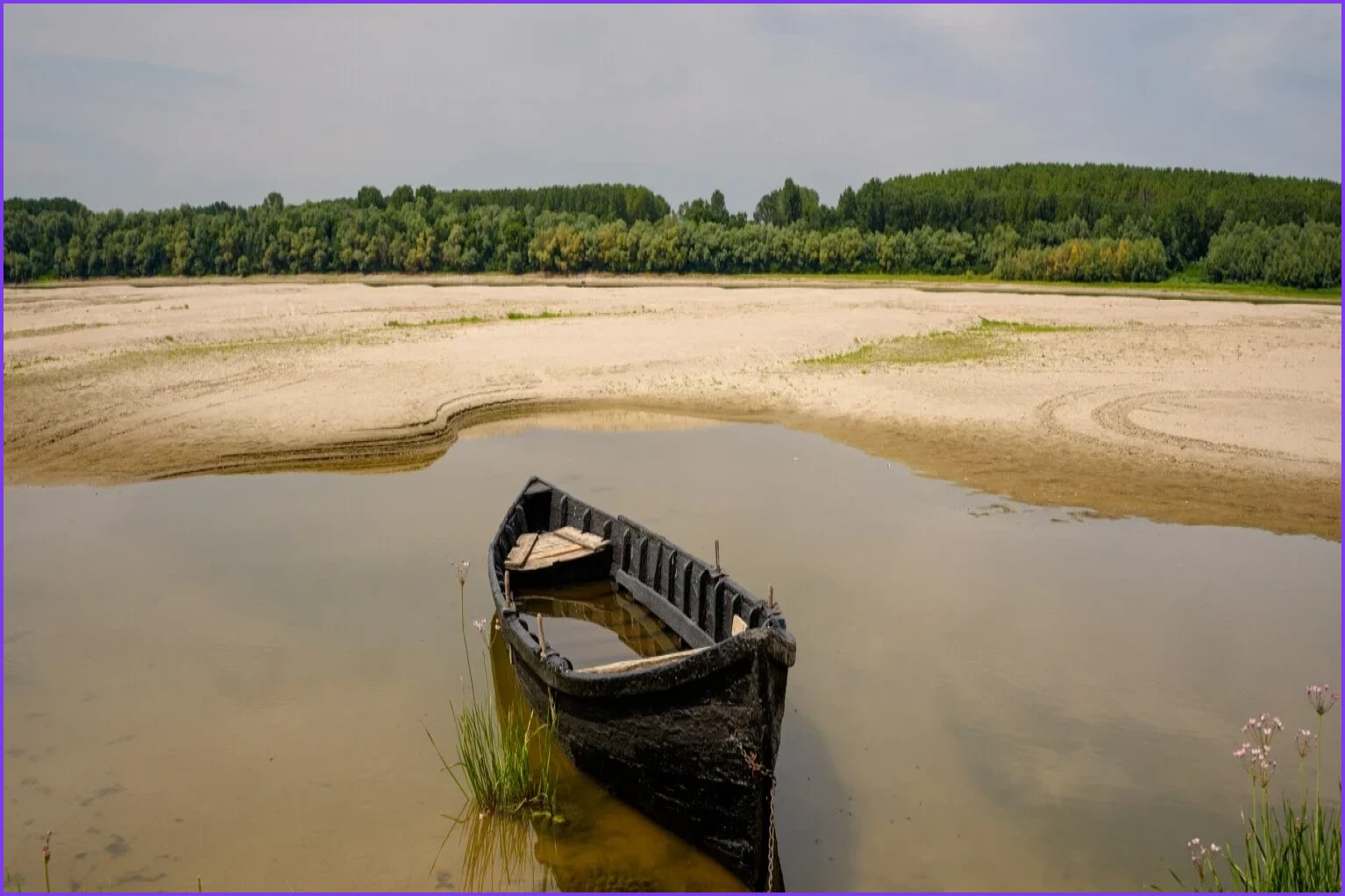
Romanian authorities are racing to sink four barges laden with rock into the Danube River in a critical effort to redirect water downstream toward the state-owned Cernavoda nuclear power plant. This emergency intervention is designed to buy additional time before the facility's second reactor is forced offline due to record-low water levels that have plagued the region for the past week.
The Cernavoda plant is a vital component of Romania’s national infrastructure, typically generating about 20% of the country’s electricity when operating at full capacity. Because the plant relies on river water to cool its reactors, the current drought—exacerbated by extreme heatwaves and minimal rainfall—has already forced the shutdown of one reactor. The Danube’s water flow has plummeted to its lowest level in decades, reaching 1,400 cubic meters per second this week, which is less than one-third of the volume typically expected for this time of year.
The barges being deployed were loaded with rock sourced from recent military operations. Earlier this week, the Romanian military utilized 180 kilograms (397 pounds) of explosives to blast submerged rock near the Danube’s Bala Canal. Once the four barges are fully submerged, they will form an underwater barrier intended to force water into the river’s main channel, directing it toward the Cernavoda facility located approximately 60 kilometers (37 miles) downstream.
Romeo Urjan, the director of the nuclear plant, explained to the local news channel Digi24 on Thursday that the Danube’s water level had dropped by about two centimeters (0.7 inches) between Wednesday and Thursday. He warned that without the installation of the barge barrier, the plant’s second reactor would likely be forced to shut down within five to six days. However, he noted that if the barges successfully increase the water flow, the plant could potentially extend its operational window to nine or 10 days from Thursday. The impact of the submerged barrier is expected to reach the plant in about one day.
In response to the deepening crisis, Acting Prime Minister Ilie Bolojan announced a nationwide state of alert in the energy sector on July 31. During a government meeting on Thursday, Bolojan emphasized that the ongoing work aims to maintain water flow to keep the second reactor operating at maximum capacity, even if river levels remain low. He again appealed to citizens and local authorities to voluntarily limit electricity consumption during peak evening hours to mitigate the risk of energy shortfalls. He noted that the sinking of the barges is expected to continue through Friday.
The regional impact of the drought is significant, as Romania may struggle to import electricity during peak hours if the Cernavoda plant is taken completely offline, especially since neighboring countries are grappling with their own energy challenges. In Hungary, record-low water levels have pushed the country’s only nuclear power plant to the brink of a total shutdown for the first time in decades. Meanwhile, in Moldova, which relies heavily on electricity imports from Romania, authorities have also urged citizens to voluntarily reduce power usage during peak times.