A joint investigation by Human Rights Watch (HRW), Amnesty International, and Legal Agenda has concluded that the Israeli strike that killed Lebanese journalist Amal Khalil and injured her colleague Zeinab Faraj in April 2026 constitutes a war crime. The organizations assert that the Israeli military deliberately targeted the two women despite clear indicators of their civilian status.
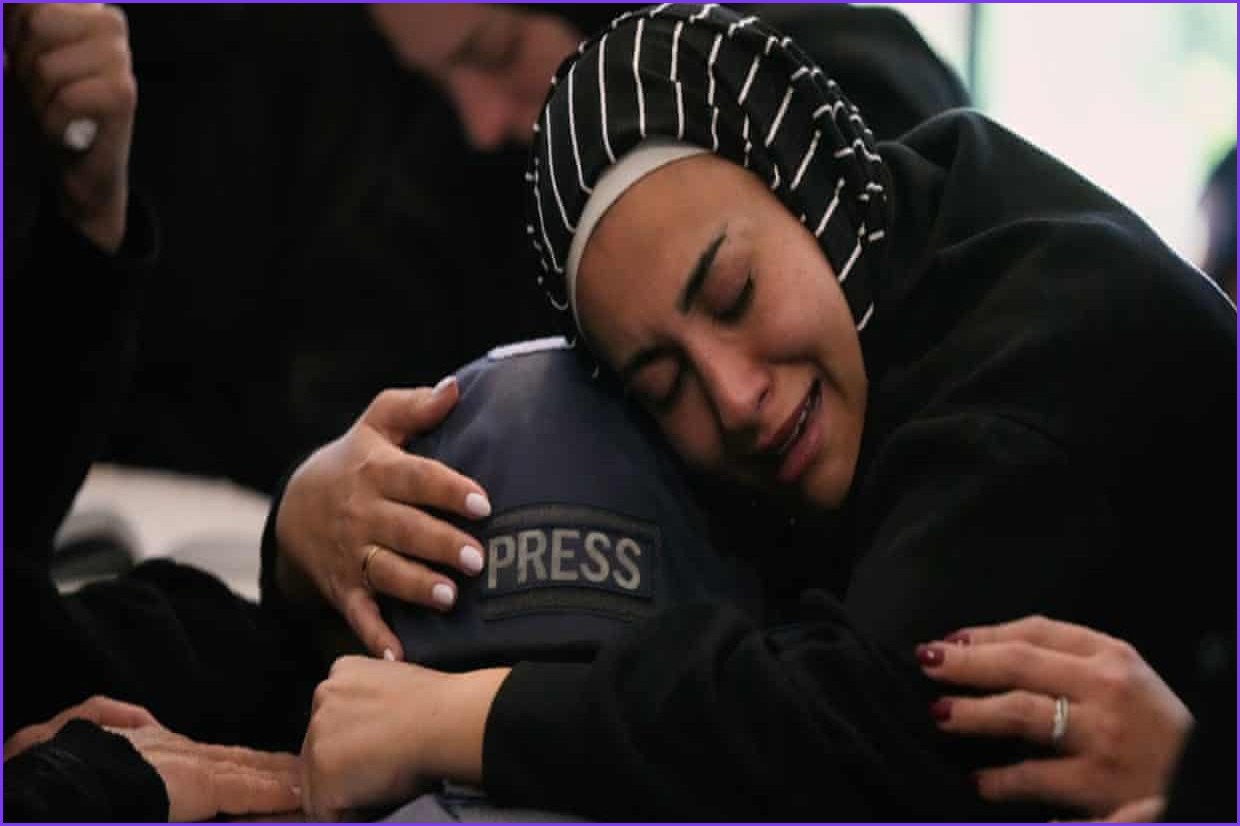
Amal Khalil, 42, was a journalist for the Lebanese newspaper al-Akhbar, while 21-year-old Zeinab Faraj worked as a freelance photojournalist. On 22 April 2026, the two women traveled to the southern Lebanese village of al-Tiri to verify reports regarding the withdrawal of Israeli troops. They were following a vehicle carrying Ali Nabil Bazzi, a municipal official from Bint Jbeil, and Mohammed Hourani, a friend of the mayor. At 2.25pm, after entering al-Tiri, the car carrying Bazzi and Hournai was struck, killing the men. Khalil immediately contacted the Lebanese civil defense for assistance.
The rescue operation faced significant delays, as the civil defense team was required to coordinate through a deconfliction mechanism to obtain safe passage from the Israeli military. By 5pm, the UN peacekeeping force in Lebanon had given a safe route for civil defence to follow to enter the town, but Israel had not yet given its approval. During this wait, Faraj reported that Israeli quadcopters flew extremely close to them, hovering less than a meter from their faces. At 3.31pm, a member of the Lebanese civil defence called Khalil and urged her to get into her car and drive out of the village, as he had not yet received permission from the mechanism to enter the village. Around nine minutes later, Israel struck the journalists’ car, injuring both women. They sought shelter in a nearby building, only for a third strike at 4.25pm, bombing the building where they were sheltering, collapsing it and burying both women under the rubble.
At 5pm, permission was given to the Lebanese Red Cross to enter the village. They were able to evacuate Faraj, who had a fractured skull, severe injuries to her right leg and eye, and a crushed hand. Rescuers could not rescue Khalil, who was trapped under rubble. The Israeli military finally granted the request for rescue crews to re-enter the town at 8.15pm. Khalil’s body was recovered at 11pm. An examination of her body at the nearby Tebnine hospital showed that she probably died at 7pm – two-and-a-half hours after she was struck for the last time.
Ramzi Kaiss of HRW stated that the military knew or should have known the victims were civilians. In response, Israel expressed regret for harm caused to journalists, characterizing the deaths as part of a series of events involving the killing of two Hezbollah operatives. Rights groups, however, highlighted that this incident follows a broader pattern of impunity, with the UN human rights office noting that at least 15 journalists have been killed in Lebanon and 210 in Gaza since 2023. Amnesty International’s Heba Morayef called on the international community to impose a comprehensive arms embargo on Israel to address these ongoing violations.