The United States and Iran are reportedly close to finalizing a deal regarding the strategic Strait of Hormuz, a crucial maritime corridor where conflict has severely disrupted global shipping. However, achieving a final agreement will require at least one of the adversaries to back down from key demands. The diplomatic effort, mediated by Oman, comes amid intense economic and political pressure on Washington to bring an end to the highly unpopular conflict.
Iranian Foreign Ministry spokesperson Esmail Baghaei announced that the draft agreement with Oman is in its "final stage." Baghaei noted that a joint statement would be released "if certain parties do not obstruct this process," in an apparent reference to the United States. Under the proposed framework, commercial vessels would enter the Persian Gulf through a route controlled by Iran and exit via a route monitored by Oman. The plan also includes charging service fees to fund maritime security and environmental preservation, an arrangement the U.S. has strongly opposed.
U.S. President Donald Trump, who arrived at Harry Reid International Airport in Las Vegas on Tuesday, August 4, 2026, expressed cautious optimism regarding the negotiations. When asked about reports from the Axios news site suggesting an announcement could come as early as Wednesday, Trump remarked, "It could happen. Tomorrow or the next day," adding that "a lot of progress has been made." In recent days, Trump has shifted between threatening massive military strikes and signaling support for diplomatic resolutions.
Meanwhile, Vice President JD Vance described the diplomatic process as highly complex during a Wednesday evening interview on Fox News Channel. Acknowledging that it might appear as though the U.S. is stalling, Vance characterized the peace efforts as "messy" and warned that "it's going to take some time." He referred to the Iranians as "extraordinarily difficult people" and observed that resolving the conflict often requires taking steps backward before moving forward.
The war was initiated on February 28 by the U.S. and Israel, with the stated objectives of dismantling Tehran's nuclear program and toppling the Iranian government. Neither objective has been met, and the conflict has instead devolved into a grueling struggle over the Strait of Hormuz. Iran's assertion of control and its persistent attacks on commercial shipping have nearly halted maritime traffic through the waterway, which previously handled a fifth of the world's traded oil and natural gas. The resulting supply disruptions have driven up global fuel and commodity prices, though Brent crude, the international benchmark, eased slightly before settling around $80 per barrel on Wednesday—well below its peak wartime levels.
The instability surrounding the conflict continues to reverberate across the Middle East. On Wednesday, Iranian-backed Houthi rebels in Yemen claimed to have launched ballistic missiles at a Saudi oil tanker in the Red Sea near the port of Yanbu, though they provided no evidence, and Saudi Arabia did not immediately comment. Simultaneously, the British military's United Kingdom Maritime Trade Operations center reported that a vessel sailing in the Gulf of Aden experienced a close-proximity explosion, though the crew remained safe. The Houthis claimed this was another ballistic missile strike targeting a Saudi tanker.
This escalation threatens to reignite Yemen's civil war, which has pitted the Houthis against a Saudi-led coalition. The shipping crisis was compounded in July when the Houthis closed the Bab el-Mandeb Strait to Saudi-linked vessels, blocking a critical alternative route for Saudi oil exports.
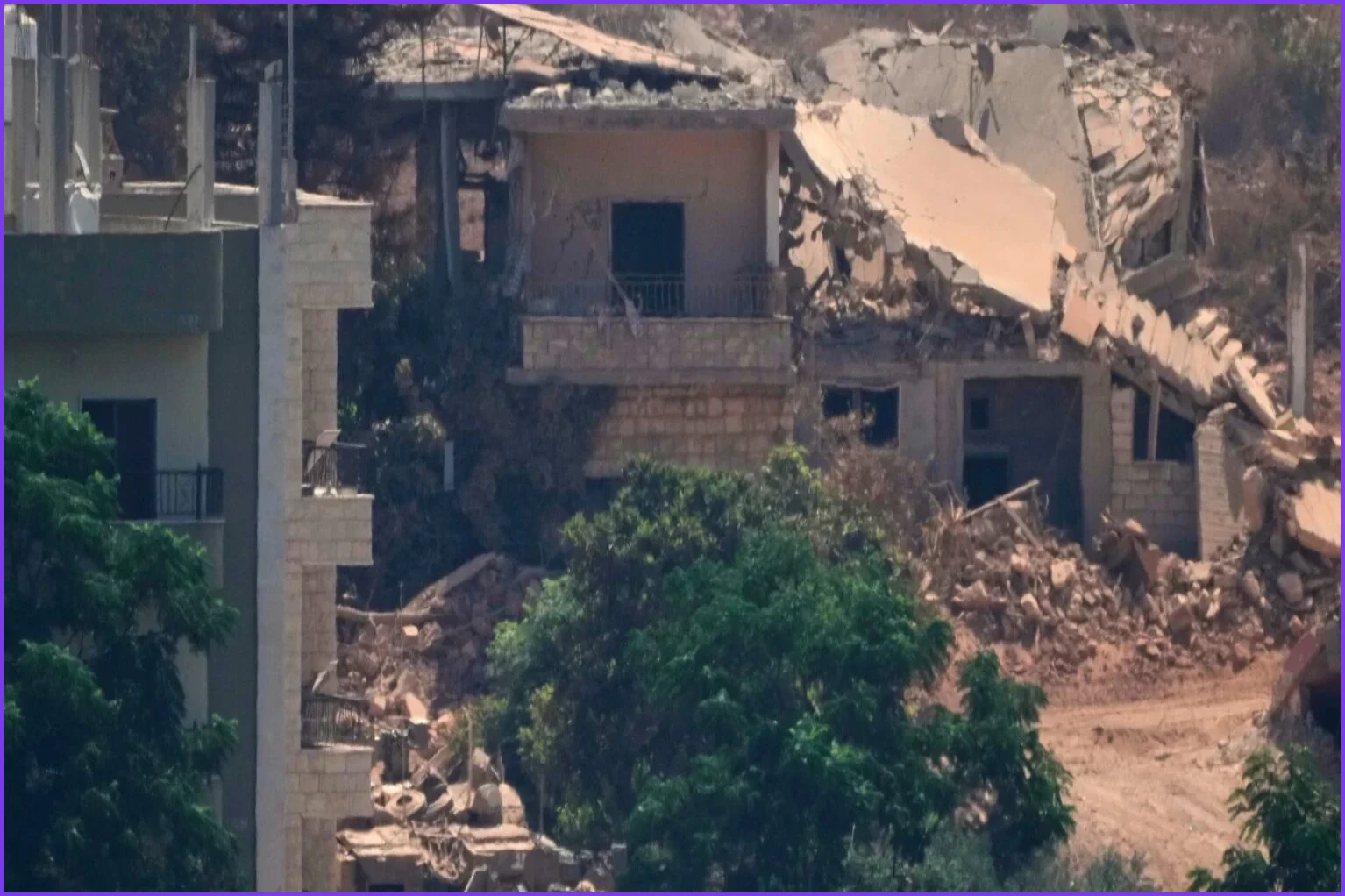
Concurrently, the fragile ceasefire between Israel and the Iran-backed militant group Hezbollah, which had largely held since June 20, faced severe strain on Wednesday. The Israeli military issued its first evacuation warning in weeks to residents of Mansouri, a village in southern Lebanon. Shortly after, Israel launched "precise strikes" in the region, calling them a response to a "blatant violation of the ceasefire." Amid the flare-up, a U.S. State Department official, speaking anonymously, confirmed that separate Israel-Lebanon diplomatic talks in Rome ended early "due to events on the ground," though they characterized the discussions as "extremely productive" and indicated they could resume on Thursday.
Becatoros reported from Athens, Greece, and Superville from Rancho Palos Verdes, California. Aamer Madhani, Fatima Hussein, Matthew Lee and Michelle L. Price in Washington and Claire Galofaro in Louisville, Kentucky, contributed.