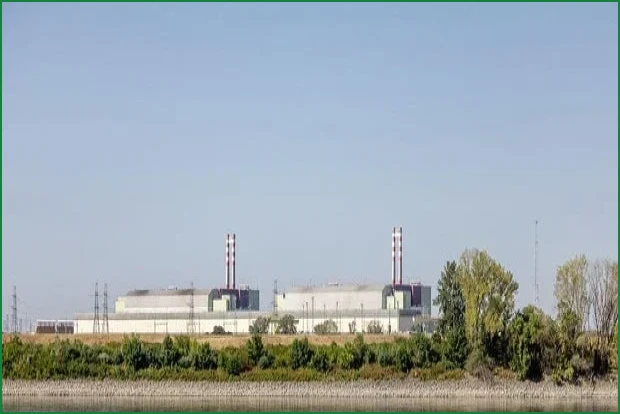
Hungary is facing an escalating energy crisis as the Danube River reaches record-low levels, threatening to force a total shutdown of the Paks nuclear power plant. The facility, which is the nation's only nuclear station, is currently struggling to maintain operations. As of Wednesday morning, three of the plant's four reactors have been taken offline, while the remaining unit is functioning at approximately 50% capacity.
Situated on the Danube about 60 miles south of Budapest, the 44-year-old Soviet-designed facility is responsible for generating roughly 50% of Hungary's electricity. Unlike many nuclear plants in countries like Germany, France, the U.K., or the U.S., which utilize cooling towers to recirculate water, the Paks plant was specifically engineered to draw water directly from the Danube. This design choice was predicated on the assumption that the river would remain a permanent, powerful water source.
Prime Minister Péter Magyar, who recently took office after his Tisza party ended a 16-year rule by Viktor Orbán, visited the site on Tuesday. He acknowledged the gravity of the situation while attempting to maintain a hopeful outlook. "Several factors will determine whether Hungary's most important power plant can avoid a complete shutdown in the coming days," Magyar stated. He urged the public to embrace national unity to conserve energy, specifically requesting that households avoid using appliances such as washing machines and tumble dryers during the peak hours of 5 p.m. to 10 p.m.
With no significant precipitation forecast for at least the next 10 days, water levels in the Danube are expected to drop further. Magyar emphasized the urgency of the situation, noting that the coming days are critical. However, he also pointed to potential relief, as forecasters expect a cold front to arrive on Friday, which may provide some reprieve from the extreme heat that saw temperatures in Budapest rise above 100 degrees Fahrenheit on Wednesday and Thursday.
This energy challenge serves as a major test for the new government. To mitigate the loss of domestic power generation, Hungary has nearly doubled its electricity imports from neighboring countries through the region's interconnected power grid. While the government has absorbed the extra costs for now, keeping prices stable for consumers, the situation reflects broader regional climate issues. According to Copernicus, the European Union's climate monitoring group, Europe is warming faster than any other continent, with eastern and central regions experiencing temperature increases of approximately 4.5 degrees Fahrenheit above pre-industrial levels. As the Danube continues to recede, it has revealed historical artifacts across eastern Europe, including sunken Nazi warships in Serbia and woolly mammoth bones in Bulgaria, underscoring the severity of the ongoing three-month drought.
Hardly any precipitation is forecast for at least the next 10 days and the Danube's water levels are expected to slip even lower.
"There are a few critical days left. Today and tomorrow are certainly that," Magyar said. "I ask everyone to continue the national unity that has developed in the country. Let's do what our country demands."