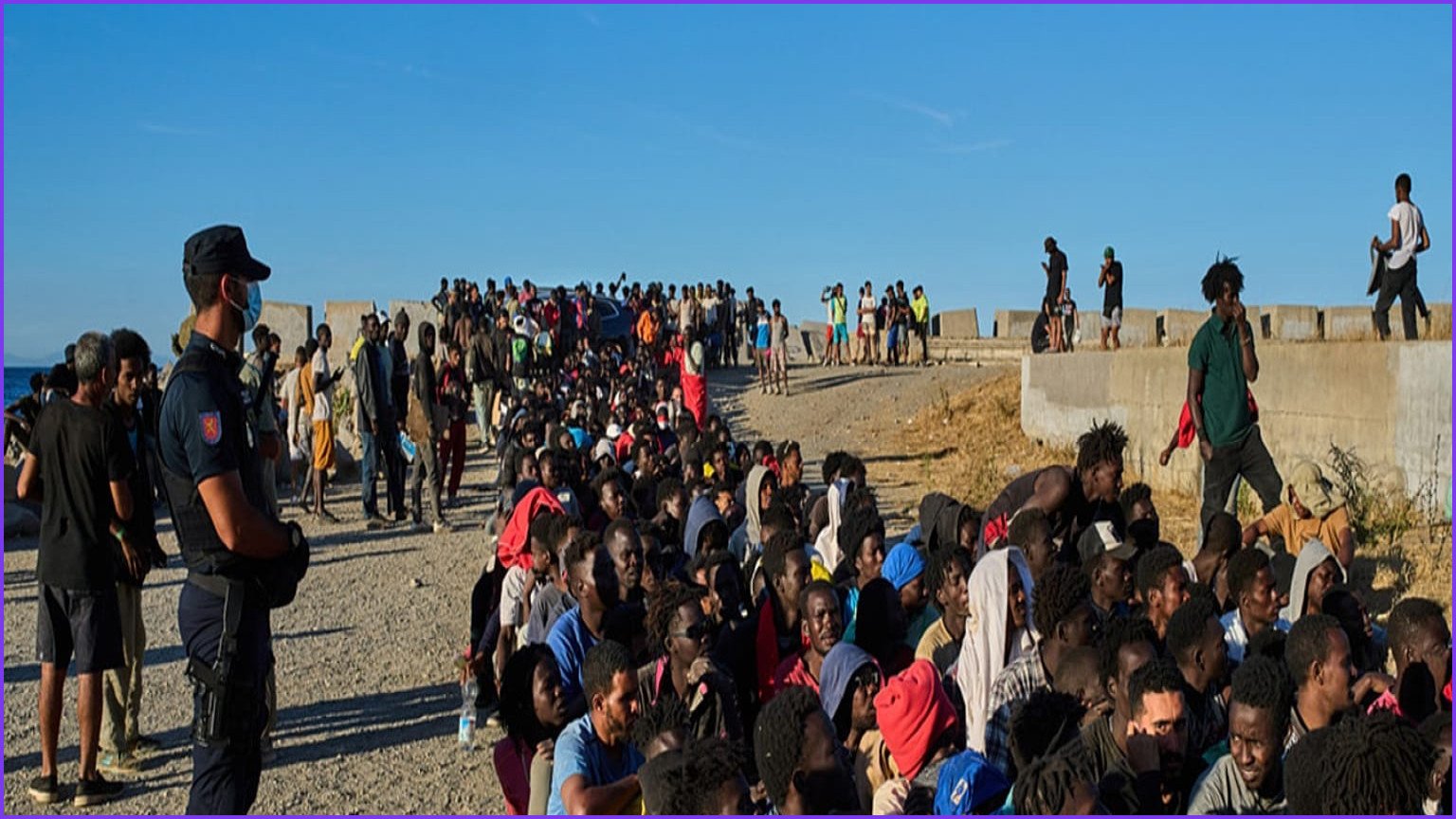
In the period leading up to the arrival of approximately 70,000 people at the Spanish territory of Ceuta, which borders Morocco, a significant volume of misleading information circulated on platforms including TikTok and Facebook. These posts frequently promised an easier route into Europe, with some claims suggesting the border was effectively open, while others falsely asserted that migrants arriving by sea would be immune to immediate return.
Furthermore, social media users shared images of Spanish Prime Minister Pedro Sánchez, portraying him as a leader committed to granting dignity and recognition to those who build Spain.
These posts deliberately misconstrued a recent government program designed to regularize thousands of migrants already residing in the country, failing to clarify that the policy was strictly limited to those who had been living in Spain since 1 January 2026 and met specific residency requirements.
The exact triggers for this unprecedented surge remain a subject of debate, with officials and experts identifying a combination of factors, including economic hardship in Morocco, the influence of criminal networks, the actions of border authorities, and the rapid spread of misinformation. Prime Minister Sánchez has explicitly argued that migrant smugglers intentionally misrepresented a recent Supreme Court ruling to encourage people to attempt the crossing.
Conversely, migration and human rights activists contend that the rumors circulating on social media were a primary fuel for the sudden influx.
In the days preceding the crossings, posts focused on two genuine developments: the Spanish government’s regularization program and a Supreme Court judgment. Critics, including the US State Department, argued that the regularization initiative signaled a lenient immigration stance, despite the government's insistence that it only applied to long-term residents.
The Supreme Court judgment itself was also subject to widespread misinterpretation. The ruling did not grant migrants an automatic right to remain in Spain or travel to the mainland; rather, it established that migrants intercepted at sea could not be immediately returned under the special border regime used in Ceuta and Melilla. Instead, they were required to undergo the ordinary legal returns system.
Despite this narrow legal scope, the ruling was framed as a broader policy shift. Throughout this period, the Spanish government has maintained a firm stance on irregular migration, keeping the 2015 border rejection provision in place and continuing close operational and financial cooperation with Moroccan authorities to prevent unauthorized crossings.
Tensions also rose between the two nations, with Spanish politicians accusing Rabat of allowing the crossings due to limited border enforcement. An Associated Press photographer reported witnessing Moroccan officers standing aside before security forces eventually intervened. Morocco has countered these accusations by claiming it warned Spain that the Supreme Court ruling would be exploited by trafficking networks, a claim the Spanish government denies.
On Tuesday, EU migration commissioner Magnus Brunner expressed concern regarding the role of online disinformation in the crisis, though he did not identify a specific source or actor responsible for the content.
As the situation unfolded, politicians across Europe expressed alarm, warning that the migrants would soon move toward mainland Spain and other European nations. Italy’s Prime Minister Giorgia Meloni introduced temporary checks on air and sea arrivals from Spain, while French Interior Minister Laurent Nuñez announced plans to bolster border controls.
British politicians, including former Home Secretary Suella Braverman, also claimed the migrants would be heading toward the rest of Europe.
However, Commissioner Brunner clarified that not a single person had crossed into mainland Europe as of Friday evening. Spain’s foreign ministry affirmed that exit checks are strictly enforced by sea and air, ensuring that no one can travel to the mainland without being identified by the National Police.
Spanish authorities have reported that the majority of migrants who entered Ceuta have already returned to Morocco, either voluntarily or through expulsion. As of the time of reporting, several thousand migrants remain in the enclave, with many hoping to reach mainland Spain. These individuals face an uncertain legal future, potentially resulting in expulsion or legal limbo in government-run centers.
Under Spanish law, adult migrants who apply for asylum face expulsion procedures if their claims are rejected, while unaccompanied minors are entitled to specific legal protections.
Amidst the chaos, various conspiracy theories emerged online, alleging that the mass crossings were orchestrated as retaliation for Spain's criticism of Israel's military campaign in Gaza and its condemnation of joint US-Israeli strikes on Iran. Despite these claims, there is currently little evidence to support the theory that the US or Israel encouraged the surge.