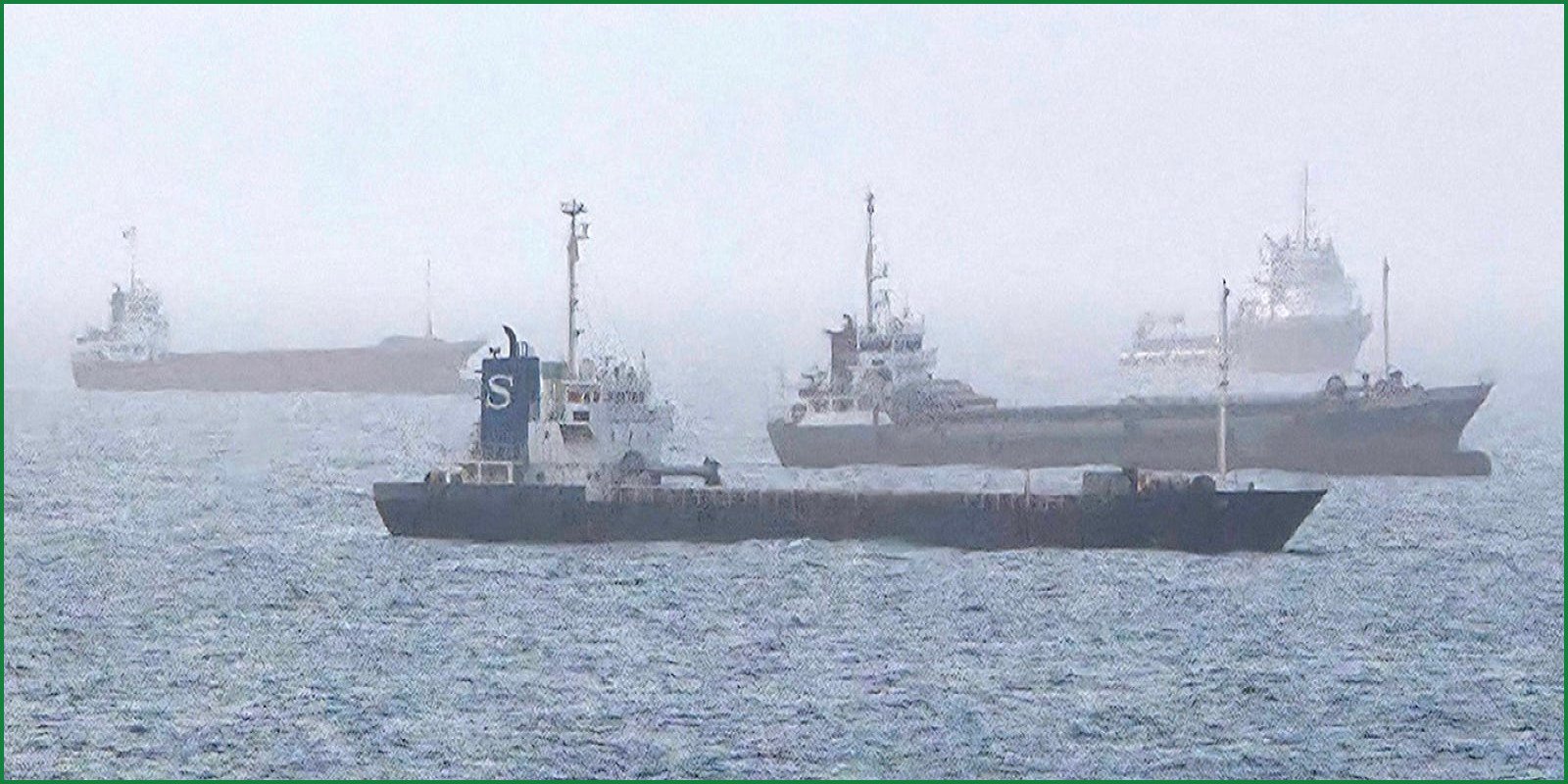
The military conflict in the Middle East has triggered an unexpected ecological crisis, with scientists warning that more than 1,500 commercial vessels stalled near the Strait of Hormuz could unleash a global "super-spreader event" of invasive marine species. Since the U.S.-Israel war on Iran began on February 28, vital shipping lanes have been heavily restricted. As Washington and Tehran continue to struggle for control over the crucial trade route, which handles approximately one-fifth of the world's oil and natural gas supply, cargo ships have remained stationary for months instead of their typical two-day port stays.
An international coalition of marine scientists recently published a study highlighting the biosecurity risks associated with this prolonged maritime gridlock. The researchers warn that marine organisms colonizing the hulls of these idling ships could devastate ecosystems worldwide once the vessels finally resume their journeys. Mario Tamburri, a professor at the University of Maryland Center for Environmental Science and the study’s lead author, described the situation as a "perfect storm," noting that designing a worst-case scenario for marine invasions would look exactly like the current crisis.
When commercial vessels remain stationary for days or weeks, their submerged hulls undergo a process called biofouling. Microbes, algae, barnacles, and other organisms quickly colonize the vessels, entering a "rapid growth phase" after about 10 days. Compounding the threat is the fact that the ships became stalled at the start of spring, a season of growth and reproduction as waters warm. The sheer volume in the number of idle vessels – and their global routes – is especially concerning to researchers.
Biofouling is not only an ecological hazard but also a costly burden for the global shipping industry. The accumulation of marine growth increases drag as ships move through the water, forcing them to burn more fuel and release higher exhaust emissions. The International Maritime Organization reports that biofouling wastes roughly 10% of all fuel consumed by global shipping fleets, prompting companies to spend billions of dollars annually on specialized hull coatings and cleaning operations to mitigate the damage.
History offers several stark warnings about the dangers of ship-borne biological invasions. During World War II, the Australasian barnacle Austrominius modestus invaded Western Europe after New Zealand vessels were held in English ports while awaiting convoy escorts, eventually outcompeting native species. In the United States, commercial ships introduced the Indo-Pacific rope grass hydroid Garveia fransiscana to the Chesapeake Bay about a century ago. Tamburri pointed out that this invasive organism continues to clog power plant cooling systems, including a local nuclear power plant that spends millions of dollars annually to manage the fouling and keep its systems clear.
Beyond ecological and structural damage, biofouling can transport dangerous pathogens. In the early 1990s, the cholera-causing pathogen Vibrio cholerae was discovered on five ships docked in U.S. Gulf Coast ports after arriving from Latin America, which was then experiencing a cholera outbreak. This discovery prompted the Food and Drug Administration to recommend that the U.S. Coast Guard advise ship captains to exchange ballast waters on the high seas before entering American ports.
The current crisis near the Strait of Hormuz is unprecedented in modern history due to the scale and resilience of the local marine life. Organisms native to the Strait of Hormuz, the Gulf of Oman, and the Persian Gulf are highly adaptable because they survive extreme seasonal temperature fluctuations, ranging from 60 degrees Fahrenheit in the winter to 95 degrees Fahrenheit in the summer. “Those organisms can withstand extremes,” Tamburri said. “They’re tolerant organisms, which makes them good candidates for invasions when they go to a new location.”
Regions with similar environmental conditions, such as high temperatures and high salinity, face the greatest risk from these resilient hitchhikers. Ports across India and Southeast Asia, particularly global shipping hubs like Singapore, are highly vulnerable. While North America and the United States are at a lower risk due to their distance and lower salinity levels, they are not entirely safe. Tamburri noted that ports along the U.S. Gulf Coast remain a particular concern due to their warm waters.
To address this looming biosecurity threat, the study's authors recommend that shipping companies perform in-water cleanings to strip away the biological buildup before ships depart. However, the researchers acknowledge this is unlikely to happen for most vessels, as operators will prioritize evacuating stranded seafarers and quickly restoring trade movements once the conflict eases. Furthermore, limited cleaning capacity and operational constraints make cleaning hundreds of massive cargo ships impractical, and ports are unlikely to have the resources to manage such large-scale operations while trying to clear shipping bottlenecks.
Given these challenges, the researchers recommend that crews estimate the buildup of marine organisms before departing so authorities can evaluate risks. They also recommend that nearby ports monitor for early detection using low-cost, rapid assessments. The study urges governments and the maritime industry to strengthen biofouling management policies, emphasizing that while the human and economic toll of the Middle East conflict must remain the top priority, the long-term ecological consequences cannot be ignored.
Looking ahead, Tamburri said, the risks from biofouling are expected to only increase as climate change leads to warmer ocean temperatures. He added that there could be areas where native organisms are on the edge of what they can tolerate because they are not adapted to warmer waters, giving these resilient invaders a better chance of colonizing and outcompeting the native species.