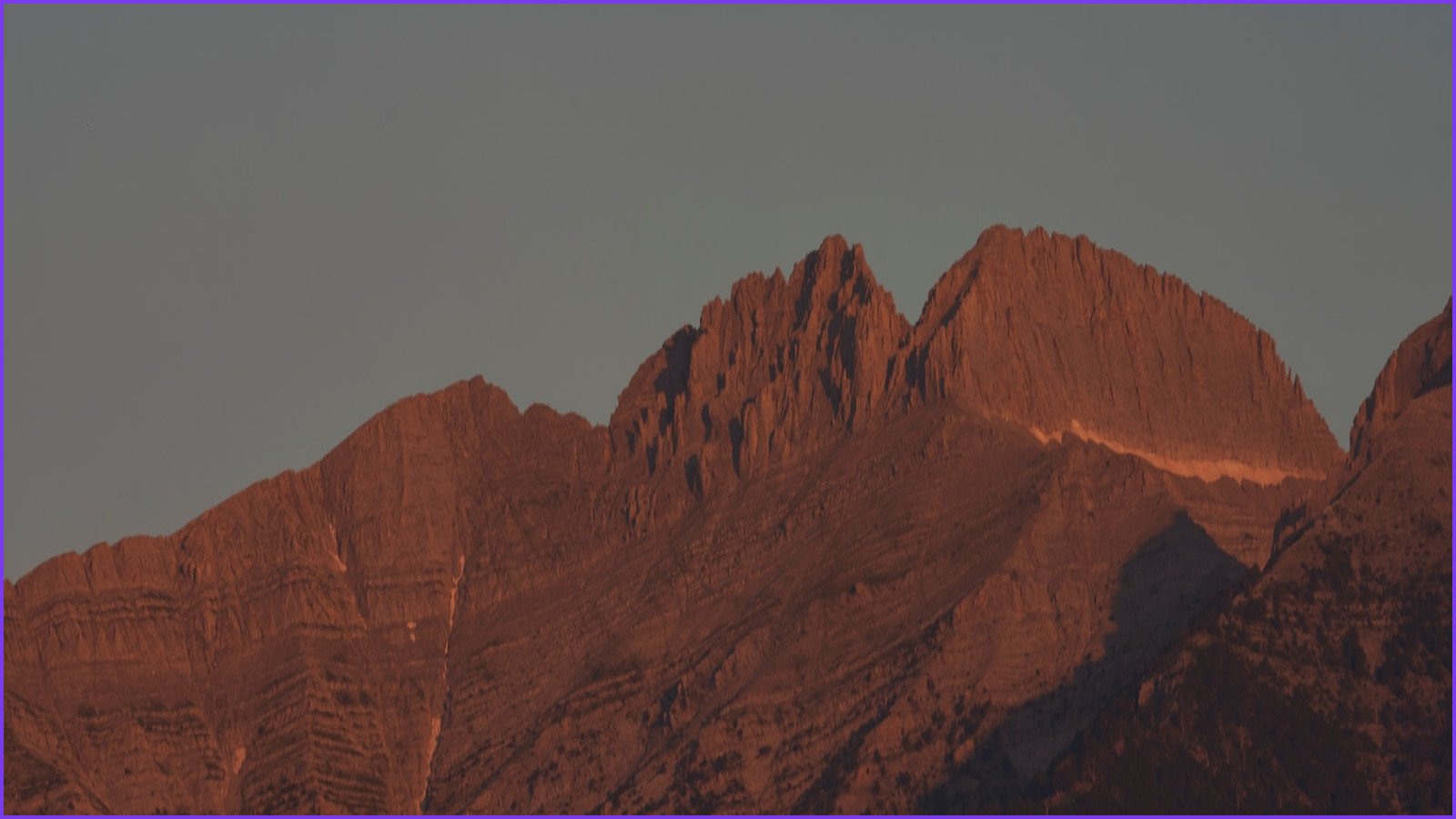
The United Nations educational and cultural committee, currently meeting in Busan, South Korea, has announced the addition of several globally significant sites to the World Heritage List. Among the most prominent inclusions are the D-Day landing beaches in northern France and the legendary Mount Olympus in Greece. The committee is currently reviewing dozens of nominations and is scheduled to meet through Wednesday.
The French designation encompasses the five Normandy landing sites of Omaha, Utah, Sword, Gold, and Juno, alongside the Pointe du Hoc assault location. These areas served as the focal point for the June 6, 1944, operation where over 150,000 Allied troops arrived to begin the liberation of Western Europe from Nazi control. The International Council on Monuments and Sites (ICOMOS), which evaluates submissions, noted that these locations retain extensive physical evidence of the conflict, ranging from German fortifications and sunken vessels to landscapes scarred by bombing. Historian David Edgerton remarked in a recent interview that the event remains perhaps the greatest amphibious landing in history, deserving recognition for its role in enabling the return of freedom to the continent.
While celebrating the designation, ICOMOS emphasized the need for rigorous preservation efforts, warning of potential threats from climate change, rising sea levels, tourism, and nearby wind farm developments. Ahlem Gharbi, France’s permanent delegate to UNESCO, remarked that the inclusion of these sites holds particular weight during the current era of international conflict, serving as a reminder of the transition toward a postwar order based on peace and security.
Greece’s Mount Olympus, rising 2,918 meters (9,573 feet) from a base near sea level, was recognized as a mixed cultural and natural heritage site following a 12-year campaign. Known in mythology as the throne of Zeus, the king of the gods, the mountain is also celebrated for its exceptional biodiversity. Georgios Koumoutsakos, Greece's delegate to UNESCO, expressed a commitment to safeguarding the site for future generations, noting that it is best to remain on good terms with the gods. Evangelos Geroliolios, the mayor of the municipality of Dion-Olympus at the foot of the mountain, acknowledged that the new status brings increased responsibilities for protecting the environment against the potential impacts of increased tourism.
The committee also granted World Heritage status to the Asuka-Fujiwara archaeological sites in Japan. These 19 locations in the western Nara prefecture date back to the 6th and 8th centuries and represent the foundations of Japan’s first centralized state, which was modeled after Chinese systems. The sites preserve the largely buried remains of royal palaces, government offices, Buddhist temples, and tombs that influenced later capitals like Nara and Kyoto. Yoshiyuki Aihara, an archaeology professor at Nara University, noted that the sites are significant for showing how Japan’s ancient state was formed through influences from China and the Korean Peninsula. Aihara, who is continuing excavation work, explained that while ruins are found about one meter under local rice paddies, they are not always easy for ordinary visitors to interpret. Japanese Vice Culture Minister Shigeki Kobayashi thanked the committee for the inscription, while Prime Minister Sanae Takaichi, a native of Nara, expressed hope that the designation would boost tourism.
Finally, South Sudan secured its first entry on the World Heritage List with the Boma-Badingilo Migratory Landscape. This region is home to one of the world's most significant land mammal migrations, involving an estimated 6 million white-eared kob, tiang, and Mongalla gazelles moving across the landscape in response to seasonal rainfall and flood dynamics. The landscape, characterized by vast wetlands, flood plains, and savannas, also provides a vital habitat for elephants, lions, cheetahs, and other wildlife, while supporting local ethnic communities that have maintained traditional herding, farming, and fishing practices for centuries, according to UNESCO.
“It’s probably the greatest amphibious landing there’s ever been. It ought to be remembered for that alone,” historian David Edgerton said in a recent interview with The Associated Press.
—— AP writer Mari Yamaguchi contributed from Tokyo.