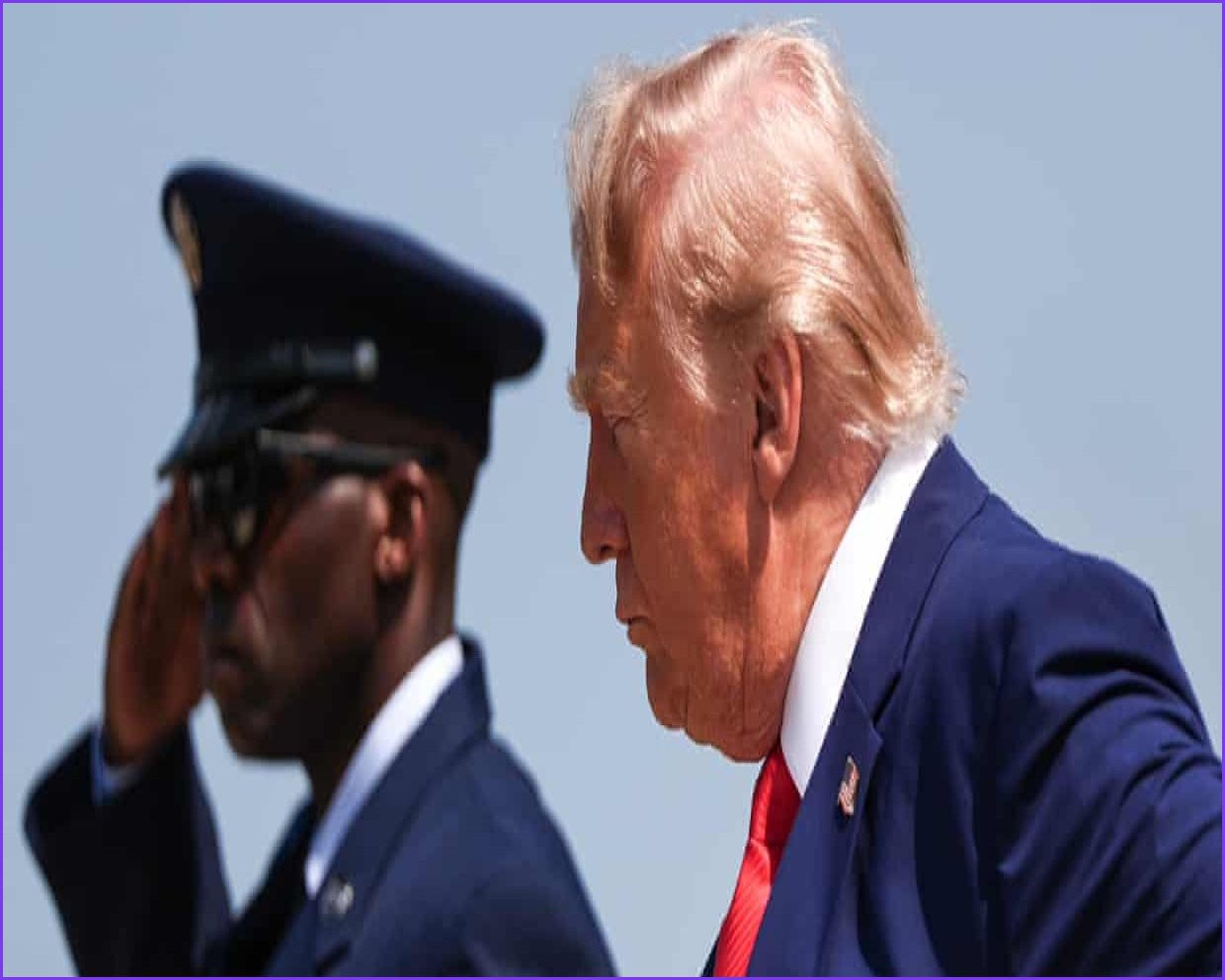
President Donald Trump has announced that he is close to making a final decision regarding a large-scale military strike against Iran. Speaking to the Axios news site, the president described the potential operation as a “massive attack” that would be larger than any previous strikes conducted during the ongoing conflict with Tehran. He emphasized that preparations for such an action are complete, though he noted that a final determination has not yet been reached.
The president’s comments arrive as tensions in the Middle East continue to escalate, marked by a surge in oil prices that pushed Brent crude above $100 per barrel. The regional instability has prompted significant concern, with UN Secretary General António Guterres warning the security council that the situation is “teetering on the edge of the unimaginable.” Guterres cautioned that the region is being pulled into a widening cycle of confrontation where individual escalations trigger further crises.
The recent spike in hostilities follows attacks by the Iran-backed Houthi militia on two Saudi Arabian oil tankers, the Encelia and the Layla, in the Red Sea. The Houthi-affiliated Saba news agency reported that the strikes caused fires on both vessels, though no casualties were reported. These attacks have threatened the Bab el-Mandeb, a critical maritime chokepoint through which approximately 12% of global trade and a quarter of global container traffic passes. The Houthi attacks threatened the safety of a second major maritime route connecting the Suez canal to the Red Sea and Gulf of Aden. They also came amid reports that Iran had sent military advisers and drone parts to the Houthis 10 days ago. Maritime analysts at Lloyd’s List Intelligence noted that the strikes have cast doubt on the viability of the shipping route, which has become crucial since the disruption of the Strait of Hormuz.
In response to the deteriorating security environment, the United Kingdom has temporarily withdrawn diplomatic staff from Iran, while the German military announced the withdrawal of two vessels from the Red Sea. Meanwhile, the US State Department has issued warnings to American citizens in the region regarding potential flight cancellations as Israeli cities have begun opening bomb shelters.
Trump has previously threatened that any further Houthi attacks would result in “major military punishment” against both the rebels and Iran, whom he labels as their proxy. During the week, he suggested that the U.S. would retaliate for every ship attacked by destroying a bridge or power plant. Additionally, he has hinted at the possibility of bombing an underground tunnel complex at “Pickaxe mountain,” where Israel alleges Iran hides uranium enrichment centrifuges. While Trump noted that Israel would join the effort if requested, he maintained that the United States does not require outside assistance.
Domestic political pressure is also mounting, as the U.S. House of Representatives narrowly passed a resolution on Thursday aimed at halting military action in Iran. This is the second such warning sent to the president, who faces declining poll ratings and significant domestic opposition to the conflict. Furthermore, Trump clarified that a proposed agreement to aid Saudi Arabia with a civilian nuclear program would be contingent on the kingdom normalizing relations with Israel through the Abraham Accords—a condition that sources indicate had not been discussed with Saudi officials prior to his announcement.
And as Israeli cities opened bomb shelters, the US state department warned Americans living in the region that flights may be cancelled.
The US secretary of state, Marco Rubio, said Trump was seeking a “head for an eye” after the recent deaths of several US service members in an Iranian strike on the Muwaffaq Salti airbase in Jordan.