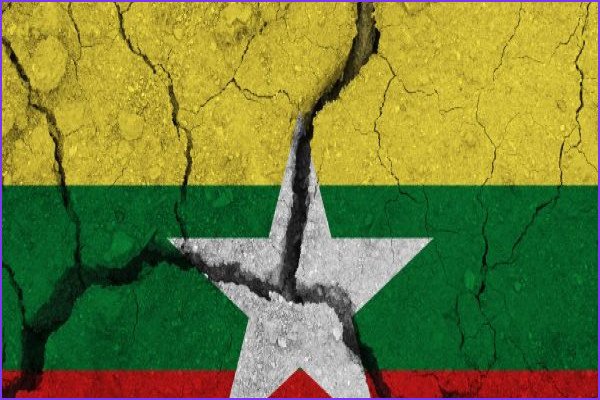
The international community continues to view Myanmar through a traditional diplomatic lens that struggles to account for the nation's profound political fragmentation. While global powers often search for a single entity to recognize as the legitimate government, the reality on the ground suggests this framework may no longer be the most effective way to address the conflict. As of mid-2026, the military regime maintains control over a territory encompassing between one-fifth and one-third of the country, primarily concentrated in major population centers, though it often lacks administrative presence. Meanwhile, nearly half of the country has drifted into a form of warlordism, characterized by competing power centers.
This shift was highlighted recently when the military-backed government denied a request from Philippines Foreign Secretary Ma. Theresa Lazaro to meet with detained civilian leader Aung San Suu Kyi, citing her prison sentence. Shortly thereafter, Min Aung Hlaing, who led the 2021 coup and declared himself president in April, conducted an official bilateral visit to Laos. This marked his first trip to an ASEAN member state since the coup. Despite ASEAN not officially recognizing the regime or the results of elections held in December and January, the organization continues to structure its diplomatic engagements as if the junta is the sole authority.
The persistent reliance on the "one government" model stems from the 1976 Treaty of Amity and Cooperation, which assumed a stable order of territorial states. However, this principle did not account for scenarios involving contested governance. International law does allow for state existence amidst divided control—as seen in cases like Somalia, Libya, and the frozen U.N. seat for Afghanistan—yet diplomatic practice remains largely wedded to the default of a singular, settled state. The Arakan Army, for instance, now administers nearly all of Rakhine State and maintains independent relations with Bangladesh, even if those interactions fall short of formal diplomatic recognition.
Competing centers of power, including the junta, the National Unity Government (NUG), and various ethnic resistance organizations, are currently running parallel initiatives rather than simply vying for sole legitimacy. The NUG, which relies on its armed wing, the People’s Defense Force, formed a new coordinating body with four ethnic armed organizations in March to consolidate its administrative control. While the junta and the NUG possess different types of claims—the former based on military force and the latter on electoral mandates—neither has resolved the question of responsibility for the ongoing crisis.
Diplomatic approaches to this deadlock vary significantly. While some analysts interpret recent visits to Naypyidaw by Thai and Indonesian officials as de facto acceptance of the military regime, other nations like Singapore and Timor-Leste continue to withhold recognition, with the latter even pursuing a war crimes complaint. Conversely, India has adopted a distinct strategy; following Min Aung Hlaing’s visit to New Delhi last month, the Indian foreign secretary stated that the country’s policy was not intended to comment on Myanmar’s internal political arrangements. Both China and India appear to be engaging with whichever authority provides the necessary functions, signaling that a single approach to Myanmar may no longer be viable.
Much of the world still views Myanmar through a narrow diplomatic lens that cannot encompass the full political complexity of its conflict.
You have reached the limit of 2 free articles this month.