France is set to summon Russia's ambassador in Paris following what officials described as a vast cyber campaign spanning across Europe. Foreign Minister Jean-Noel Barrot announced the move on Monday during an interview with BFMTV/RMC, confirming that France will also impose sanctions on nine individuals and four entities identified as being responsible for the operations.
Barrot stated that the campaign was orchestrated by the FSB, which serves as Russia's primary national intelligence and security service.
The announcement coincides with similar sanctions unveiled by the European Union and the United Kingdom. Barrot characterized the Russian attacks as attempts at espionage and sabotage across a dozen European countries, noting that the objective was either to capture sensitive information or disrupt critical infrastructure, such as rail systems.
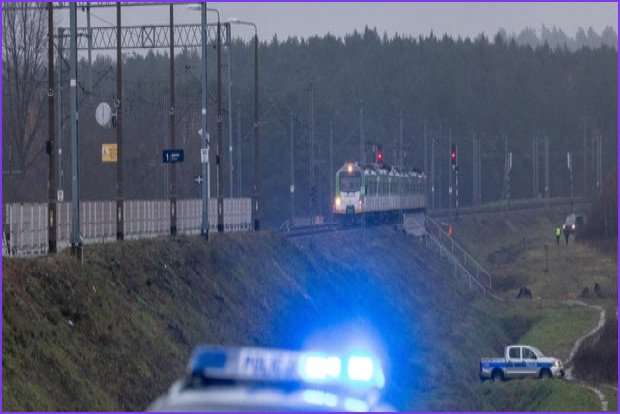
He pointed to a specific incident in Poland last year, where two Ukrainian nationals allegedly working with Russian intelligence were accused of blowing up a railway line, an event Poland’s top diplomat previously labeled as an act of state terror.
Despite the reach of these attacks, Barrot claimed that France has been able to detect the hostile activity due to significantly strengthened national defenses. Meanwhile, the European Union formally denounced what it termed Russia's malicious cyber ecosystem, condemning the use of state and non-state actors, including intelligence services, cybercriminal groups, and private companies.
The EU accused the FSB of managing a diverse network of threat groups tasked with infiltrating government networks and damaging critical infrastructure.
According to the EU, nations including France, Germany, Poland, Cyprus, the Netherlands, Austria, Slovakia, Romania, and Finland have been targeted, resulting in widespread financial losses and operational disruptions. The bloc's sanctions target a mix of Russian military intelligence officers from the GRU, hacktivists, and private firms.
Simultaneously, the U.K. government announced it is sanctioning 24 individuals and entities for their involvement in hybrid and cyber operations.
The heightened tensions arrive as Paris prepares to host a summit for the Coalition of the Willing, an alliance of Ukraine's supporters. Kremlin spokesman Dmitry Peskov dismissed the group as a coalition of warmongers, warning that Russia is closely monitoring the actions of these nations.
The recent accusations follow a pattern of warnings from various European states, including Sweden, Norway, Denmark, and Latvia, regarding Russian threats to critical infrastructure.
In late 2025, an alleged FSB plot targeting the Polish energy grid was reportedly thwarted, which the U.K. government noted could have left 500,000 civilians without electricity. These cyber activities, alongside mysterious drone sightings near military bases and incursions into NATO airspace, have led many allies to describe Europe as existing in a gray zone of escalating hybrid warfare.