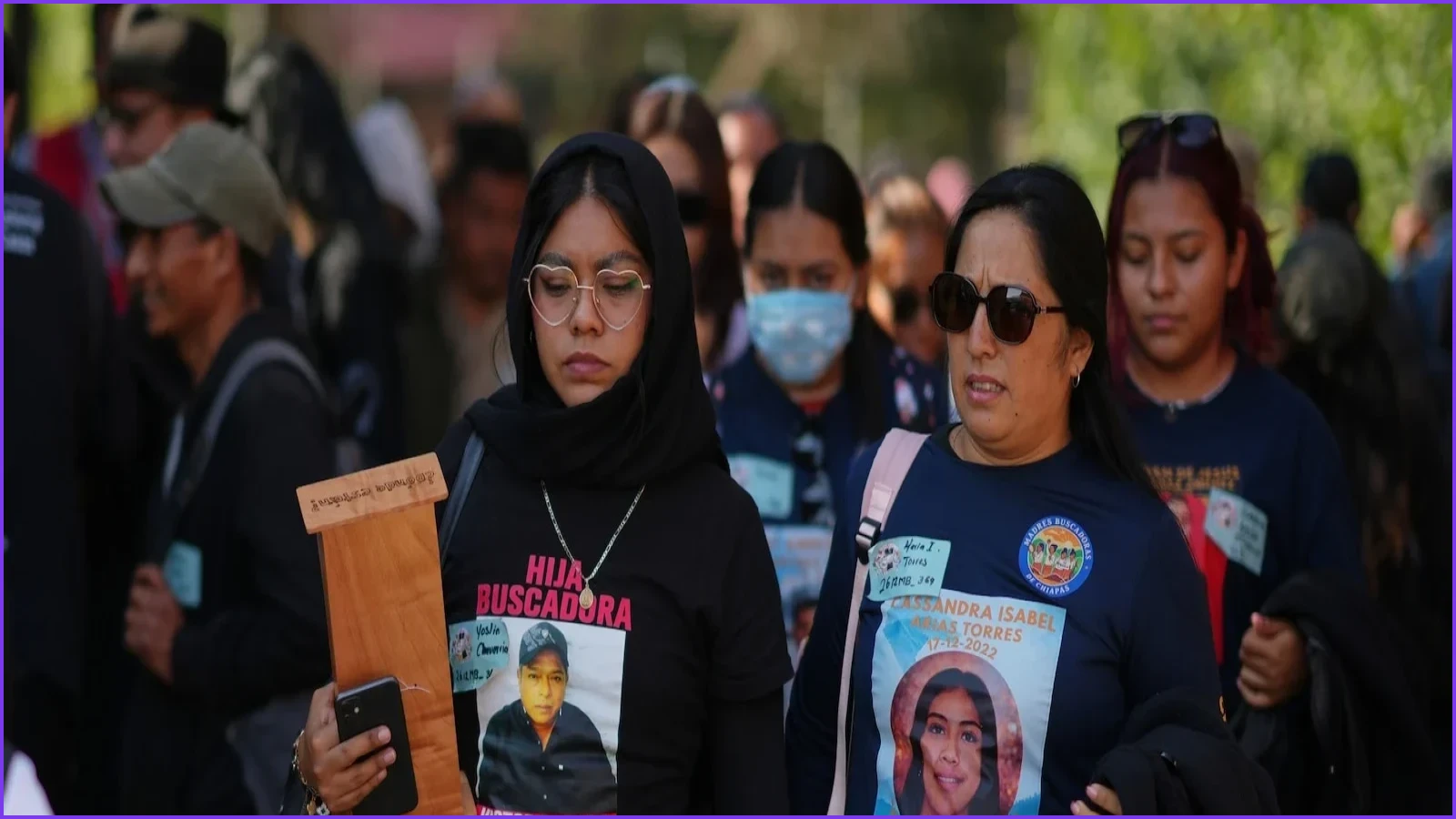
Starting this Saturday, more than 1,500 members of Mexico's Zapatista movement will launch a "Tour for Life," traveling from the southern state of Chiapas to Mexico City. The extensive caravan aims to unite forces with families searching for their missing loved ones, addressing the country's severe crisis of more than 130,000 disappeared individuals nationwide.
The Zapatista Army of National Liberation, widely recognized as the EZLN, initially organized an armed uprising against the Mexican state in 1994. Although the guerrilla group never formally surrendered its weapons, it transitioned over subsequent decades toward social activism and territorial self-governance, continuously advocating for Indigenous rights and broader human rights.
In the city of San Cristóbal de las Casas, relatives of missing individuals gathered to meet with Zapatista representatives ahead of the trip. Yoslín Chavarría, who has been searching for her father since 2023 and carried a handcrafted Zapatista doll, described the gathering as deeply emotional. She expressed that having their souls heard brought warmth in contrast to government efforts that frequently attempt to silence their voices, framing the tour as a vital opportunity for missing people's stories to echo across different regions of Mexico.
Over the past 32 years, the Zapatistas have consistently promoted the rights of Indigenous communities and human rights while maintaining an active public presence through strategic national and international campaigns. In 2001, the movement organized a massive nationwide caravan across Mexico. Five years later, in 2006, members launched another tour advocating for alternative political approaches. In 2018, the group nominated an independent candidate for the Mexican presidential election. More recently, Zapatista delegates undertook a symbolic voyage to "invade" Europe, deliberately reversing the historical route navigated by Spanish conquistadors 500 years prior.
Although the EZLN has previously voiced support for families affected by disappearances, this newest initiative marks a significantly broader mobilization. Hundreds of citizens across 27 of Mexico's 32 states have answered the movement's latest call to action.
The Zapatista delegation plans to remain based in Mexico City through January. During their stay, members will participate in a scheduled demonstration on Dec. 19 to mark the United Nations' newly established International Day of Recognition for Women Searching for Missing Persons.
Among those accompanying the movement along its full route is Fernando Vargas, whose son, an engineering student, vanished two years ago in the mountainous region south of Mexico's capital. Vargas traveled to Chiapas specifically to join the Zapatistas from the start, stating that the intention is to merge the struggles of Indigenous peoples with those of families seeking missing relatives.
Reflecting on the legacy of the 1994 Zapatista uprising, which brought widespread visibility to the systemic racism, marginalization, and neglect affecting millions in Mexico, Vargas drew parallels to current civic demands. Following the 1994 revolt, peace negotiations produced government agreements in 1996, which subsequently laid the groundwork for a major constitutional reform five years later in 2001. That reform formally recognized essential Indigenous rights, including cultural respect and self-determined organizational structures, though full implementation remains unrealized in several parts of the country.
Vargas emphasized that families of the missing hope to spark a comparable reform process to confront what he characterized as absolute impunity and zero efficiency on the part of government authorities.