A coalition of 14 nations, led by the United States and the United Kingdom, issued a joint statement on Sunday reaffirming that China’s expansive maritime claims in the South China Sea are illegal. This declaration commemorates the July 12, 2016, arbitration ruling by a tribunal in The Hague, which was established under the United Nations Convention on the Law of the Sea (UNCLOS). The signatory nations described the landmark decision as a significant milestone that remains final, legally binding, and definitive.
The arbitration was originally initiated by the Philippines in 2013 following a tense standoff in the disputed waters. China refused to participate in the proceedings and has consistently rejected the 2016 ruling, maintaining that its claims to virtually the entire sea passage—a vital global trade route—are valid. The region remains a major flashpoint, frequently characterized by territorial disputes involving China, the Philippines, Vietnam, Malaysia, Brunei, and Taiwan.
In their statement, the 14 nations explicitly declared that there is no legal basis for China’s expansive maritime claims, including those rooted in so-called historic rights. The tribunal’s 2016 decision had largely favored the Philippines, ruling that China lacked the legal standing to claim historic rights to resources outside of its internationally recognized territorial areas. The UNCLOS treaty, which governs the world’s oceans, has been ratified by over 170 parties, including both China and the Philippines.
Beyond the U.S. and the U.K., the group of nations supporting the statement includes the Philippines, Japan, Australia, New Zealand, Canada, Germany, Italy, Estonia, Latvia, Lithuania, Romania, and Slovenia. These countries reiterated their strong opposition to destabilizing or unilateral actions, such as the use of force or coercion, which threaten regional peace and security. They specifically condemned the use of coast guard, military, and maritime militia forces to harass or obstruct lawful operations, which they noted endangers the safety of personnel and fishermen.
While China did not provide an immediate response to the anniversary statement, the Chinese embassy in Manila recently reiterated its position that the 2016 ruling is illegal, null, and void. Beijing maintains that the award does not alter the historical or factual basis for its sovereignty over the islands and adjacent waters in the South China Sea.
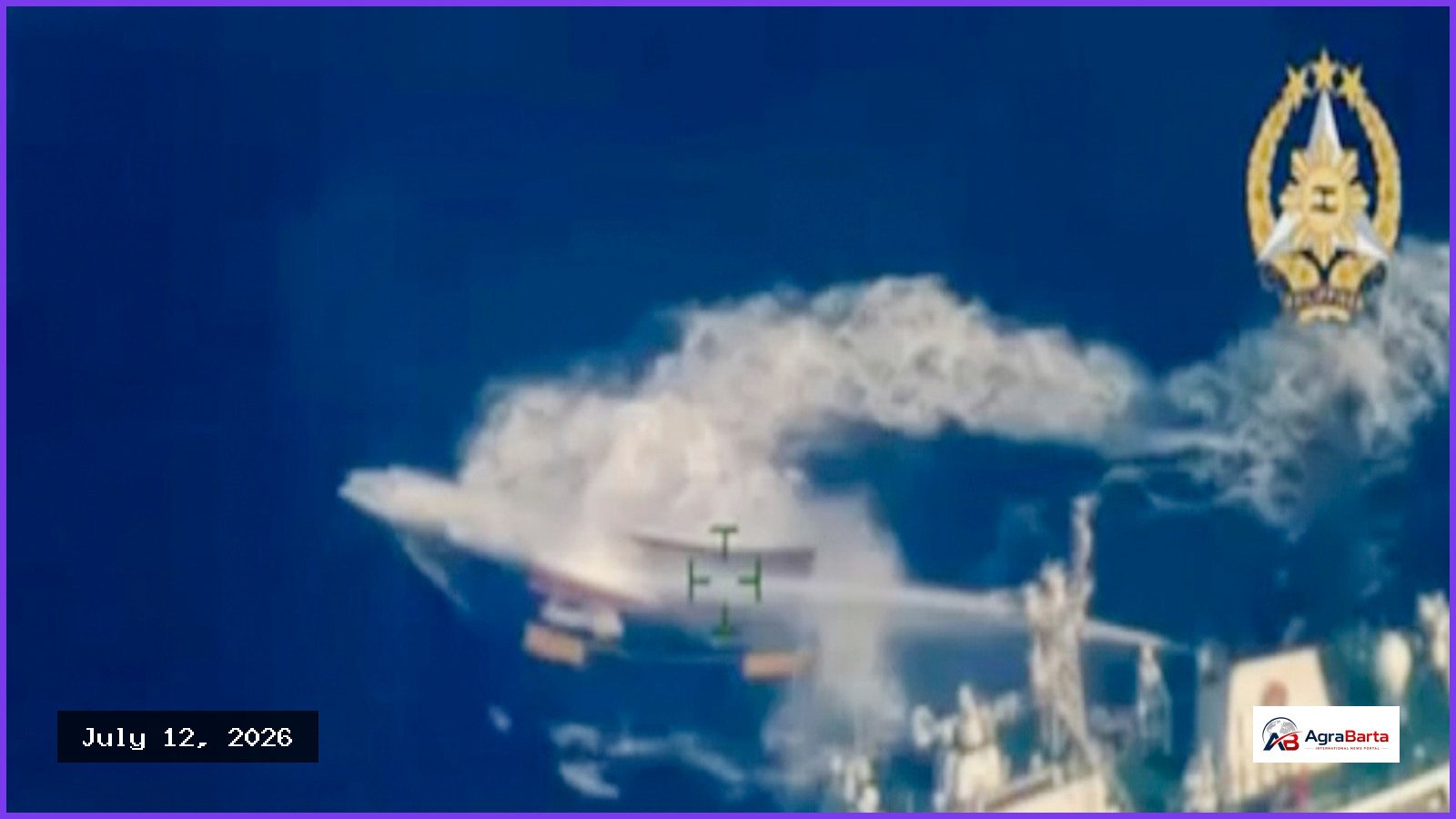
Tensions have escalated in recent years, marked by frequent confrontations between Chinese forces and those of rival claimant nations. These incidents have included the use of water cannons, military-grade lasers, and dangerous blocking maneuvers, leading to collisions at sea and high-risk aerial encounters. The United States continues to urge China to comply with the ruling, with both the Biden and Trump administrations previously warning that Washington is obligated to defend the Philippines—its oldest treaty ally in Asia—if Filipino forces, vessels, or aircraft face an armed attack in the disputed region.
The convention, largely regarded as the treaty governing the world’s oceans and seas, took effect in 1994 and has been ratified by more than 170 countries and parties, including China and the Philippines.
“Freedom of navigation and overflight as well as other internationally lawful uses of the sea as reflected in UNCLOS” must be upheld, the countries said, adding that the territorial disputes should be resolved peacefully based on the 1982 U.N. convention.