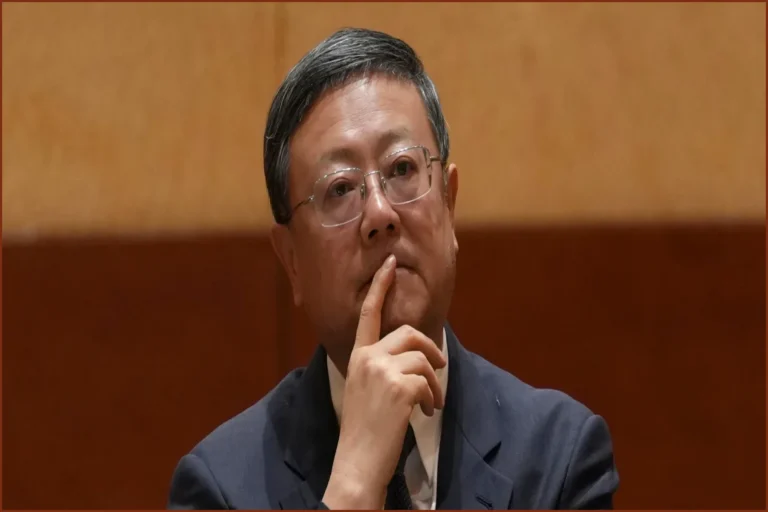
Mongolia is navigating a period of profound political instability following the abrupt resignation of President Khurelsukh Ukhnaa on November 17, 2026. The departure, which occurred after a political rival based overseas leveled explosive corruption allegations against him, has significantly altered the landscape for the nation's 2027 presidential election. Mongolia’s parliament, dominated by the president’s own Mongolian People’s Party (MPP), formally approved his resignation two days later, necessitating that the presidential race be moved forward from its original June date to March 2027.
This election was originally intended to be the first held under the 2019 constitutional amendment, which mandates that the president serve only a single six-year term. The amendment was designed to bolster checks and balances between the State Great Khural, the Cabinet, and the presidency. Khurelsukh, who was the first leader to operate under these constraints, had utilized his tenure to expand Ulaanbaatar’s global engagement. Despite its challenging geopolitical location between Russia and China, Mongolia successfully deepened ties with "third neighbor" partners, including South Korea and Japan, as well as several European and Turkic nations.
While the upcoming election is expected to be dominated by domestic concerns, the transition in leadership is unlikely to trigger a major shift in Mongolia’s overarching foreign policy. The strategic balancing act between its two powerful neighbors remains a fundamental pillar of national policy. However, the domestic political environment remains volatile. The MPP has struggled with public confidence following the ousting of Prime Minister Oyun-Erdene Luvsannamsrai in May 2025 and the resignation of Zandanshatar Gombojav in March 2026.
The opposition Democratic Party (DP) is positioning itself to challenge the MPP, framing the ruling party’s internal conflicts as a national security issue. Potential DP contenders currently include former Prime Minister Altankhuyag Norov, former DP Chairman Gantomor Luvsannyam, and current MP Ganbat Dashdondog. Meanwhile, the MPP has signaled that it intends to move past the recent scandals by selecting former Prime Minister Zandanshatar Gombojav as its primary candidate for the March contest, viewing him as a figure free from the corruption allegations that have plagued the party.
The broader context for the election remains shaped by a steady decline in Mongolia’s Corruption Perception Index scores since 2015, a trend that has fueled repeated public protests, most notably the "coal theft" demonstrations of 2022. As the country prepares for the vote, the central question for voters remains whether political parties can field candidates who are untainted by corruption and capable of ensuring institutional stability. Implementation of Mongolia’s foreign policy is only one element of the presidency, however. In addition to serving as chair of Mongolia’s National Security Council, and as commander-in-chief, the president has veto power over legislation. Regardless of the outcome, the next president will face the immediate challenge of addressing domestic governance issues while maintaining Mongolia's global footprint and economic diversification. You have reached the limit of 3 free articles this month.
In Northeast Asia, Mongolia sealed a strategic partnership with South Korea in 2021, upgraded bilateral relations with Japan to Special Strategic Partnership for Peace and Prosperity in 2022. These bilateral links brought deeper political, economic, and cultural links that will strengthen Ulaanbaatar’s landlocked posit
Perhaps to most important question ahead of the 2027 presidential election is whether political parties will field candidates free of corruption scandals and allegations. Mongolia’s score in the Corruption Perception Index has been on a downward slide since 2015, with the MPP in power for the majority of that time (sin