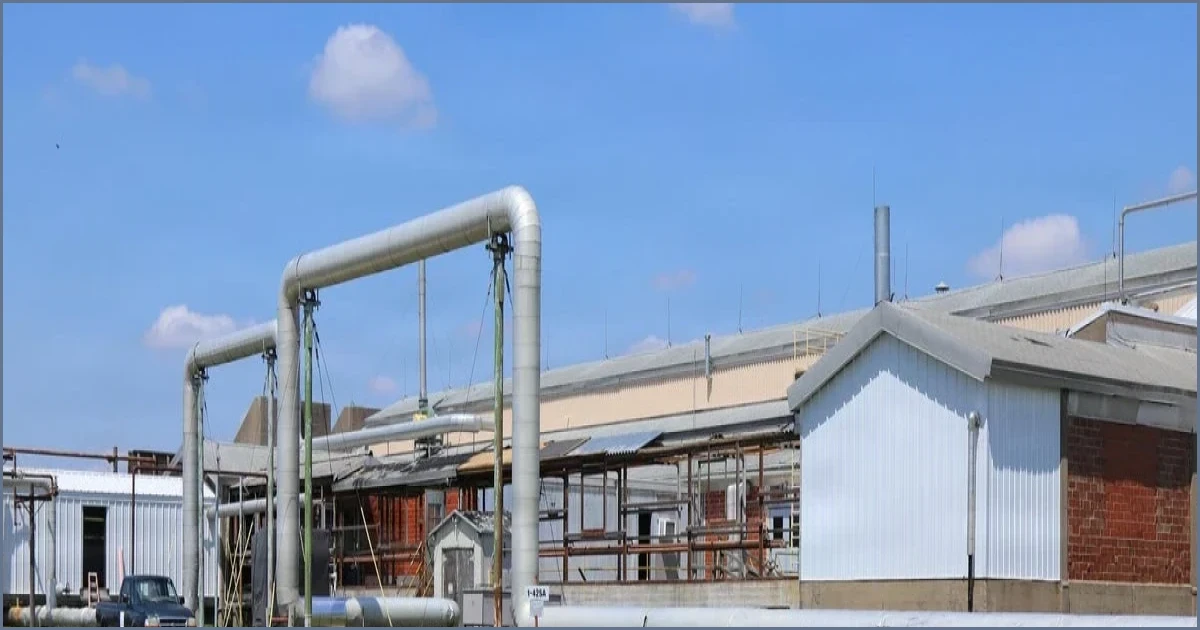
The U.S. Army is set to detonate 5 tons of unstable explosives containing lead azide at a munitions plant in Iowa on Wednesday morning, officials confirmed. The controlled detonation, scheduled for 9 a.m. Central time, follows a series of legal and political discussions.
Acting Secretary of the Army Adam Telle announced the plan Tuesday at a press conference, stating that the weather forecast for Wednesday is “ideal to protect public health and safety across the region.” He emphasized that the unstable explosives become more dangerous as temperatures drop. Army Maj. Gen. Eric Shirley, who commands the operation, added, “Inaction is no longer an option. It would be irresponsible for us to not take the determined, consensus-based course of action moving forward.”
The government has consistently argued that the detonation is essential due to the risk of the lead azide spontaneously exploding. Telle reiterated this stance, saying, “There is consensus across the experts, across the country, that a controlled mitigated detonation of the lead azide here at Iowa Army Ammunition Plant is far preferable to an uncontrolled, spontaneous detonation of that substance.”
A federal appeals court on Monday declined to block the Army from proceeding with the detonation. This ruling came after environmental groups challenged the emergency permit granted by the Environmental Protection Agency (EPA), arguing that the EPA had not provided sufficient notice to residents.
The 8th Circuit Court of Appeals had temporarily blocked the detonation last week to allow time for a more comprehensive ruling. However, on Monday, the court determined that the environmental groups had failed to demonstrate a likelihood of success in their challenge. The court acknowledged the risks, stating, “We are mindful of the very real risks presented by the Army’s planned detonation of the stores of degraded lead azide. However, we must acknowledge the realities of the situation: the degraded explosives present a risk of an uncontrolled and unplanned explosion, which would occur without the benefit of the safety measures that the Permit puts in place.”
Following the court's decision, the Army noted Monday night that current Iowa Gov. Kim Reynolds “has given her support to go forward.” Telle also posted on X, confirming a broad consensus among federal agencies: “It is the unanimous judgement of our people — the Army, Navy, EPA, ATF, FBI, DARPA, DoE, CDC, HHS, FEMA and every other agency involved — that the Army should proceed with an extensively mitigated, carefully controlled detonation, which will occur this Wednesday morning, as previously scheduled, based on forecast wind conditions.”
Earlier on Monday, President Trump had stated that the government would not proceed with the detonation until the appeals court ruled and unless Democratic Iowa Gov.-elect Rob Sand signed off. Trump added that government experts considered detonating the material the best option. He warned on social media, “If [Sand] or the Courts do not agree, we will have no choice but to not proceed with the controlled removal of these hazardous materials, and be forced to hold the incoming Governor responsible for any and all death or destruction caused by this very unfortunate, and longterm, situation.”
Rob Sand, who is not yet in office and whose input was not legally required, responded on social media that the Trump administration “should make this decision based on the information they have from the people they brought in to do the job months ago and have been on the ground in Middletown for weeks.” Sand added, “Everyday Iowans are entitled to know how Middletown came to this situation, and learn why the administration believes this is the best path forward.”
The government has maintained that even if the appeals court had stayed its EPA permit, the Army possesses the legal authority to proceed without a permit to “respond to the immediate threat of an uncontrolled explosion.”
The lead azide has been stored for decades in earthen-covered containers at the Iowa Army Ammunition Plant in Middletown, a small town located near the Mississippi River in southeastern Iowa. The EPA reported earlier this year that the material had deteriorated over time, increasing the risk of explosion if moved or disturbed.
The detonation is expected to release a plume of toxic lead particles into the surrounding area. An earlier detonation plan, slated for Friday, had prompted the Army to ask some Middletown residents to evacuate their homes temporarily for six hours, warning of loud noises, vibrations, and a dust plume.
Environmental groups, including the Sierra Club and the Iowa Environmental Council, had asked the federal appeals court to review the EPA’s permit last week. They argued that the EPA failed to fully assess the risks or consider alternatives, and that the Army was operating on an “extraordinarily rushed timeline” that prevented residents from receiving adequate notice. Politicians from both parties in Iowa and Illinois also criticized the plan, citing concerns about widespread lead contamination in both states.
However, the panel of three appellate judges sided with the federal government, finding that the EPA “adequately incorporated safeguards” to mitigate risks, including barriers and environmental monitoring plans, and that the Army had considered a range of alternatives.