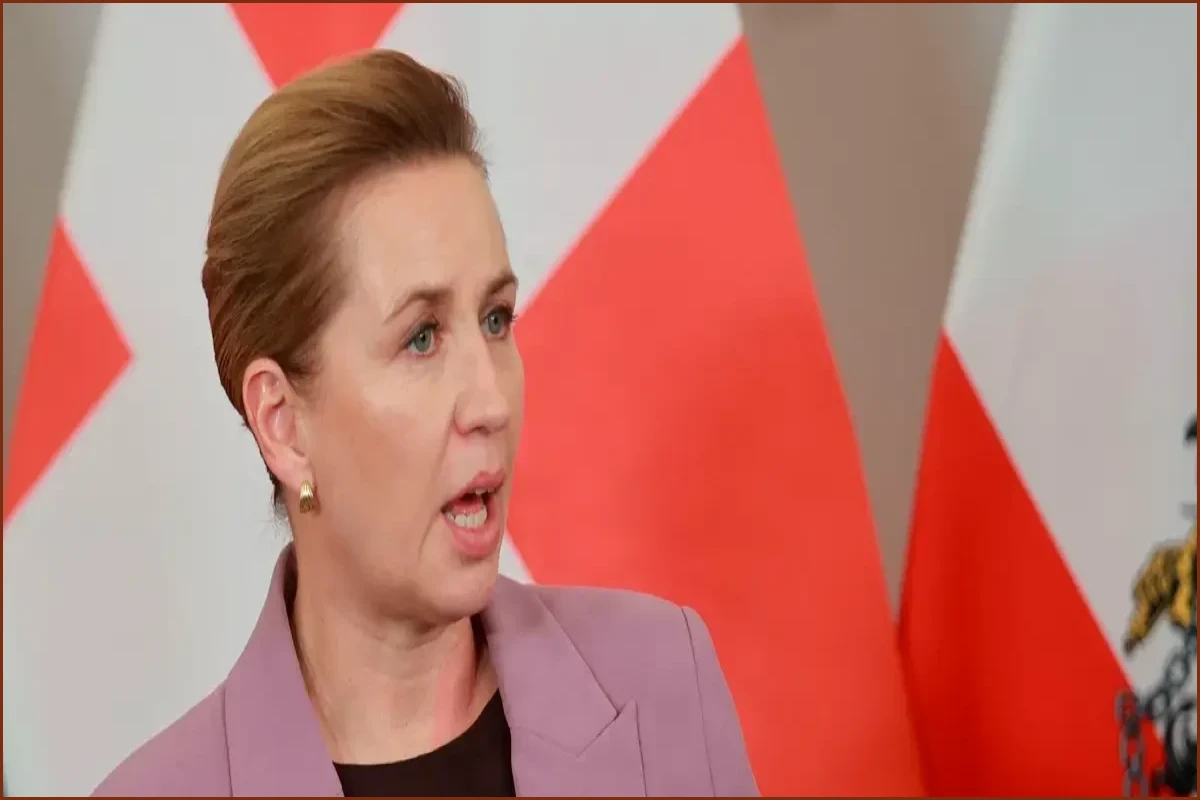
Danish Prime Minister Mette Frederiksen has issued a defense of her recent remarks following a wave of criticism sparked by her appearance on the Borgerlig Tabloid podcast, produced by the Danish outlet BT. During the interview, the Prime Minister made comments that were interpreted by many as an allusion to the far-right conspiracy theory known as "population replacement."
In the aftermath of the broadcast, Frederiksen stated that she is not a supporter of a "great replacement of the population" and emphasized her desire to maintain a "strong majority culture" within Denmark. Despite this clarification, her rhetoric drew sharp rebukes from left-wing parties, including the Red-Green Alliance and The Alternative, both of which support her government. Critics across Danish and international media outlets expressed particular alarm at her use of language that is closely associated with far-right extremist ideologies.
Pelle Dragsted, leader of the Red-Green Alliance, spoke with the Danish newspaper Berlingske to articulate his concerns. While suggesting he did not believe the Prime Minister intended to endorse a concept linked to the extreme right, he expressed a strong desire that she avoid using such terminology in the future. Speaking to the public broadcaster DR, Dragsted described the term as "very dangerous" and noted its connection to a racist conspiracy theory alleging that a political elite intends to replace Europe's existing population with a new one.
He further argued that such rhetoric is linked to violent movements monitored by national security services, adding that his opposition to these comments was distinct from his known disagreements with the Prime Minister over immigration policy.
The "Great Replacement Theory" is a widely debunked conspiracy theory promoted by the far-right, which posits that Western populations are being intentionally replaced through immigration. During the podcast, Frederiksen did not explicitly reject the theory, stating instead that she wanted Denmark to remain "Danish" and that she did not support a "multicultural society where cultures are treated as equal." She characterized Danish society as an "original tribe, which is ethnically Danish" that evolves as new people arrive, while reiterating that the nation must maintain a "strong majority culture" in the future.
The controversy drew a pointed response from Tarjei Jensen Bech, a survivor of the 2011 Utøya attack in Norway. The attack was carried out by far-right terrorist Anders Breivik, who targeted a youth camp for Social Democrats based on the belief that they were facilitating the replacement of the Norwegian population. In an opinion piece for the Danish newspaper Politiken, Jensen Bech expressed shock that a fellow Social Democrat leader would discuss the "great replacement." He urged the Prime Minister not to use the same language that he associated with the deaths of his friends during the attacks in Oslo and on the island of Utøya.
Conversely, the comments were praised by Rasmus Paludan, a prominent Danish far-right figure who has previously been jailed in Sweden for hate crimes. Elise Sydendal, migration spokesperson for The Alternative, joined the chorus of criticism, labeling the rhetoric "extremely concerning" and noting its similarity to that used by Paludan. The Denmark Centre for Terror Analysis (CTA) has previously described the Great Replacement Theory as a leading narrative among right-wing extremists that can be used to mobilize radical elements.
In a subsequent Facebook post, Frederiksen sought to distance herself from the criticism, stating she did not wish to be associated with conspiracy theorists or fascist movements. She defended her stance on maintaining a majority culture, noting that while Denmark has historically been a homogenous country, it has changed. She expressed gratitude toward those who have integrated and become "friends, family, colleagues and neighbours," while also noting that some individuals have arrived who do not share the country's best interests, citing "criminality, radicalisation and a culture of dominance." She concluded that Denmark is a society defined by values that require a majority culture for others to adapt to and integrate into.
Meanwhile, reports from Politico indicate that the Social Democrats' group in the European Parliament is planning a formal discussion regarding Frederiksen's migration policies, including her support for a "return hub" for deported migrants in Rwanda.
"Don't use the words which cost my friends their lives," he wrote, referring to the 69 people killed in the attack on the island and the eight killed in Breivik's bomb attack on the same day in the Norwegian capital of Oslo.
Denmark's Centre for Terror Analysis (CTA) described the Great Replacement Theory in 2021 as "one of the leading narratives among right-wing extremists globally, widespread among both right-wing radicalists and right-wing extremists in Denmark."