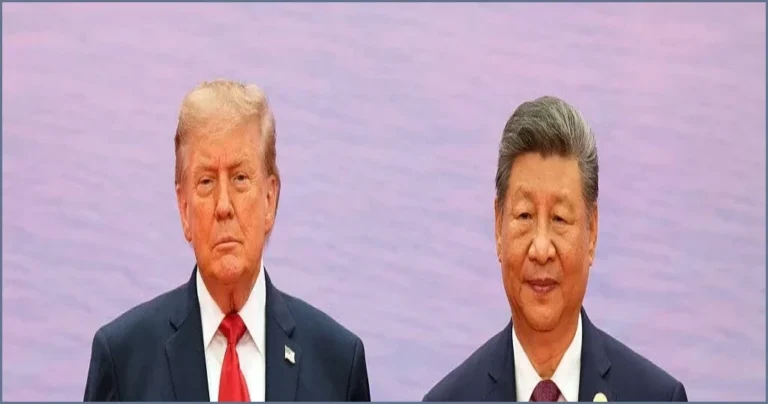
Shenzhen has undergone a visible transformation ahead of the 2026 APEC Summit, with city streets decorated in bougainvillea and elaborate floral displays to welcome international visitors. The Economic Leaders’ Meeting, scheduled for November 18 and 19, brings a high-profile delegation to the city, including U.S. President Donald Trump and Russian President Vladimir Putin. These leaders are set to join Chinese President Xi Jinping for a much-anticipated trilateral meeting on November 19, providing Beijing with a global stage to present its long-term vision for the “Greater Bay Area” (GBA).
This ambitious project aims to integrate the Pearl River Delta’s manufacturing belt—comprising nine mainland cities—with Hong Kong and Macao. The initiative represents the next phase of China’s economic growth, moving beyond its historical reputation as “the world’s factory.” Following the 1980 establishment of Shenzhen as one of the first Special Economic Zones, the region evolved from a hub of garment and toy manufacturing into a sophisticated center for electronics and consumer technology. This growth was historically defined by a “front shop, back factory” model, where Hong Kong provided financing and market access while Guangdong handled production.
The GBA development plan, officially unveiled in 2019, seeks to formalize this connection into an internationally competitive “world-class city cluster.” Each location has a designated role: Hong Kong remains the financial and international trade center, Macao is positioned as a tourism hub, Guangzhou brings strengths in commerce and scientific research, and Shenzhen is expected to lead in technological innovation and venture capital. Smaller cities like Dongguan and Foshan remain important manufacturing centers, with dense networks of suppliers and factories supporting the region’s industrial base.
To realize this integration, Beijing has invested heavily in “hard connectivity,” such as the Guangzhou–Shenzhen–Hong Kong Express Rail Link, which reduced travel time between Hong Kong’s West Kowloon station and Shenzhen’s Futian station to just 14 minutes. The long-term goal is to make it possible to travel between each of the region’s major cities within an hour.
Despite these physical gains, researchers note that the GBA is still lagging behind on “soft connectivity,” or legal integration. The region lacks any single government or legislature able to enact common laws across all 11 jurisdictions, as Hong Kong and Macao retain their own legal systems as special administrative regions while mainland cities operate under Chinese law. For example, transferring personal data between a company in Shenzhen and one in Hong Kong can involve navigating two separate legal codes on privacy. Furthermore, local governments in the region still actively compete with one another for capital and talent.
Beijing’s plans for greater integration have also aroused political concerns in Hong Kong, where some residents worry that closer ties with the mainland could gradually erode the city’s autonomy. During the unveiling of the plan in 2019, former Hong Kong legislator Alvin Yeung warned that being “planned” in this way only made people worry that Hong Kong’s distinctive status might be weakened. A 2025 survey by the Chinese University of Hong Kong found that only 39.4 percent of respondents viewed the GBA as an opportunity for Hong Kong, while 21.5 percent disagreed and 32.2 percent remained undecided. Those concerns persist even as Hong Kong’s newly released First Five-Year Plan commits the city to further integrating with the mainland.
Ultimately, Beijing wants this regional network to help China move beyond low-cost manufacturing and become a leader in the technologies it currently imports or relies on foreign companies to develop. China’s 15th Five-Year Plan places renewed emphasis on technological self-sufficiency, with the aim of strengthening domestic capabilities in areas like semiconductors, artificial intelligence, robotics, and biotechnology. With the GBA, Beijing hopes to create an innovation powerhouse that can rival other major technology hubs like the San Francisco Bay Area.
The choice of Shenzhen as the host city for this year’s APEC is in itself an important part of Beijing’s effort to tell the story of “the Chinese miracle.” When Xi Jinping announced Shenzhen as the host at the APEC handover ceremony in November 2025, he described how the city had grown “from a backward fishing village into a modern metropolis,” calling it “a miracle created by the Chinese people in world-development history.”