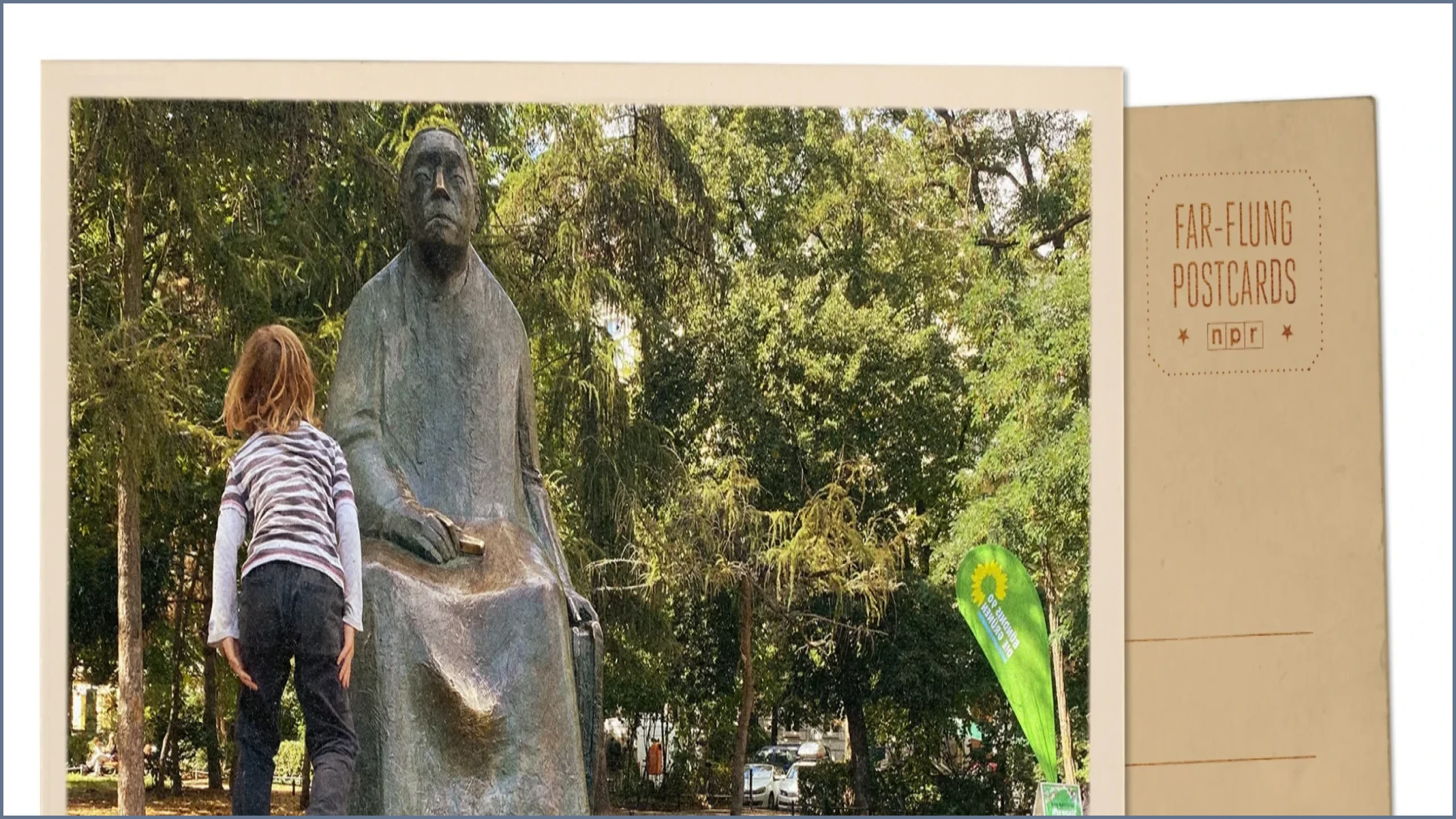
In a bustling Berlin square named Kollwitzplatz, a bronze statue of the German expressionist artist Käthe Kollwitz sits quietly, overlooking a playground. The artist once lived just off this square, where her own children likely played at the turn of the 20th century. Today, the space is filled with the sounds of children on swings and slides, often playing games that bring them into direct contact with the sculpture.
During a recent visit, a young boy playing hide-and-seek jumped onto the statue's plinth, using the figure of the artist as a shield. His friend quickly found him, and the pair chased each other around the bronze form, inadvertently embracing the statue in a manner reminiscent of the mother figures depicted in Kollwitz's own lithograph renderings. These works, produced in the wake of World War I, famously fixated on the suffering and futility of conflict, portraying wide-eyed, undernourished children held by mothers whose anguish is etched into their faces.
Kollwitz’s own life was deeply marked by the loss of her son, Peter, who died at the front in Belgium at the age of 18. Her sculpture, The Grieving Parents, stands in Belgium as a testament to that loss. Back in Berlin, the Kollwitz statue remains calm, sitting with charcoal in hand as if poised to capture the happy hubbub of children growing up in a city that is safe. However, with wars not so far away and Germany bringing back military service for a new generation, the presence of the statue serves as a poignant reminder of the enduring need to protect the next generation, much like the artist did in her own work.
For more Far-Flung Postcards, click here.