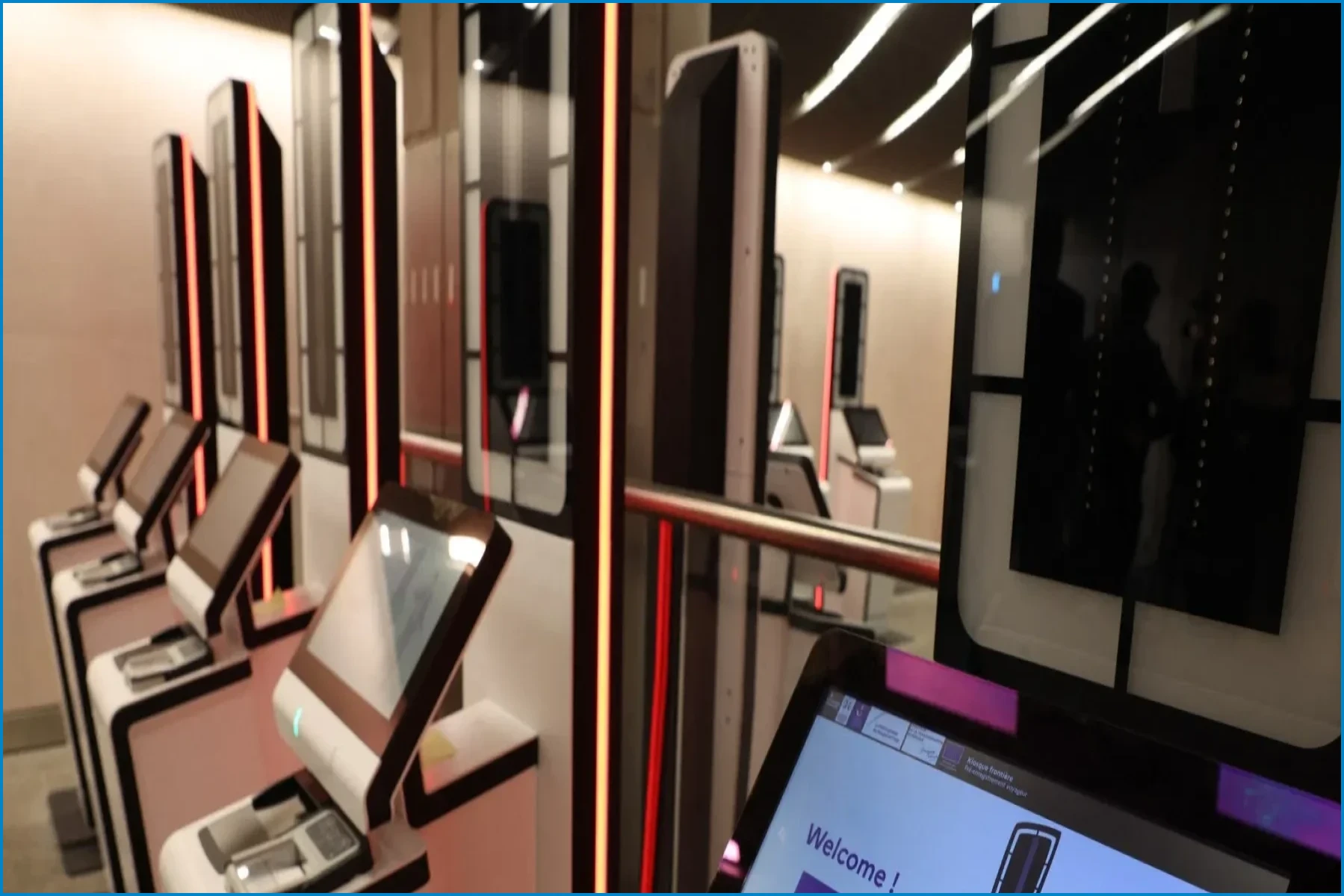
Switzerland is currently evaluating the potential for a fast-track border scheme aimed at selected non-EU travellers, as officials search for solutions to mitigate the extended waiting times at airports that have emerged since the introduction of the European Union’s Entry/Exit System (EES). Justice Minister Beat Jans met with representatives from airports, airlines, and border control authorities this month to discuss these potential improvements to entry procedures.
The proposed arrangement would allow selected third-country nationals to voluntarily complete a one-time registration and screening process before their arrival. According to the Federal Council, this system could enable border officials to bypass some routine questioning, instead relying on automated e-gates to conduct checks. While these discussions have taken place, the government has not yet confirmed whether the program will be implemented, nor has it released details regarding eligibility or a start date. The November meeting was intended to explore potential improvements rather than to announce a final policy decision.
This proposal draws upon a mechanism provided under EU border rules. According to European Commission guidance on National Facilitation programs, frequent non-EU travellers may qualify for such schemes if they hold valid documents, meet entry requirements, and possess necessary visas or residence permits. Applicants must also demonstrate regular travel patterns, lawful use of previous visas, sufficient financial means, and a clear intention to leave the Schengen Area before their authorized stay expires. While approved travellers might be exempt from standard questioning regarding their destination, visit purpose, or funds, they would not be exempt from border controls entirely. Switzerland has not yet published its own specific eligibility criteria for such a program.
The EES, which Switzerland began implementing in October 2025, digitally records the entry and exit of non-EU nationals for short stays in the Schengen Area by collecting biometric data, including fingerprints and facial images. According to the Swiss government, more than 225 million entries and exits by 90 million third-country travellers have been recorded across the Schengen Area since the system's launch, with over 78,000 people refused entry. The new checks have caused significant delays at Swiss airports, particularly during periods when multiple non-Schengen flights arrive simultaneously. In June, reports indicated that wait times at Zurich Airport could reach one to two hours, while Geneva Airport experienced waits of up to two and a half hours during the peak January and February ski-holiday season, when daily passenger numbers exceeded 70,000.
The aviation industry has been pressuring officials to ease these checks, leading to an open letter to European Commission President Ursula von der Leyen that called for greater flexibility in EES operations and the establishment of a permanent mechanism to suspend procedures during exceptional circumstances. Separately, in July, Switzerland joined Belgium, France, Germany, Greece, Italy, Malta, the Netherlands, and Portugal in requesting that the European Commission extend an emergency mechanism that would allow border authorities to temporarily suspend biometric data collection during periods of extreme congestion. These two initiatives address the same issue from different perspectives, with one seeking emergency flexibility during periods of high pressure and the other aiming to simplify future border checks through pre-screening.