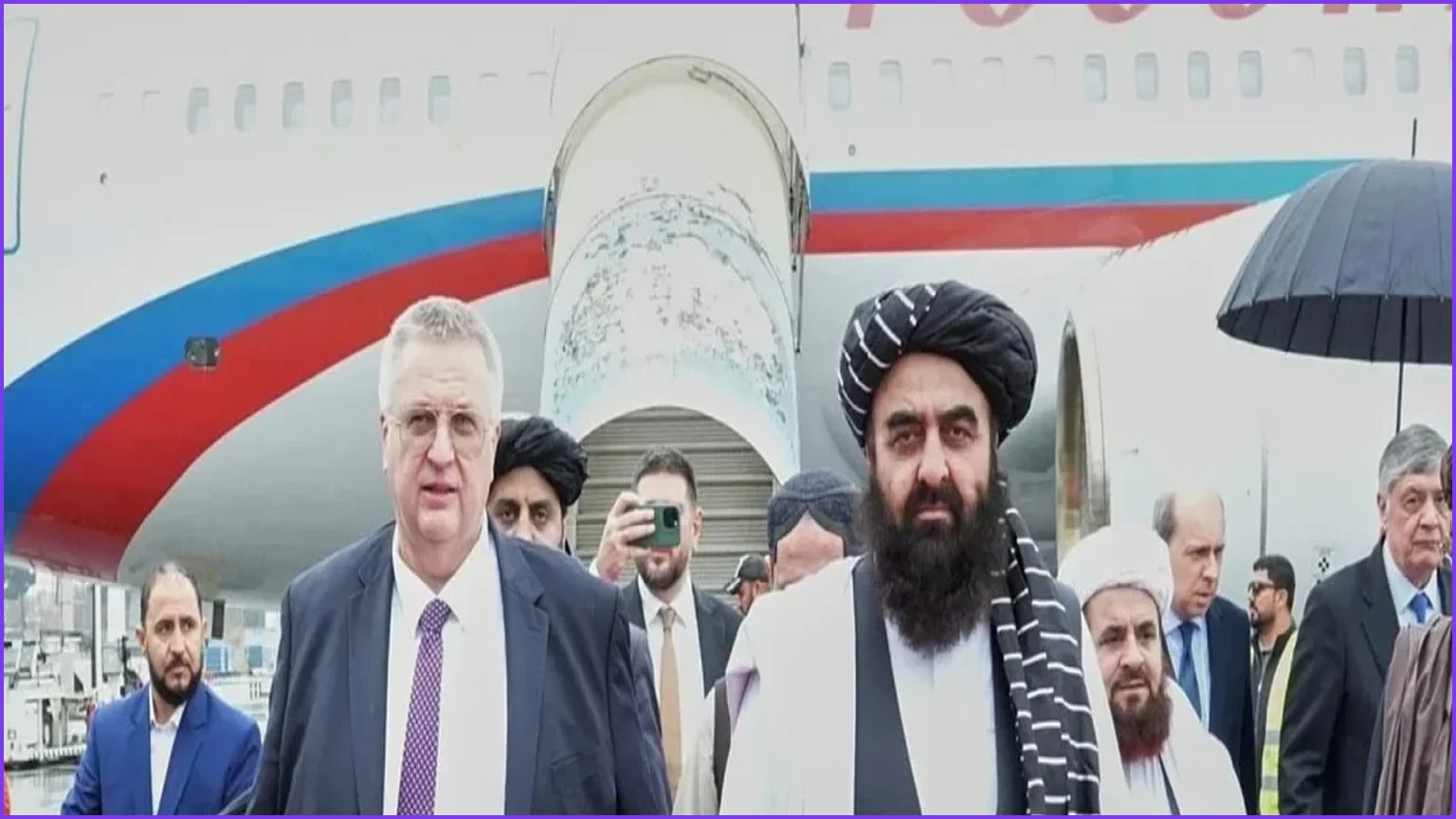
Russian Deputy Prime Minister Alexei Overchuk arrived in Kabul on Thursday alongside a delegation of 70 business representatives to conduct bilateral economic discussions with Taliban government leadership, according to Afghan officials.
Overchuk, who was received with a guard of honour upon arrival, held meetings with Taliban Prime Minister Mohammad Hassan Akhund, Deputy Prime Minister for Economic Affairs Abdul Ghani Baradar, and Foreign Minister Amir Khan Muttaqi.
In an official statement published on X, the Afghan government noted that Baradar highlighted the country's commercial potential to the visiting Russian officials, citing its strategic geographic location, abundant natural resources, and a workforce of 24 million people. Baradar called on Russian companies to invest in Afghan mining, agriculture, factory production, and the construction of roads and railways, while also proposing the creation of a special economic zone.
Baradar further requested that Russia assist in facilitating the entry of Afghan goods into Russian markets, support efforts to expand Afghan agricultural exports, and work jointly to lower transit and transportation expenses.
According to reports from a Russian news agency, Overchuk explained that the delegation comprised executives from firms already doing business in Afghanistan, alongside numerous others seeking to establish operations there. He noted that the participating companies operate across the transport, logistics, pharmaceuticals, and agricultural sectors. Overchuk added that Afghan authorities expressed interest in acquiring Russian chemical fertilizers and establishing domestic fertilizer manufacturing facilities on Afghan soil.
Bilateral commerce has grown rapidly, with Overchuk estimating that trade between Russia and Afghanistan in the first eight months of 2026 had more than doubled, exceeding $349 million.
Russia officially recognized the Taliban administration in July 2025, becoming the only country to formally do so since the group returned to power in August 2021 following the withdrawal of United States forces. While no other nation has extended formal recognition to the Taliban regime, the authorities in Kabul have conducted high-level discussions with several foreign governments and maintained specific economic and diplomatic relations internationally.