Russia and Ukraine have agreed to the largest prisoner exchange of their nearly five-year war following two days of U.S.-brokered negotiations in Abu Dhabi, though delegations made minimal headway toward a comprehensive peace agreement.
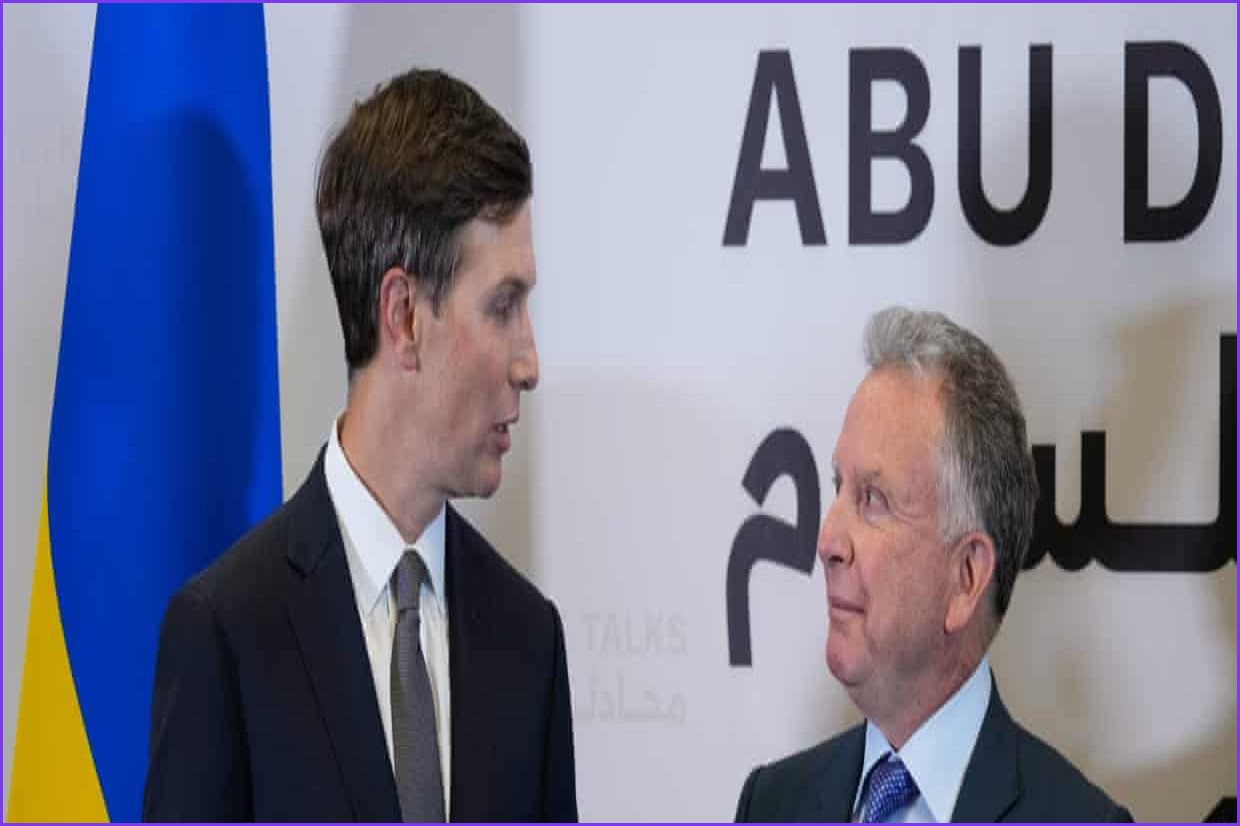
The trilateral talks—the first mediated by Washington since February—were led by U.S. envoys Jared Kushner and Steve Witkoff. Kushner stated that the proposed exchange is expected to involve more than 1,000 prisoners from each side, describing the agreement as a step to "reunite families, build trust and create momentum towards peace."
Following the conclusion of the Abu Dhabi discussions, the U.S. envoys are scheduled to travel to Moscow on Thursday to confer with Russian President Vladimir Putin. They will then head to Dublin to meet with Ukrainian President Volodymyr Zelenskyy and a group of European partners. "In close coordination with Ukraine and our European partners, we have aligned on proposals we will discuss with President Putin in Moscow tomorrow, followed by consultations with President Zelenskyy," Kushner said.
Despite progress on the captive exchange, fundamental territorial disagreements remain unresolved. Moscow continues to insist on gaining full control of the entire Donbas region, including areas currently held by Kyiv, as well as portions of two southern Ukrainian regions that Russian forces do not presently occupy. Vladimir Medinsky, the hardline Russian official leading Moscow's delegation, signaled an unyielding position, asserting that "every inch of our land will be returned to Russia, one way or another." He added that Russia would only consider negotiations successful "when there is peace on its terms."
Medinsky also declared that the primary task of any overarching settlement must be building a new European security system that functions as "a new Yalta and Potsdam." Criticizing Europe's post-Second World War security structure as failing, Medinsky remarked, "Essentially, the whole body is sick, and Ukraine was just a cyst that burst. The whole body must be cured. A Band-Aid won’t be enough."
On the Ukrainian side, senior delegation member David Arakhamia noted that while the Russian team arrived with "very, very strict directives" that made narrowing differences difficult, substantive progress was made regarding post-war security guarantees for Ukraine. "I think we have good momentum to bring about a solution before the new year," Arakhamia said.
Establishing post-war security mechanisms formed a major focus of the talks. Kushner emphasized, "The issues that were covered in these discussions were really postwar security. How do we make sure that once this war ends, it doesn’t start again?" He noted that a key aim of his trip to Moscow is to "see if we can get Europeans added" to future rounds of negotiations.
European governments, concerned about post-war security arrangements being shaped without their direct participation, sent envoys to Abu Dhabi to try to influence proceedings, though they did not take part directly in the meetings. European leaders have actively discussed establishing a direct line of communication with Putin; the leaders of Norway and Finland recently spoke with the Russian president, and German Chancellor Friedrich Merz stated on Wednesday that he is open to doing so. However, Kushner suggested Europe unify its diplomatic voice, stating, "If Europe could identify one person to speak on their behalf, that would be a bigger achievement than getting the Russians to include them in the negotiations."
Russian officials continue to resist European participation, arguing that countries providing arms to Ukraine cannot act as neutral mediators. Medinsky stated that Russia would engage with European nations only "when their conscience awakens" and weapon shipments to Ukraine cease.
While diplomatic talks unfolded in the United Arab Emirates, military operations continued on both fronts. Russian forces launched drone strikes against Kyiv and several other regions during the day. Meanwhile, an overnight Ukrainian attack hit the Ust-Luga port in Russia's Leningrad region—a critical hub for Russian energy exports—where infrastructure was still burning on Wednesday.