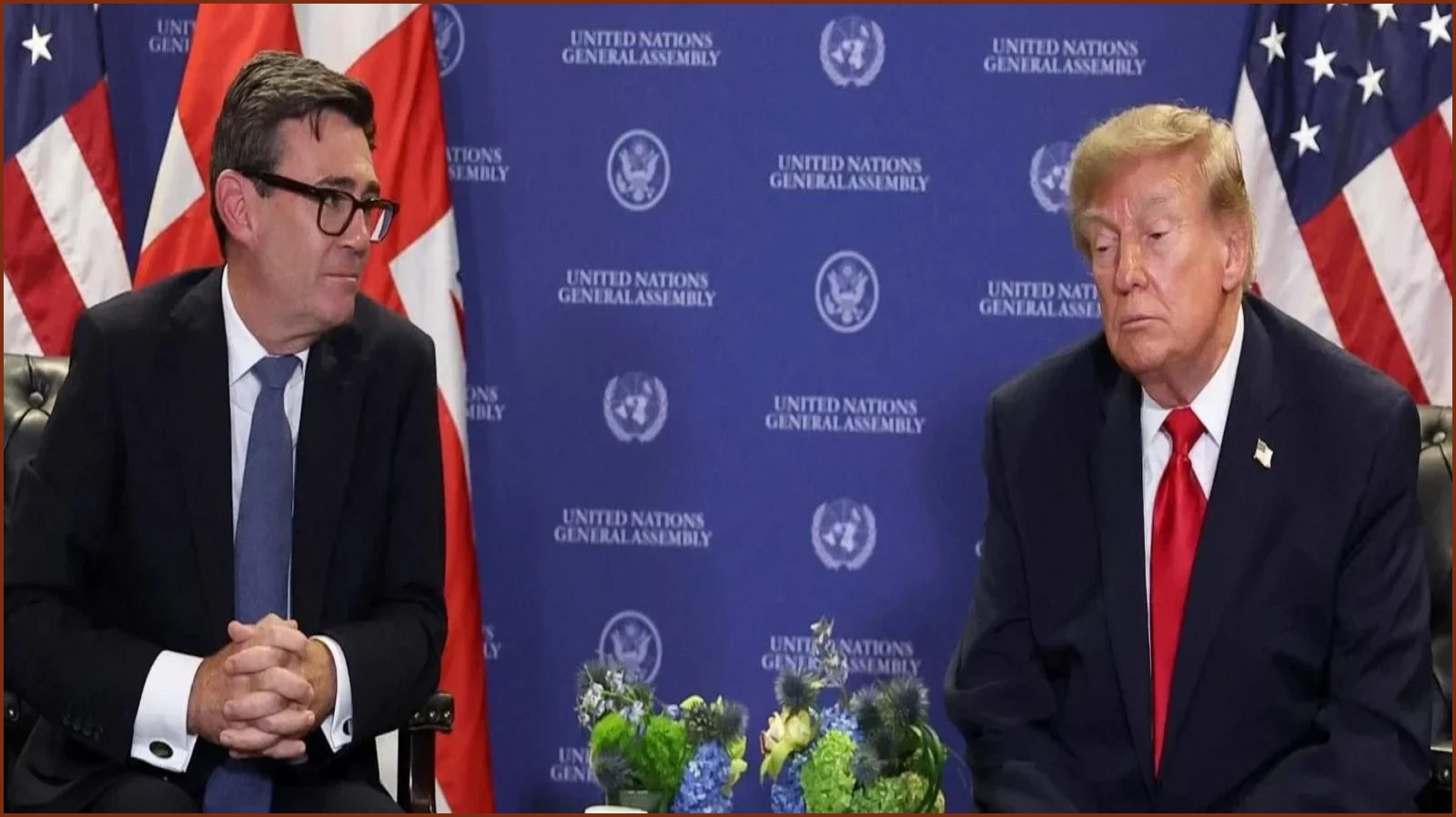
Prime Minister Andy Burnham has publicly addressed the outcome of the American midterm elections, making an immediate observation on contemporary international politics and diplomacy. His first words noted, "Well, President Trump has accepted the results." This statement marks a departure from typical British leader comments on US presidential elections, where such acceptance would usually be taken for granted.
Mr. Burnham is in the early stages of building a relationship with President Trump, which so far includes a handful of phone calls and a single face-to-face meeting at the United Nations in New York in September. As he continues these efforts, he faces a President in a significantly different political landscape compared to when Sir Keir Starmer previously sought to establish rapport.
The midterm results are seen not as an extraordinary comeback for President Trump, but rather as a punishment for the consequences of a foreign war he had initially pledged to avoid. The British government's public reaction is also heavily influenced by the repercussions of the war with Iran, particularly its impact on the cost of living.
"I feel the world has an opportunity now to unite around the issue that is affecting us all and that's the cost of living," the Prime Minister stated. He further emphasized, "But I can't get people's cost of living pressures down until the conflict in the Middle East is resolved, the conflict between in Ukraine started by Russia."
Within government circles, the war in Iran and its effects on energy prices are widely considered the most significant individual factor contributing to the rising cost of living. This perspective aligns many, including America's allies and both Democrats and Republicans in the US, who attribute the election results to the high prices seen at petrol stations.
Foreign Secretary Ed Miliband reflected on these issues before the American votes were fully counted. When asked specifically if he feared that a domestically weakened President Trump might adopt a more belligerent stance internationally, Mr. Miliband pointed to the Iran war. He highlighted that "The Strait of Hormuz being not exactly closed, but not properly open, not free flowing, and that is hitting families at home."
Mr. Miliband underscored the need for a diplomatic resolution to the conflict, stating, "We know that we need a diplomatic way out of this conflict, and so that is one of the things that we're working on. It's something I talked to the U.S. Secretary of State about at the G20, and it's something we continue to work on." He also met Marco Rubio at a meeting in Atlanta last week.
A critical question for the British government and other nations is whether President Trump's domestic defeat will lead to increased international aggression. Alternatively, it remains to be seen if America's traditional allies, including the UK, the European Union, Canada, and Australia, will feel more empowered to collaborate with President Trump's domestic political opponents to challenge and restrain a weakened presidency. The answers to these questions are expected to significantly shape global affairs in the coming years.
As he continues to attempt to build a rapport with Donald Trump, he will be doing so with a president in a wildly different political situation than when Sir Keir Starmer was trying to build bridges with him.
Time to focus on cost of living, says PM after US election results