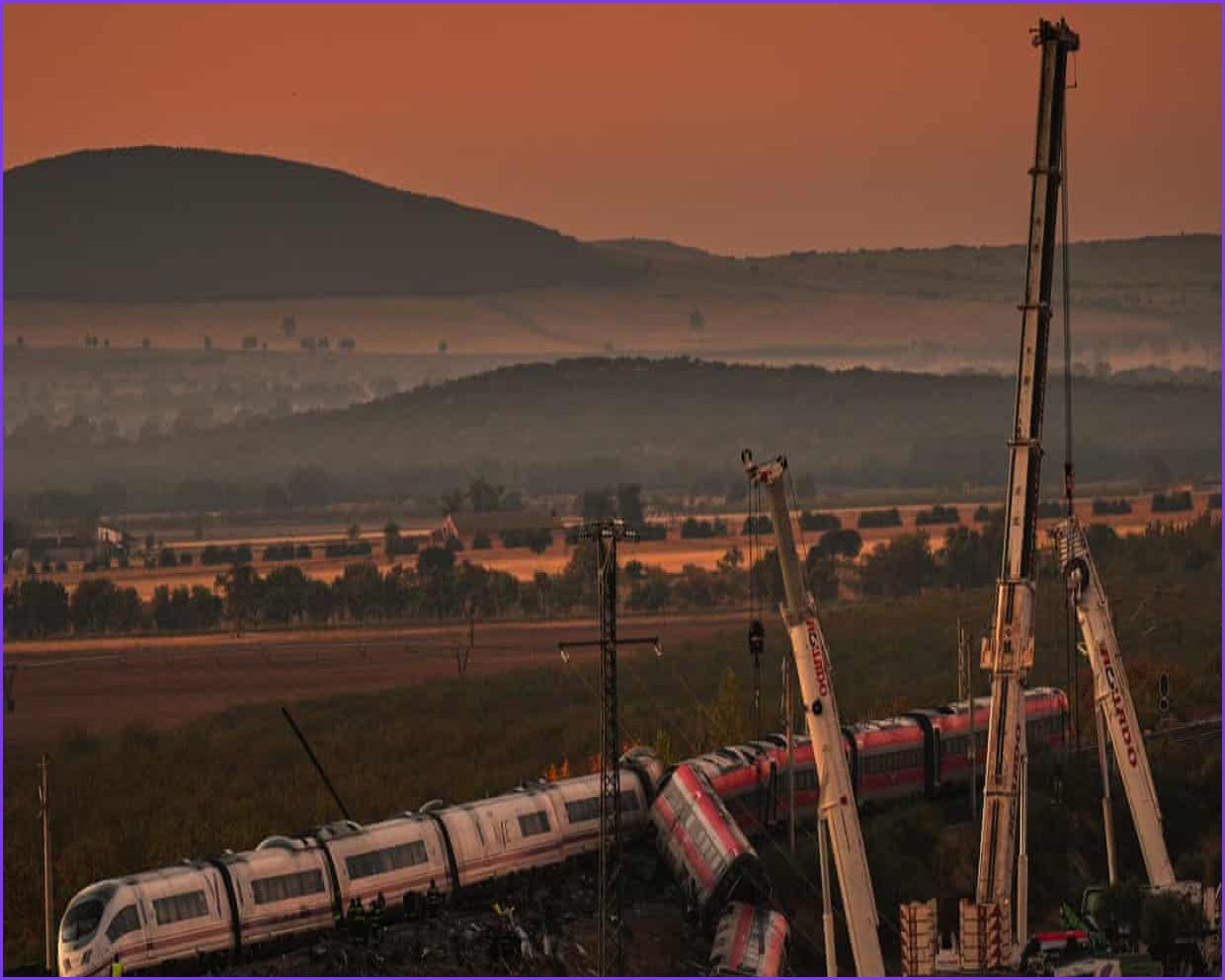
Authorities have confirmed that citizens from several nations were among the 69 people killed in last week’s high-speed train collision in Spain. The disaster, which stands as one of the deadliest rail incidents in Europe this century, included 54 Spanish nationals alongside victims from the United States, Canada, Japan, Argentina, Mexico, Tunisia, the Czech Republic, France, and Portugal.
Forensics teams have been working to identify the victims, a process described as grueling as officials sometimes must rely on individual body parts to confirm identities. According to a statement from authorities, all but three of the deceased have now been identified. Three reports of missing individuals remain active, specifically concerning two Australian citizens and one Japanese citizen. Officials noted that many of the contacted families have expressed a desire to travel to Spain for in-person identification, and the government is currently awaiting their arrival.
The collision represents the second major high-speed rail accident in Spain this year, following a January crash in the southern region of Andalusia that resulted in 46 deaths. This latest tragedy has prompted renewed scrutiny regarding the country's rail safety infrastructure. Investigators found that an automatic safety system failure had halted all rail traffic on a 63km stretch of track. Despite this, a control center authorized a Renfe service to proceed with its journey while another train remained stationary on the line.
The timing of the disaster adds political pressure, occurring just one month before the general election scheduled for 29 November. Socialist leader Pedro Sánchez faces the challenge of overcoming unfavorable polling numbers as he seeks to extend his eight-year premiership in the wake of the national tragedy.
The train disaster, one of Europe’s deadliest rail incidents this century, killed 69 people, including 54 Spaniards
It had already announced the deaths of a French and a Portuguese citizen, as well as that of 54 Spaniards.