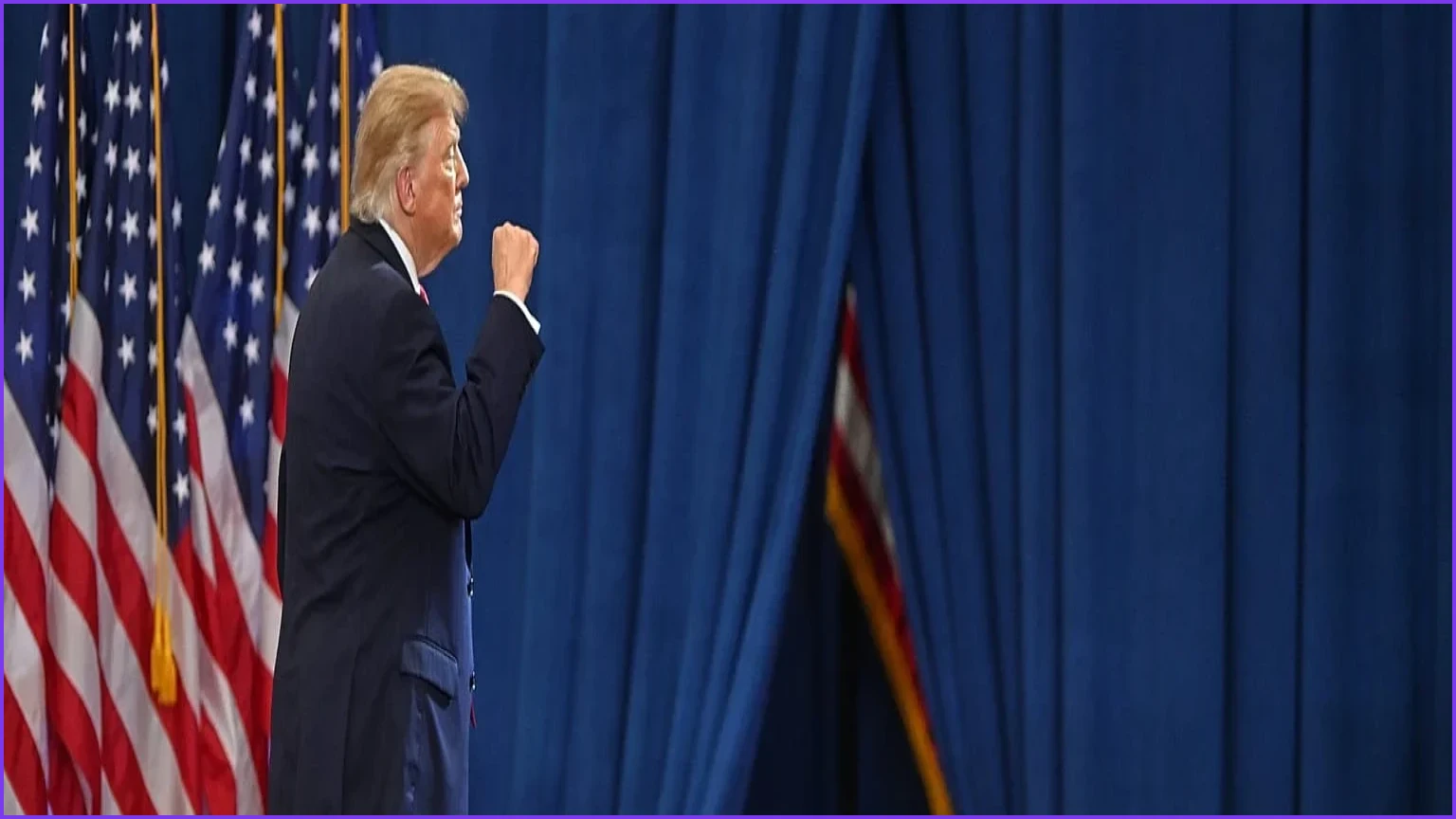
During a Tuesday speech in Lubbock, Texas, US President Donald Trump announced plans to significantly ease restrictions on methane emissions from oil and gas producers. The targeted regulations were originally introduced under the administration of former Democratic President Joe Biden to curb releases of the potent greenhouse gas.
Addressing the rally, Trump stated that he is officially terminating what he described as expensive and unnecessary rules in an effort to save energy producers and consumers $45 billion. Earlier this month, the Environmental Protection Agency (EPA) had similarly estimated potential savings of $45 billion (around €39 billion), though the agency did not supply a detailed breakdown explaining how the number was calculated.
Environmental Protection Agency Administrator Lee Zeldin voiced support for rolling back the limits, framing the decision around consumer costs. Zeldin argued that Americans must be able to afford heating their homes in the winter, fueling their vehicles, and driving to work, asserting that citizens cannot do so when energy producers are burdened by unnecessary regulations.
Methane constitutes the main component of natural gas and represents the second-biggest contributor to global warming after carbon dioxide. It is responsible for approximately one-third of the rise in global temperatures since pre-industrial times, representing roughly 0.5°C of warming. Although methane traps significantly more heat than carbon dioxide, its atmospheric lifespan is relatively brief, lasting between seven and 12 years compared to the centuries CO₂ remains in the atmosphere.
Data from the International Energy Agency (IEA) indicates that the United States is currently the world's leading source of methane emissions stemming from oil and gas production, followed by Russia.
"Tonight, I'm officially terminating Biden's expensive and unnecessary methane regulations to save consumers and energy producers $45 billion," Trump said at the rally in Lubbock, Texas.