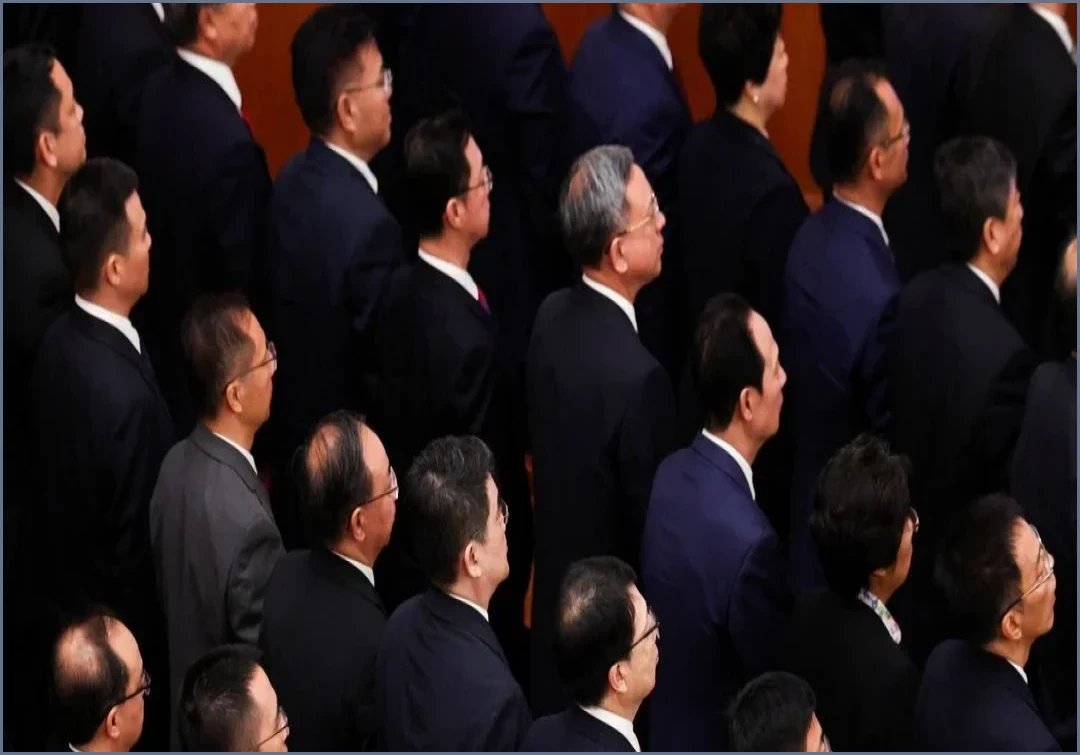
President Xi Jinping opened a key meeting of Communist Party elites in Beijing on Monday, an event that observers are monitoring closely for indicators regarding the nation's future leadership and policy direction. Approximately 300 members of the ruling Communist Party’s Central Committee are in attendance at this session, known as the fifth plenum, which is being held under strict security protocols.
State news agency Xinhua reported that Xi presented a draft decision to the committee, which outlines strategic plans designed to bolster rigorous self-governance within the party. The primary focus of the gathering is to tighten internal discipline, with specific measures aimed at reducing corruption and enhancing the loyalty and efficiency of party cadres. While the meeting is closed to the public and few details are expected until its conclusion on Thursday, the timing is considered critical as it precedes a major party congress scheduled for next year. At that congress, 73-year-old Xi is widely expected to secure a historic fourth term and oversee a significant leadership reshuffle.
Xi has maintained a 14-year anti-corruption campaign that has resulted in the purging of thousands of officials, including dozens of members of the Central Committee. Despite these efforts, the Chinese leader has expressed frustration regarding cadres he feels are failing to implement his directives. Ahead of the plenum, state media highlighted a speech given by Xi in January, in which he criticized "two-faced" officials who allegedly resist central directives while appearing to comply, pursuing "individualism" and "political opportunism."
Analysts have suggested that Xi is utilizing the plenum to enforce stricter supervision and rules to maximize cadre loyalty. However, the impact of his extensive purges is evident in the current attendance; the session is expected to have the lowest turnout since the death of Mao Zedong in 1976. Eight seats on the Central Committee remain vacant, and 15 additional members are currently under investigation. The military has also faced significant intervention, with five of the seven members of the Central Military Commission (CMC) having been toppled. According to the Asia Society Policy Institute, only two of the 44 military members appointed to the Central Committee in 2022 have avoided being purged or disappearing. The plenum may address potential appointments to the CMC or a restructuring of party control over the military, though the party could also opt to wait until next year’s congress to address these vacancies.
These discussions occur against a backdrop of economic instability, as China faces sluggish domestic spending and a persistent crisis within its property sector. Authorities are expected to release a summary of the plenum’s outcomes upon its conclusion on Thursday.