Nineteen Filipino electrical engineers, who were seized by Swedish police on October 9th and subsequently held in a Migration Agency detention centre, have been released. Their lawyers have strongly condemned the decision to detain them as “unlawful” and are now preparing to seek damages from the Swedish state.
Fabrizio Vittoria Beijer, an EU lawyer with Momentius LPA, confirmed the engineers' release from detention on Friday night. He added that the workers intend to return to their jobs at the SSAB site as soon as their identity documents are returned by the police.
The Migration Agency, which serves as the appeal body in such cases, has reportedly overturned the deportation decisions. Vittoria Beijer stated that the agency confirmed by both phone and mail that “the 19 decisions were overturned and that they accepted our appeal.” Police in Sweden’s Eastern Region, who conducted the initial raid, also confirmed that the Migration Agency had lifted the deportation orders.
Bart Maes, the Dutch lawyer who arranged the workers' posting under the EU Posted Workers Directive, publicly announced their release in a press statement on Sunday. Maes refuted claims by the Migration Agency that overcrowding in detention centres contributed to the releases, asserting, “For the record: the capacity problems at the detention centres that Migration Agency mentioned to Södermanlands Nyheter yesterday morning have nothing to do with the releases. The men are free because the decisions against them were unlawful.”
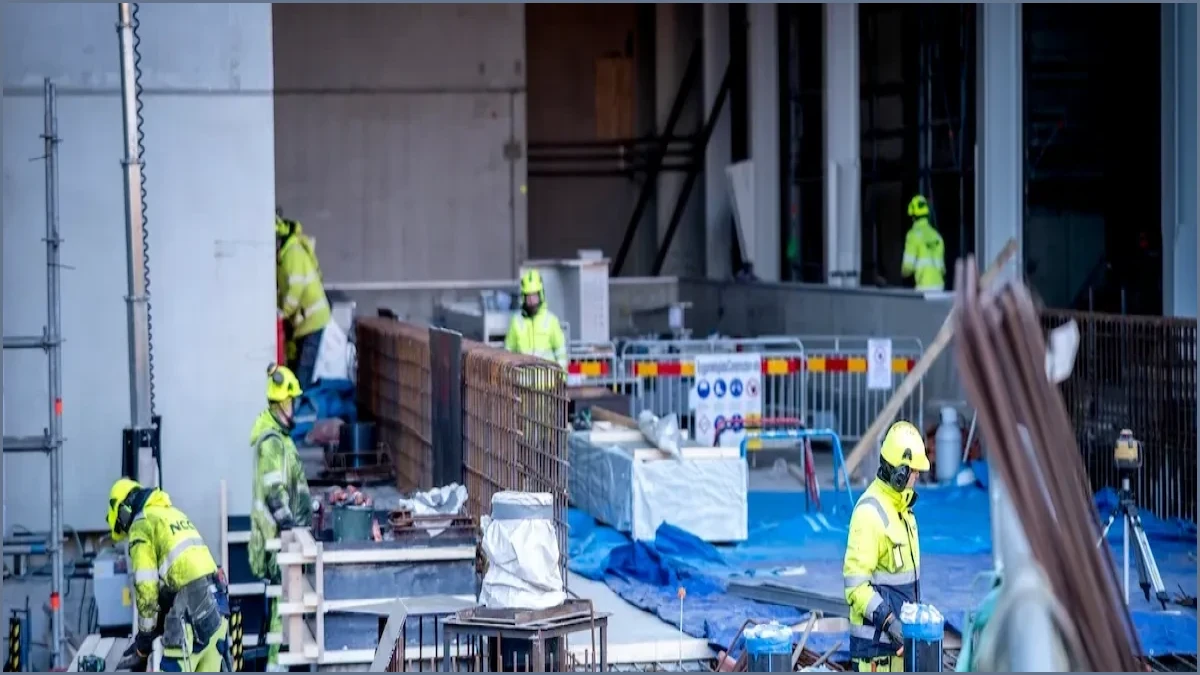
The engineers were initially apprehended during a highly publicised raid on October 7th, carried out by Swedish police in collaboration with seven government agencies: the Swedish Work Environment Agency, the Swedish Labour Markets Authority, the Swedish Economic Crime Authority, the Swedish Social Insurance Agency, the Swedish Gender Equality Agency, and the Swedish Tax Agency.
Following the raid, police had issued a press release stating that “A total of 20 foreign nationals were found to be without permission to reside and work in Sweden. They have now been taken into custody and will be deported from Sweden with a re-entry ban.” However, Maes clarified that there were in fact 19 workers and that all of them possessed the legal right to work in Sweden under the EU Posted Workers Directive.
Maes criticised the Swedish authorities, stating, “I have concluded that either the Swedish [authorities] don't know European law or they do know and don't care and I don't know what's worse.” He emphasised that the posting was meticulously prepared with a Swedish lawyer and that “they ticked every box. This is the purest Intra-EU service provision you will find on the planet.” He further highlighted that the workers did not require Swedish work permits, a principle upheld by the European Court of Justice since 1994, and that authorities “should have known that.” The workers also held valid Dutch residency permits, and “almost all” were still within the 90-day period permitted under Schengen rules.
Despite the Migration Agency’s decision, the police in Sweden’s Eastern Region indicated their intent to continue pursuing the case, stating disagreement with the agency’s ruling. However, a redacted copy of one decision seen by The Local suggests that the police do not have the option to appeal the Migration Agency’s decision. Police stated, “We are continuing to work on the case and conducting further checks to review the arrangement, but as this is an ongoing government process, we cannot go into what specific measures or foreign government contacts are involved.”
Vittoria Beijer explained that the police’s initial decision was based on two aspects of the posting, both of which he argued were legal. The police contended that the workers were not continuously residing in the Netherlands, suggesting a “construction to avoid to applying for a normal residence permit.” Additionally, police questioned whether a person could be posted by a Dutch company to work for an Italian company, deeming it “not allowed.”
Vittoria Beijer countered these points, asserting that the police were incorrect on both counts. He stated, “These people have been living and working in The Netherlands for more than a year, so it's not like this has just been arranged just so they can move here and start working here in Sweden. They were working in Netherlands, performing activities in Netherlands and the Italian company also has a Dutch company in The Netherlands. This is intra-EU mobility, which is totally allowed by national law and European law.”
Maes affirmed his commitment to the case, stating his intention to pursue it until Sweden pays damages and legal fees, and the engineers are permitted to return to the SSAB site to complete their work. “We are going to talk with the Swedish state, the Swedish authorities, who are going to pay the bill. And it will be a huge bill,” he declared, adding, “These Filipinos, who are highly skilled workers from the Netherlands, they will come back and they will complete the job, whether the Swedish like it or not.”