Siam Amazing Park, Thailand’s oldest and longest-running amusement park in Southeast Asia, has been forced to close for an estimated six months or more following severe flooding that inundated the facility and damaged its rides and electrical infrastructure.
The park, located on the outskirts of Bangkok, shut its gates late last month after days of non-stop rain transformed much of the area into a giant lake. Managing director Wuthichai Luangamornlert described the rapid escalation of the situation, noting that while heavy rains are common, the continuous downpour was unprecedented. “When it rains a lot, it will dry off and the water will go away by the next morning,” he initially believed. However, the water level continued to rise, leading him to realize, “that it was not normal.”
After three days, Bangkok’s sewers filled, and water levels inside the park reached approximately knee height, damaging many of the motors and electrical systems powering the attractions. Lines of silt still mark the park’s buildings, serving as a stark reminder of the flood’s impact. The once-vibrant park, known for drawing up to a million visitors annually to its thrilling rides like the 80km/h Boomerang rollercoaster and one of the world’s largest wave pools, now stands eerily silent, its giant lion’s head frozen in a roar, with no water flowing down its log flume.
The closure marks a significant challenge for the park, which was founded in 1980 by Wuthichai’s father, Chaiwat Luangamornlert. Chaiwat is celebrated in Thailand for his rags-to-riches story and for keeping park prices affordable for average Thai families. Wuthichai reflected on the sudden shift in his outlook, stating, “It happened within a few hours,” as concern turned into the reality of a prolonged closure.
The park’s plight mirrors a wider crisis across Bangkok, where the government declared a flood disaster in all 50 districts. For days, residents navigated destroyed homes by boat or even inflatable pool toys. Weeks later, while only puddles remain in some areas, many canals are still full, and the rainy season has not yet concluded.
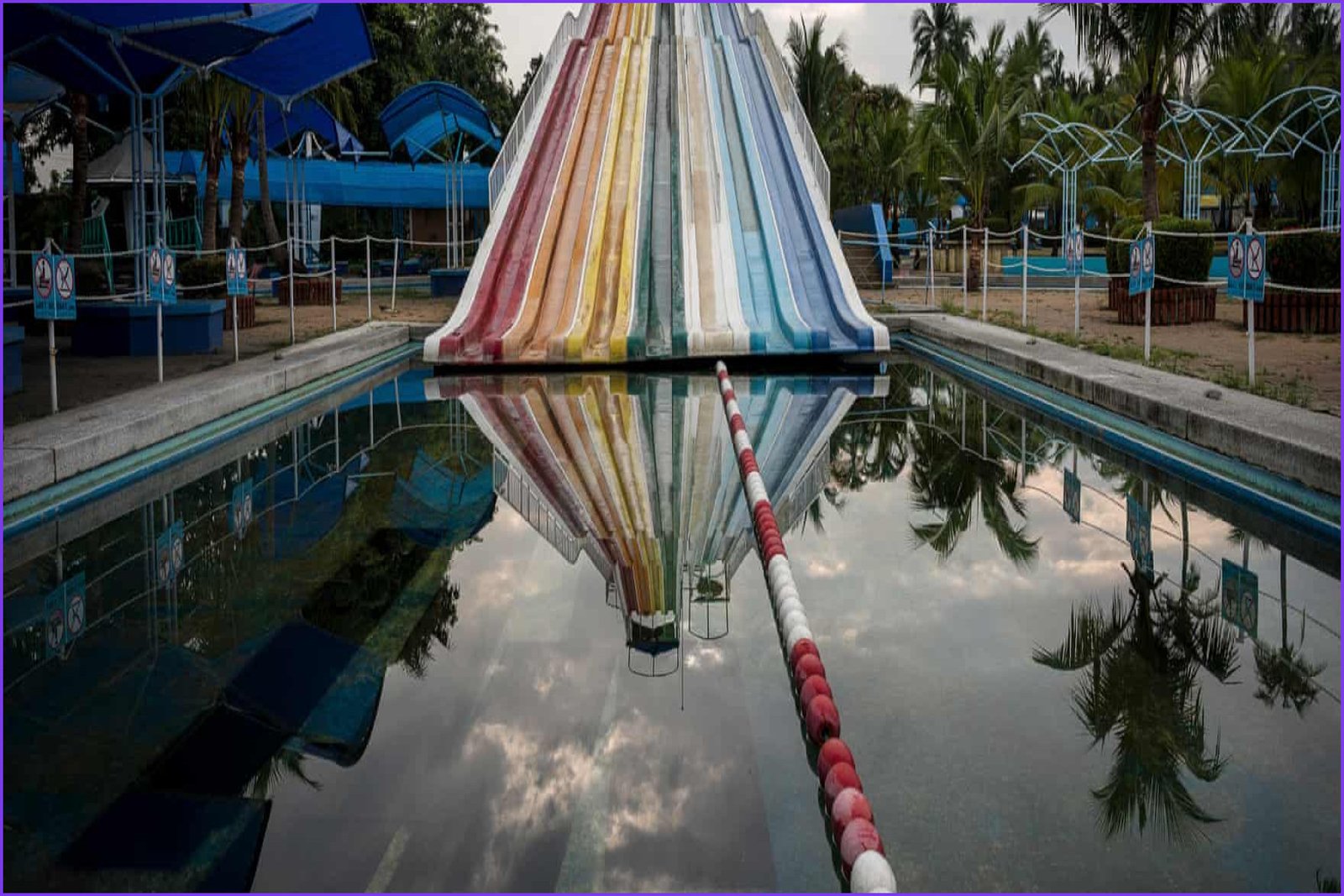
In the amusement park’s water section, dry slides now drop into murky floodwaters, and abandoned deck chairs overlook pools turned green with algae, now home to small fish that have entered the previously chlorinated waters. Stalls that once offered rice, spicy meat, and American-style hotdogs stand empty, though their price boards remain.
The park’s several hundred staff are a primary concern for Wuthichai, especially as the business had not fully recovered to its pre-Covid pandemic strength, a period when they closed but avoided redundancies. The repair process is complicated by the fact that several rollercoasters are foreign-made, requiring specialized parts and labor from Europe or Japan, which could take months to arrive. However, the double-decker carousel at the park entrance is locally made. Despite the closure, Wuthichai noted that interest remains, with people still making appointments, though no final decision has been made regarding the staff.
Climate scientists have warned that the world is experiencing a slow-moving crisis due to human-induced heating. While it is premature to directly attribute Bangkok’s recent heavy rains to climate breakdown, the situation is further complicated by an abnormally strong El Niño, a cyclical weather pattern known for bringing violent weather extremes.