A former Ukrainian security services officer currently held in a Kyiv prison has claimed that a June bomb attack in Monaco targeting a multi-millionaire businessman was orchestrated by a senior member of Ukraine’s military intelligence agency (HUR). Vitalii Zhykovych, who describes himself as a freelancer for the Security Service of Ukraine (SBU), has spoken out about the attempted assassination, offering his first detailed account of the events surrounding the explosion and the subsequent murder of the suspected bomber.
The attack took place in June as Ukrainian-born businessman Vadym Yermolayev, his partner, and his 13-year-old son were returning from a seafront dinner in Monaco. Surveillance footage captured a woman placing a bag containing an explosive device on their doorstep just before they arrived. The bomb detonated as the family approached, leaving Yermolayev and his son badly injured, while his partner suffered catastrophic, life-altering injuries. Yermolayev, who renounced his Ukrainian passport years ago and holds Cypriot citizenship, later described their survival as nothing short of a miracle.
The woman who planted the bomb was quickly identified as 39-year-old Anastasia Berezovska. Interpol circulated her image on July 2, but she had already fled Monaco. She drove through Italy and Germany before boarding a bus from Frankfurt back to Ukraine. Berezovska had been living in Germany as a refugee with her young son since early 2022. According to Zhykovych, she was his agent whom he recruited online to work against Russia and help repel armed aggression. However, Berezovska's husband has strongly rejected these claims, calling the allegation of her being an agent nonsense and stating she was unwittingly dragged into the plot.
Zhykovych claims that the day after the Monaco bombing, Berezovska called him to explain her actions, stating that Vladyslav Reut, an active-duty HUR intelligence officer, had promised her a $50,000 fee. Residents in her home village noted she had been saving money to purchase a flat. Berezovska never received the money; shortly after arriving in Ukraine, she was driven into the woods west of Kyiv, shot in the head, and buried in a shallow grave. Her body was discovered a week after the Monaco blast.
Both Zhykovych and Reut were arrested and charged with Berezovska's murder. Reut, whom Zhykovych refers to as "The Boss," initially confessed to investigators and led them to her grave. However, during a subsequent court appearance, Reut changed his testimony, pointing the finger at Zhykovych. Zhykovych has maintained his innocence regarding both the murder and the bombing, claiming he did not send Berezovska to kill anyone, nor did he execute her.
In detailed statements from prison, Zhykovych alleged that Reut was the mastermind who proposed the Monaco operation. Zhykovych claims he believed it was an official state mission, saying Reut assured him the operation had been approved by his superiors within the Main Intelligence Directorate of the Ministry of Defence (HUR). Zhykovych says he initially refused to allow Berezovska to carry out the attack because she lacked proper training, suggesting she only be used for reconnaissance instead. He alleges that Reut then bypassed him entirely, communicating directly with Berezovska and providing her with the explosives.
Regarding the motive, Zhykovych claimed Reut told him Yermolayev was being targeted for funding the annexation of Crimea by paying taxes to Russian authorities from businesses operating in occupied territories. Yermolayev has repeatedly denied having any active business interests linked to Russia.
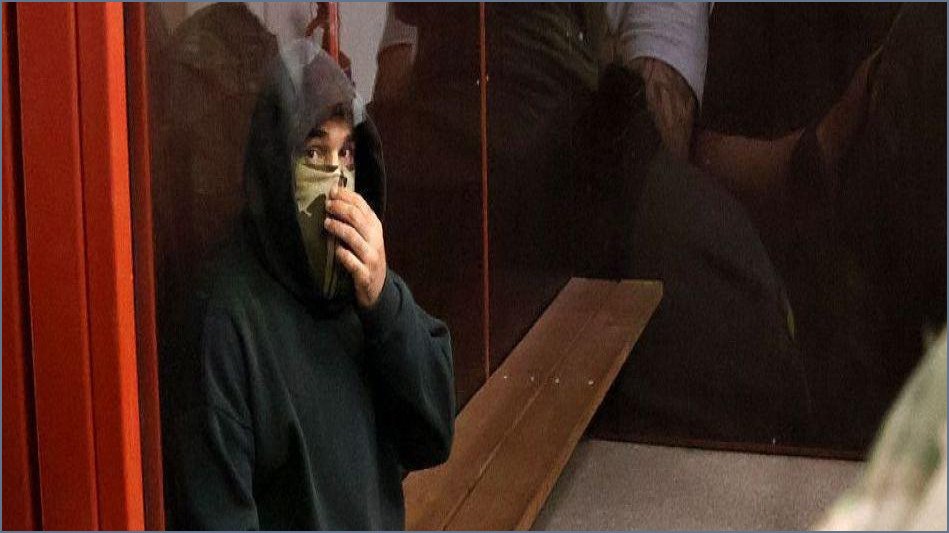
However, the narrative grew more complicated during Zhykovych’s recent custody hearing in Kyiv, where he spoke publicly for the first time under heavy guard. During the open court session, Zhykovych contradicted his previous statements, claiming that Reut had actually admitted the Monaco attack was not authorized by the state. Instead, Zhykovych testified that someone had ordered this target from the civilian side, though he was cut off by the judge before he could elaborate.
Zhykovych also revealed that Reut had initially identified two targets. While Zhykovych declined to name the second individual, other sources have suggested it was a pro-Russian blogger convicted of treason in absentia by a Ukrainian court last year.
The case has sparked intense speculation about whether the attack was a state-sanctioned assassination, a rogue operation, or a criminal dispute. Yermolayev himself has stated he believes serving HUR officers close to the agency's current and former leadership were linked to the bombing, demanding truth and justice. He has dismissed other theories, including speculation that the attack was connected to a conflict between organized crime groups running highly lucrative scam call-centers, known in Ukraine as "offisy." Earlier this year, an Estonian court convicted Yermolayev’s son, Artur, of defrauding Estonian citizens of millions of euros through these networks.
Yermolayev has publicly stated he has never had any connection to those operations.
The SBU has officially described Zhykovych only as a former law enforcement officer, while the investigation into both the Monaco bombing and Berezovska's murder continues.
Now Zhykovych has put forward his own theory to us.
Additional reporting by Anastasiia Levchenko and Volodymyr Lozhko.