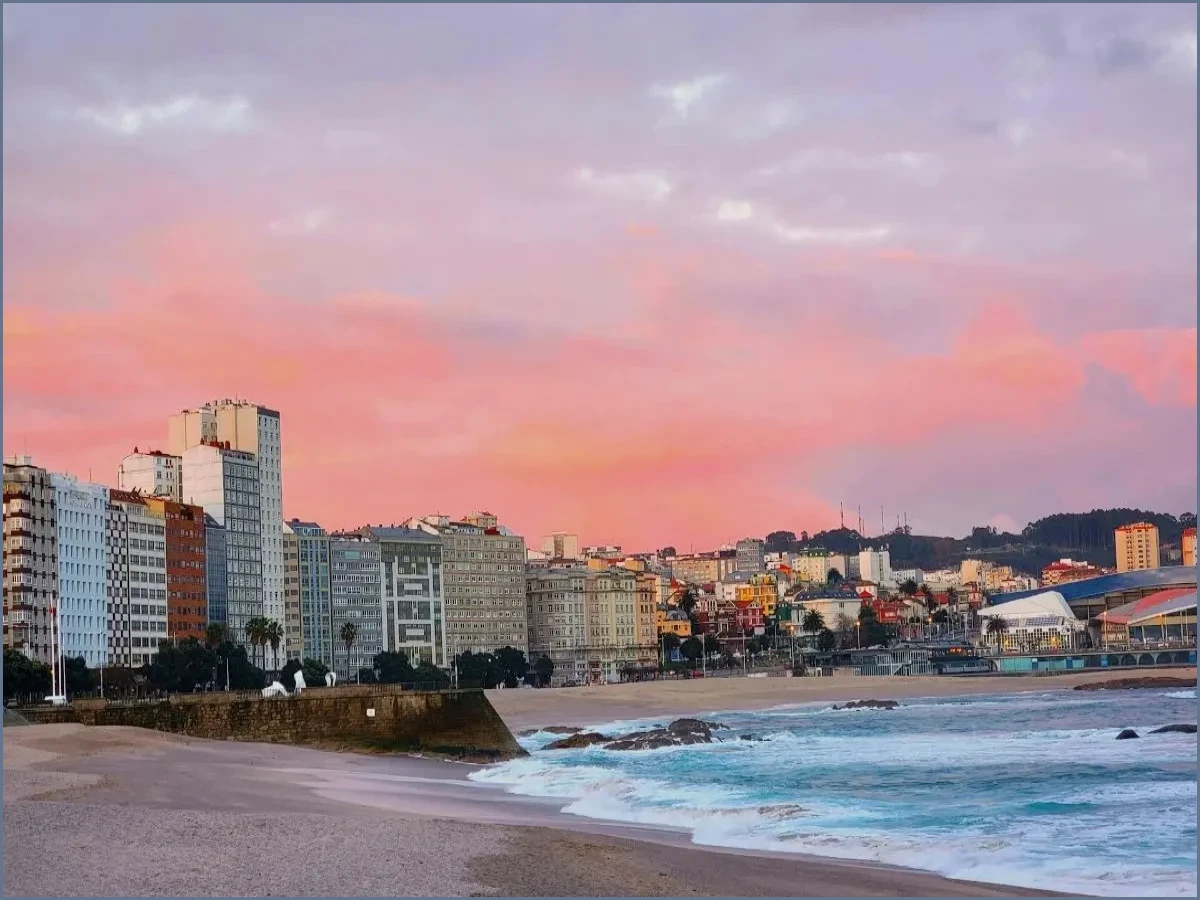
Two cities in the northern Spanish region of Galicia have officially outranked Madrid, Barcelona, and other major metropolitan areas to be crowned the Spanish cities with the highest quality of life. According to the 2026 Global Cities Index, a comprehensive study conducted by Oxford Economics, A Coruña and Vigo have secured the top spots in the country, a result that highlights the growing prominence of smaller regional cities over traditional international capitals.
The study, which utilized a wide-ranging methodology to compare 1,000 cities across 163 countries, cross-referenced economic forecasts with standardized public databases. The results were organized into five broad categories: Economy, Human Capital, Quality of Life, Environment, and Governance. Within the quality of life criteria, A Coruña achieved a global ranking of 68th, while Vigo followed at 83rd.
These rankings placed both cities ahead of all other Spanish competitors, including Barcelona (88th), Bilbao (93rd), Valencia (99th), and Madrid (101st). The list continued with Valladolid (108th), Palma de Mallorca (109th), Las Palmas (115th), Málaga (124th), Zaragoza (141st), Santa Cruz de Tenerife (146th), Granada (170th), Murcia (186th), Seville (202nd), and Alicante (251st).
Beyond the domestic context, the Galician cities performed impressively on the global stage. A Coruña ranked higher for quality of living than Dublin (70th) and Stockholm (77th). Furthermore, both A Coruña and Vigo (83rd) ranked above major international hubs such as New York (86th), Tokyo (99th), London (147th), and Copenhagen (160th).
This recognition is not entirely new for the region; a 2023 study by Spain's Organization of Consumers and Users (OCU) previously named Vigo as the Spanish city with the best quality of life, citing its safety, cleanliness, education, environment, and air quality.
Additionally, the smaller city of Pontevedra has frequently received global praise for urban planning that prioritizes pedestrians over vehicular traffic.
A Coruña, the economic hub of the region with a population of approximately 250,000, has invested heavily in infrastructure. Through its 2025–2028 Neighbourhood Plan, the city has undertaken street regeneration projects designed to create more space for pedestrians, reduce traffic, and improve accessibility.
The city currently boasts over 57 kilometres of bike lanes, and its public rental service, BiciCoruña, is seeing record usage with more than 1.9 million journeys recorded so far in 2026. The city also features Europe’s longest beach promenade, spanning 13 kilometres.
Mayor Inés Rey of A Coruña welcomed the ranking, noting that while it provides objective validation for the city's appeal, the administration must not become complacent. "Those of us who live here already knew that A Coruña is the best city in Spain, but it’s always good to have external, objective indicators to confirm this," Rey stated.
She added that while the city excels in cultural and leisure offerings, there is always room for improvement. However, the mayor also addressed the pressing issue of housing, which remains a significant concern for locals across Spain.
"It’s all very well to top that ranking, but I’d like to top another one: that of the Spanish city with the highest number of social rental properties," she said, acknowledging that access to affordable housing is a serious challenge for thousands of residents. The mayor emphasized that the ongoing goal is to ensure the city remains as accessible for those who cannot afford high costs as it is for those who can.
READ ALSO: How Spaniards' views on tourism keep getting more negative
Rey went on to tackle the main issue among Spaniards not only in A Coruña but across the country.