A new national study and academic research reveal that more than half of women in the United States face significant obstacles when navigating the healthcare system, with many reporting that their medical concerns are frequently dismissed or misdiagnosed by clinicians. The findings highlight a deep-seated disparity in how male and female patients are treated, often resulting in prolonged delays before women receive accurate diagnoses for their conditions.
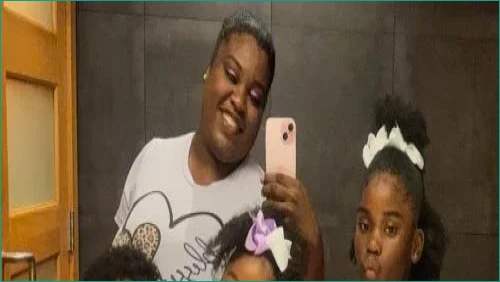
For Nydrianna Raines, a mother of three from Little Rock, Arkansas, this systemic disconnect had devastating personal consequences. While pregnant with her son, Raines was already struggling emotionally after losing both her father and her grandmother within a span of just a few months. Seeking support, she asked her physician at an Arkansas women's clinic for mental health assistance. However, the doctor dismissed her concerns, suggesting she was merely experiencing "seasonal depression" that would eventually resolve on its own.
"They didn't recommend any services," Raines recalled. "They didn't recommend any medication. They didn't do anything to help me get over this."
Without professional support, Raines' symptoms intensified throughout her pregnancy and continued after she gave birth to her son, Jaxon, in November 2020. The emotional toll became so severe that she had to ask her mother, who lived in Florida, to take temporary custody of her two daughters, Kehlani and Nyla, so she could focus entirely on caring for her newborn. At the time, Raines was also dealing with housing instability, living in temporary accommodations after experiencing homelessness. The overwhelming stress of her untreated depression eventually caused her body to stop producing milk, forcing her to buy formula because she could no longer breastfeed.
"It was just too much to be disregarded by the health system," Raines said. Feeling completely disillusioned, she stopped seeking assistance from the women's clinic altogether and instead relied on her family and the father of her children for support.
Raines' experience is far from isolated. According to a survey conducted by Gallup and Pivotal, an organization founded by philanthropist Melinda French Gates, 51% of U.S. women experienced difficulties accessing healthcare over the last five years. Furthermore, one in three women strongly or somewhat agreed that a healthcare provider had minimized or dismissed their pain symptoms. Women also reported facing higher rates of misdiagnosis, conflicting information, and a lack of clear guidance regarding their next medical steps compared to men.
While issues like doctor shortages, insurance inconsistencies, and packed schedules make booking appointments difficult for all consumers, the survey indicates that women face unique challenges once they actually get in front of a doctor. Stephanie Marken, a senior partner who leads Gallup's custom research division, noted that the study "uncovers an entirely additional set of challenges that exist within the health care system, and unfortunately exist to a greater extent for women than for men."
This disconnect is further documented in a new book, "Seen but Not Heard; What Medical Records Don't Tells Us About Women's Lives," co-authored by sociologist Jennifer Silva and epidemiologist Annemarie Hirsch. The researchers compared the electronic health records of an unidentified mid-Atlantic health system against personal interviews conducted with dozens of economically disadvantaged women. Though they did not interview the physicians directly, relying instead on their written notes, the authors found stark discrepancies between what the patients reported and what the doctors actually documented.
Hirsch, a professor and co-director of the Geisinger-Johns Hopkins Bloomberg School of Public Health Environmental Health Institute, explained that doctors frequently failed to write down critical details shared by female patients. These communication gaps can delay proper diagnoses for years, particularly for conditions like endometriosis or polyendocrine metabolic ovarian syndrome, a common hormonal disorder. The authors documented cases where women waited a decade or more for an accurate diagnosis.
"They weren't getting the right test and often were seen as having psychological problems that caused the pain," said Silva, a professor at Indiana University's Paul H. O’Neill School of Public and Environmental Affairs. "In one shocking case, it wasn't until a woman's husband went with her to the appointment and shared with the doctor charts and descriptions he had made of his wife's pain that the doctor actually believed her and ordered imaging."
The Gallup-Pivotal survey, which polled more than 5,200 adults over an eight-day period in July, confirmed that women consistently wait longer for diagnoses. While two-thirds of men received a diagnosis within three months of seeking care, only slightly more than half of women did. Approximately 23% of women had to wait at least a year for a diagnosis, and 8% waited five years or longer. This disparity persisted even when men and women suffered from the identical conditions, though chronic pain and mental health issues took the longest to identify across the board.
Financial barriers also disproportionately affect female patients. The survey found that approximately one in three women skipped or delayed medical care due to cost over the past year, compared to one in four men. Marken emphasized that these findings should serve as a wake-up call for the medical community to focus on the quality of clinical relationships. "It's not just about getting into a doctor's office," Marken said. "It's actually having a quality interaction and relationship with the provider that leads you to an accurate diagnosis."
Sometimes it took several years for a diagnosis. About 23% of women waited at least one year to be diagnosed; 8% of women had to wait five years or longer.