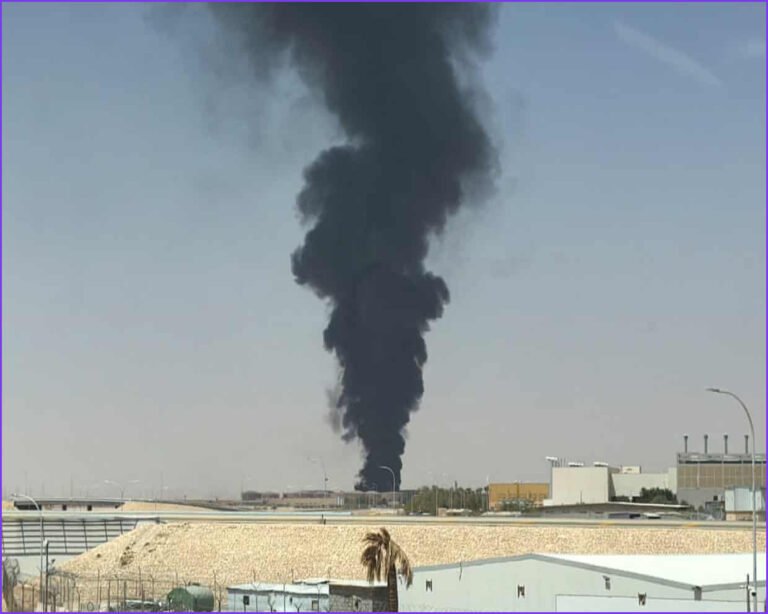
The escalation of military conflict in the Gulf has exposed a critical vulnerability for the millions of Asian migrant workers who sustain the region's economies. Often serving as the drivers, cleaners, builders, and security guards of these oil-rich nations, these foreign laborers have increasingly become the forgotten civilian casualties of regional warfare, left with minimal safety nets or evacuation pathways when hostilities break out.
The immediate dangers facing these workers were underscored on February 28, following an Iranian military strike on the United Arab Emirates. Among the first reported casualties of the attack were three migrant workers from Bangladesh, Pakistan, and Nepal. By March 16, Human Rights Watch had documented at least 11 civilian deaths and 268 injuries across the Gulf region, noting that foreign nationals comprised the vast majority of the victims. At least 10 of those killed were identified as migrant workers, with some dying in direct missile strikes and others hit by falling debris from air defense interceptions.
Human rights advocates warn that the official death toll is likely a significant undercount. Currently, there is no centralized, public casualty registry in the Gulf to track victims by nationality, occupation, or immigration status. Furthermore, the region lacks any standing mechanism to guarantee emergency evacuation, income protection, or compensation for foreign workers caught in active combat zones.
For many of these laborers, escaping a conflict zone is financially and logistically impossible. Most migrate to the Gulf by taking out high-interest loans to cover recruitment fees and travel expenses. Abruptly returning home means losing their sole source of income while remaining saddled with insurmountable debt. Consequently, staying in a dangerous environment is often not a choice of employment over safety, but rather a desperate attempt to prevent absolute financial ruin for their households back home.
Even when workers choose to flee, structural barriers often trap them in place. Despite recent labor reforms in several Gulf states, sponsorship-based employment systems still leave workers heavily dependent on their employers for housing, transport, vital information, and physical custody of their passports. Existing labor and compensation frameworks in the Gulf are designed to handle routine workplace injuries, leaving them completely unequipped for missile strikes, sudden airspace closures, or large-scale emergency evacuations.
While some labor-sending nations have tried to establish safety nets, their reach remains limited. Bangladesh, for example, repatriates the remains of deceased citizens and offers up to 1 million taka (approximately $8,140) in death compensation to registered workers through its official migrant-insurance system, alongside grants from the Wage Earners’ Welfare Board. However, these benefits are strictly contingent on formal registration. Undocumented workers or those who arrived through informal channels receive little to no support beyond basic repatriation assistance. Moreover, a one-time insurance payout cannot replace the lifetime earnings of a deceased breadwinner, especially for families carrying heavy migration debts.
This systemic lack of protection persists because key stakeholders lack financial incentives to address conflict risks. Origin countries measure migration success primarily through remittance inflows, recruitment agencies profit by shifting placement costs onto the workers, and destination employers benefit from cheap, flexible labor. As a result, the workers—who possess the least bargaining power—are forced to absorb the entire risk of war.
To address this crisis, experts suggest utilizing existing regional forums like the Colombo Process, which represents Asian labor-sending states, and the Abu Dhabi Dialogue, which includes both origin and destination countries. While these platforms have historically focused on ethical recruitment and reducing remittance fees, the recent conflict highlights the need for a crisis-ready migration agenda.
Advocates are calling for conflict-contingency protocols to be integrated into bilateral labor agreements. These protocols would mandate that employers and host governments provide multilingual emergency alerts, equal access to bomb shelters, secure access to personal identification documents, safe evacuation routes, and continued wage payments if work is suspended due to hostilities. Additionally, governments must establish transparent claims rules before crises occur, ensuring that hostile-fire injuries are presumed covered without forcing families to navigate complex legal definitions, and that irregular immigration status does not bar workers from receiving emergency shelter, medical care, or repatriation.
Finally, establishing a joint, public casualty registry would prevent migrant deaths from being obscured within broader civilian casualty statistics. By bargaining collectively rather than negotiating separate bilateral deals, major labor-sending nations like India, Bangladesh, Nepal, Pakistan, and Sri Lanka could leverage their combined influence to secure these vital protections. With millions of South Asian workers sustaining the Gulf's development, their home countries can no longer assume the region's security will hold, nor can they leave migrant families to bear the devastating double burden of migration debt and war.