Iran launched direct military strikes against Kuwait early Thursday morning, significantly escalating regional tensions following heavy U.S. bombardments earlier in the week. Air defense sirens echoed across Kuwait as military systems intercepted incoming missiles and drones. The Kuwaiti Defense Ministry described the incident on social media platform X as a act of "blatant Iranian aggression."
The strikes on Kuwait followed reports from Jordan and Bahrain, both key U.S. allies, which announced that their own air defense networks had successfully intercepted multiple Iranian aerial attacks on Wednesday. The rapid expansion of hostilities comes after U.S. forces targeted Iranian military infrastructure on Sunday, striking rocket launchers on an island in the strategically vital Strait of Hormuz. American officials stated those launchers were positioned to deploy sea mines into the shipping corridor.
The human and military toll of the confrontation continues to rise. According to Mizanonline.ir, a media outlet affiliated with the Iranian judiciary, the U.S. strikes on Tuesday killed one navy pilot, two air force pilots, and three other navy personnel. The U.S. Central Command confirmed that its Tuesday operations focused on disabling Iranian military assets, including radar installations, air defense sites, and maritime capabilities.
Amid these military exchanges, a devastating civilian tragedy occurred in southern Iran. In the port town of Kuhestak, located approximately 1,100 kilometers (680 miles) southeast of Tehran, hundreds of mourners gathered on Thursday for the funeral of four victims—including two women and two children—who were killed when a U.S. missile struck a home during a wedding celebration on Tuesday night. Iranian state media reported Thursday that a fifth person injured in the strike had died, raising the total death toll from the wedding incident to five.
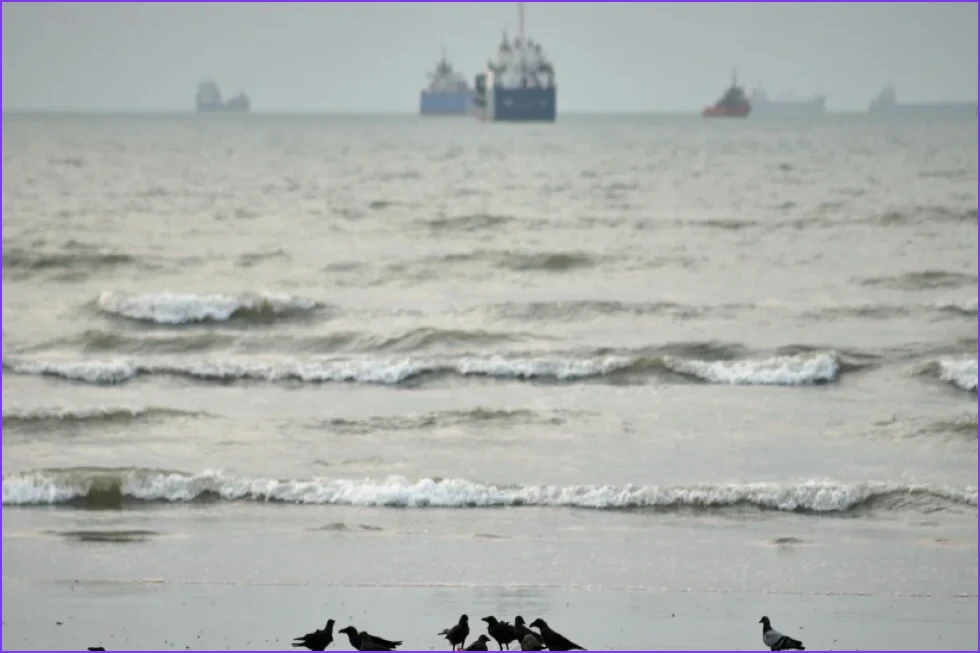
The ongoing warfare has severely choked commercial shipping through the Strait of Hormuz. Ship operators are largely avoiding the waterway due to the threat of Iranian attacks and a strict vetting regime enforced by Tehran. According to shipping data from Lloyd’s List Intelligence, only 102 transits were recorded last week, down from 126 the previous week, and far below the pre-war average of 130 or more transits per day. Despite the danger, a highly guarded shuttle trade continues to move oil along a southern route near Oman under the protection of U.S. forces, allowing an average of 5 million barrels of oil per day to exit the strait over the last 28 days, according to TankerTrackers.com.
Meanwhile, the Israeli-Palestinian conflict saw further bloodshed on Thursday. Israeli airstrikes in Gaza killed three Palestinians, including a 15-year-old child. The casualties were brought to the Shifa hospital. The Israeli military claimed that troops in northern Gaza targeted two individuals who crossed the "Yellow Line" and approached forces in a threatening manner. However, medical officials at Shifa disputed this account, stating the individuals were killed in a designated "safe area" west of the Israeli-controlled boundary, which confines Gaza's 2 million residents to a narrow coastal strip. A separate Israeli strike in Gaza City killed one Palestinian and critically injured two others, an action confirmed by the Israeli military without further details.
In the occupied West Bank, tensions boiled over as residents in the village of Al-Mughayyir held funerals for two teenagers, aged 16 and 19, who were shot and killed by Israeli forces on Wednesday night. Local official Amin Abu Aliya reported that Israeli soldiers accompanied settlers into the village, where they attacked two homes and stole livestock. When residents confronted them, the military opened fire. Separately, Israeli police announced the arrest of a 19-year-old Israeli settler suspected of participating in a violent weekend riot in the West Bank village of Qusra, during which settlers threw stones and barricaded themselves inside a Palestinian family's home.
On the diplomatic front, Prime Minister Benjamin Netanyahu's office announced that Israel has agreed to release five Lebanese civilians who were detained in southern Lebanon. The individuals were taken into custody after Lebanon assisted in a search for the remains of Lebanese Jewish leaders who were abducted and murdered by militant organizations during Lebanon’s civil war in the 1980s.
Domestically, Netanyahu is facing intense political pressure as Israel prepares for a general election on October 27. The prime minister is actively urging smaller, right-wing political factions to merge into larger coalitions. Currently, independent campaigns by hard-line cabinet members Itamar Ben-Gvir and Bezalel Smotrich threaten to fracture Netanyahu's conservative voter base, potentially undermining his prospects for reelection.