Direct military conflict between the United States and Iran flared on Sunday after a monthlong pause in hostilities, with U.S. forces striking targets in the Strait of Hormuz and Iran launching retaliatory missile and drone attacks against U.S. installations in Jordan and the United Arab Emirates. The sudden escalation marks a significant breakdown in the relative quiet that had persisted since late July.
The U.S. military confirmed in an email that it targeted and destroyed two Iranian rocket launchers on Larak Island, a strategic military post overlooking critical shipping lanes near the port of Bandar Abbas. According to American military officials, the launchers were actively being prepared to deploy sea mines into the international shipping routes of the Strait of Hormuz.
Iran's armed forces acknowledged the strikes on Larak Island but stated that the operation resulted in the deaths of both military personnel and civilians. In immediate retaliation, Tehran fired ballistic missiles and launched drones at U.S. positions across the region. Iranian state media asserted that these counterstrikes targeted U.S. forces and helicopters at an air base in the United Arab Emirates, as well as multiple military bases in Jordan. Iran justified targeting Jordan by claiming that Jordanian bases and aircraft had been utilized to launch and support the U.S. strike on Larak Island.
The regional response to the retaliatory attacks varied. The United Arab Emirates government denied reports from Iranian state media that its al-Minhad Air Base had been targeted by missiles. However, the UAE did confirm that its forces successfully intercepted several drones over its territorial waters, which it stated had been launched from Iran. Meanwhile, Jordan's armed forces reported that they shot down eight missiles that entered the country's airspace. The Jordanian military declined to comment on whether any other drones or missiles had managed to penetrate its air defense systems and reach its bases.
The clashes come amid deep disputes over the security of the Strait of Hormuz, a vital chokepoint for global oil transit shared by Iran and Oman. Just last week, Admiral Brad Cooper, the commander of U.S. Central Command, stated that American forces had completed clearing sea mines from the strait's international shipping routes. However, Iran countered this claim, reporting that a supertanker had caught fire over the weekend after striking two naval mines, bringing the vessel to a halt. Iranian state television quoted the paramilitary Revolutionary Guard as saying the tanker was attempting to pass through the waterway "illegally." The Guard warned that it would take similar action against any other vessel violating Iran's navigation restrictions. While maritime law guarantees freedom of navigation through the shared strait, Iran considers any unauthorized entry to be illegal. Iranian President Masoud Pezeshkian stated that while Iran is not seeking a broader war, it will defend itself. "We will never remain silent in the face of any aggression and will respond decisively to the aggressors," Pezeshkian said on state media.
The Sunday attacks followed weeks of mounting threats and a fresh round of highly restrictive economic sanctions imposed on Iran by President Donald Trump last week. Overnight, Trump posted what appeared to be an artificial intelligence-generated video showing a massive missile strike on a large oil facility, accompanied by a caption stating: "Kharg Island being blown to smithereens." Kharg Island is located approximately 410 miles west of Larak Island. There was no evidence that Kharg Island had actually been struck. Hamid Bovard, the head of the state-run National Iranian Oil Co., ridiculed the post, calling Trump's tweets "laughable" and stating that conditions on Kharg Island were calm as workers continued to repair damage from previous attacks.
Prior to Sunday, the last U.S. strike against Iran took place on July 29, after which Trump ordered a temporary halt to attacks following discussions with Gulf leaders. The UAE, Kuwait, Bahrain, and Saudi Arabia all host U.S. military personnel and extensive installations, which have been repeatedly targeted by Iran since the outbreak of the U.S. and Israeli war on Iran in February. While senior U.S. and Israeli officials have previously stated that their ultimate goal was to topple the Iranian regime, Iran's leadership has maintained its grip on power. Consequently, the Trump administration's primary focus has shifted toward reopening the Strait of Hormuz, where shipping disruptions have caused global energy prices to spike over the past six months.
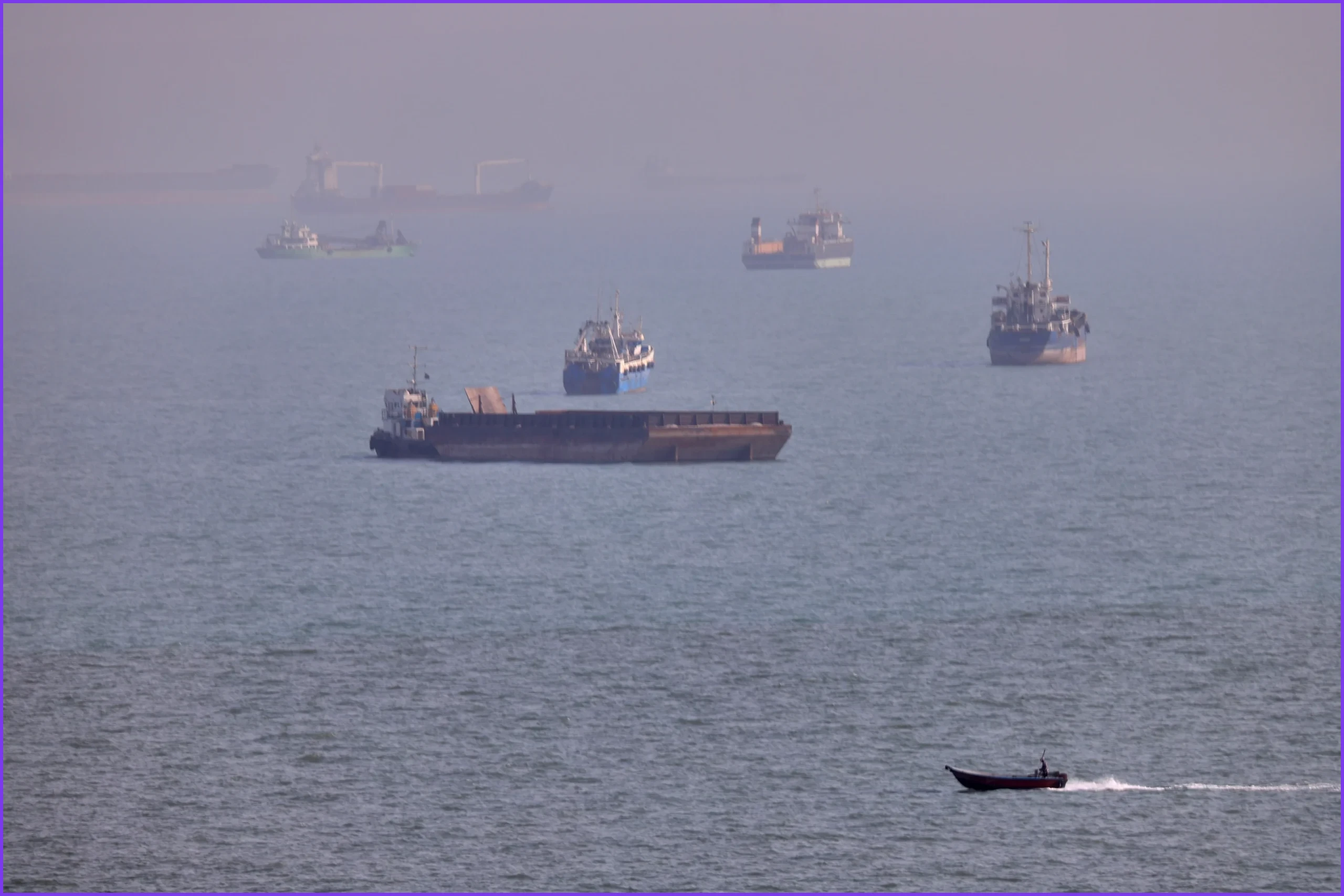
A small boat sails past cargo ships and other commercial vessels anchored in the Strait of Hormuz off Bandar Abbas, Iran, on Aug. 5. Amirhosein Khorgooi/ISNA via AP hide caption