The government of Myanmar is navigating a complex path between preserving and erasing the legacy of General Aung San, the leader who guided the nation toward independence in 1948. While the military-aligned administration has moved to highlight conservation efforts at the General’s official residence in Yangon, the initiative unfolds against a backdrop of a strained relationship with his daughter, the former pro-democracy leader Aung San Suu Kyi.
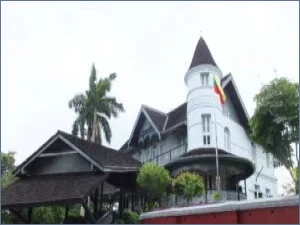
In July, the European-style villa, notable for its distinctive turret, received an official bronze plaque designating it a heritage building. The tourism ministry aims to leverage the refurbished Aung San museum, alongside 6,000 other historic sites slated for conservation, to boost international tourism. Myanmar has seen a significant decline in visitor numbers, with international arrivals falling below 1 million in 2025, a sharp drop from the record 4.7 million recorded in 2015.
The interior of the teak villa preserves intimate details of the General’s life. The lounge features a seated figure of the Bogyoke, or General, depicted while reading, while the dining table is arranged with his preferred meal of naan and steamed yellow peas. Upstairs, a crib-style cot remains in the bedroom once used by his daughter, Suu Kyi, who last visited the residence in 2017. She was released from prison in April but remains under house arrest.
Myanmar’s president and former army chief, Min Aung Hlaing, visited the site a year ago to inspect the vintage Wolseley car housed in a garage on the property. This vehicle holds historical significance as the transport used by Aung San to reach Shan State for the signing of the 1947 Panglong Agreement, which established the Union of Burma. Automobile researcher Moe Myint Win reported that a year-long reconditioning process, including new pistons, has potentially made the vehicle drivable once more.
Despite these preservation efforts, other elements of Aung San’s legacy are disappearing. Reports from domestic media and Radio Free Asia indicate that the government has removed multiple bronze statues of the General. In June, a portrait of Aung San Suu Kyi was taken down from the gate of her lakeside villa. A spokesperson for the president claimed these removals were intended to preserve the dignity of a historical figure by addressing statues that were "disproportionate or incorrectly shaped."
The General’s legacy faces challenges from various political sides. In 2019, the installation of a golden statue in Kayah State sparked protests from activists who viewed it as an attempt to obscure the suppression of ethnic autonomy. Scholars note that the government’s shift toward centralization over the decades has effectively sidelined the federalist promises Aung San made at the time of independence. The 1947 Constitution, which he helped draft, was abolished following the 1962 military coup, stripping states of the legal right to secede that had been granted ten years after independence.
As the Yangon museum prepares to commemorate the 80th anniversary of the General’s assassination next July—an event marked annually as Martyrs Day—it remains a focal point for visitors, including monks, students, historians, and tourists. The site also includes a crop patch and an ornamental pond where one of the General’s sons died in a 1953 drowning accident.