Israeli Prime Prime Minister Benjamin Netanyahu is set to make history as he enters the campaign for the country's upcoming October 27 election. No previous sitting Israeli prime minister has ever run for office while simultaneously defending themselves in an active criminal trial. Netanyahu, who was first indicted in 2019 before his trial commenced in 2020, faces fraud and breach-of-trust charges across three separate cases, along with a severe bribery charge in the most prominent of them. Both Netanyahu and his wife, Sara Netanyahu, have consistently denied all allegations of wrongdoing in their respective legal battles.
The prosecution's corruption case against the prime minister is structured around three distinct investigations, known as Cases 1000, 2000, and 4000. In Case 1000, prosecutors allege that Netanyahu and his family members accepted lavish gifts, such as expensive cigars and champagne, from wealthy businessmen in exchange for political interventions that could benefit those individuals. Case 2000 centers on recorded conversations between Netanyahu and Arnon Mozes, the publisher of the Yedioth Ahronoth newspaper. According to prosecutors, the two discussed securing more favorable press coverage for Netanyahu in exchange for legislative or regulatory measures designed to weaken a rival publication, Israel Hayom. The most serious allegations are contained in Case 4000, where prosecutors accuse Netanyahu of pushing through regulatory decisions that benefited the telecommunications giant Bezeq. In exchange, he allegedly sought favorable coverage from the Walla news website, which was owned at the time by Bezeq's controlling shareholder, Shaul Elovitch. Netanyahu faces fraud and breach-of-trust charges in all three cases, as well as a bribery charge specifically linked to Case 4000.
While Netanyahu maintains that the prosecution is entirely motivated by political bias, the bribery charge has encountered significant hurdles in court. In June, the presiding judges renewed their suggestion that prosecutors withdraw the bribery count, indicating they believe it may be difficult to prove. However, even if the prosecution decides to drop the bribery charge, Netanyahu will still remain on trial for the fraud and breach-of-trust charges across all three cases.
Netanyahu's personal involvement in the courtroom reached a critical stage when he began testifying in December 2024. His testimony, cross-examination, and subsequent questioning ultimately spanned 98 hearings over a period of 18 months. The proceedings were repeatedly delayed and interrupted by his official overseas travel, personal health issues, and formal requests to postpone or leave hearings due to pressing diplomatic and security matters. Although Netanyahu completed his testimony on June 24, the trial continues as more witnesses are scheduled to be heard.
In an effort to resolve his legal troubles outside the courtroom, Netanyahu sought an alternative solution. In November 2025, he formally requested a pardon from Israeli President Isaac Herzog without admitting any guilt. In April, President Herzog stated that all potential avenues for a legal agreement must be fully exhausted before he would consider such a request. Under Israeli legal precedent, no pardon has ever been granted before a criminal trial has concluded. Despite the ongoing trial, Israeli law permits Netanyahu to continue serving as prime minister, allowing his political leadership and criminal proceedings to run concurrently.
Meanwhile, Sara Netanyahu faces her own distinct legal challenges. In 2019, she resolved a previous criminal case by admitting to wrongdoing under a plea agreement. Prosecutors had accused her of improperly spending more than $100,000 in state funds on catered meals for the prime minister's official residence. Under the plea deal, a more serious fraud charge was reduced, and she agreed to reimburse the state 45,000 shekels and pay a 10,000-shekel fine. However, Israeli authorities confirmed in February 2025 that a new criminal investigation had been launched against her. She is accused of attempting to intimidate Hadas Klein, a key prosecution witness in Case 1000, and interfering with her husband's trial. This investigation was initiated following an Israeli television broadcast detailing messages that allegedly showed efforts to coordinate protests and public campaigns targeting Klein and other prosecution figures. No indictment has been announced in connection with this new investigation.
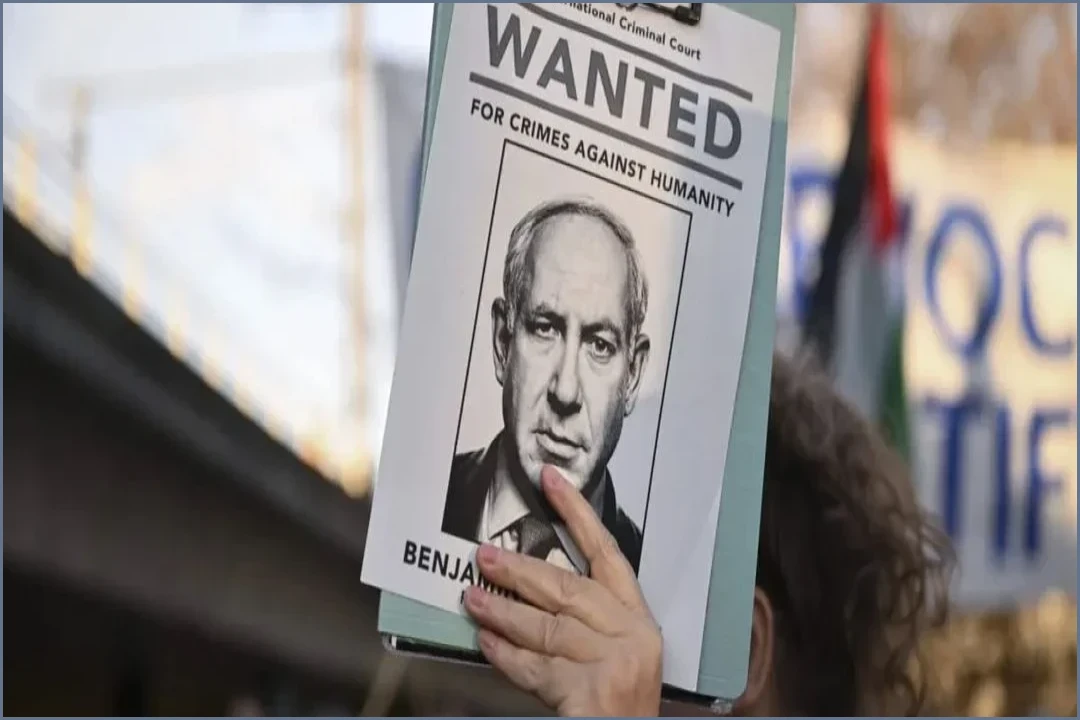
Netanyahu's legal exposure also extends to the international stage. On November 21, 2024, the International Criminal Court (ICC) issued an arrest warrant for the prime minister. The ICC judges stated there were reasonable grounds to believe Netanyahu holds criminal responsibility for alleged war crimes and crimes against humanity in Gaza, including starvation as a method of warfare, murder, persecution, and other inhumane acts. Netanyahu and Israeli officials have rejected the allegations and disputed the ICC's jurisdiction over the matter.
The upcoming election campaign is further complicated by ongoing military operations in the region. On August 18, Israeli military aircraft targeted the Abu al-Duhur military airbase in northern Syria, damaging its runway and infrastructure. Netanyahu's office defended the strike, claiming intelligence indicated that Türkiye might deploy military assets to the facility. However, Türkiye denied having any military presence at the base. Tom Barrack, the US Ambassador to Türkiye and envoy to Syria, later confirmed that American intelligence agencies had investigated the Israeli claim and determined it was false, characterizing the strike as an "unnecessary escalation." Syrian Foreign Minister Asaad al-Shaibani also noted that Damascus had previously informed Israel that there were no plans to establish a permanent Turkish base. Following the incident, Washington called for immediate de-escalation.
The military strike drew sharp criticism from domestic political figures, who linked the escalation to Netanyahu's political survival. Former prime minister Ehud Barak labeled the escalation with Türkiye as "reckless and stupid." Former defence minister Moshe Yaalon and opposition leader Yair Golan also condemned the action, accusing Netanyahu of letting his personal political considerations dictate critical military decisions. Netanyahu now enters the October election facing a complex array of challenges, including a six-year-old criminal trial, an unresolved pardon request, his wife's active investigation, and an outstanding international arrest warrant.