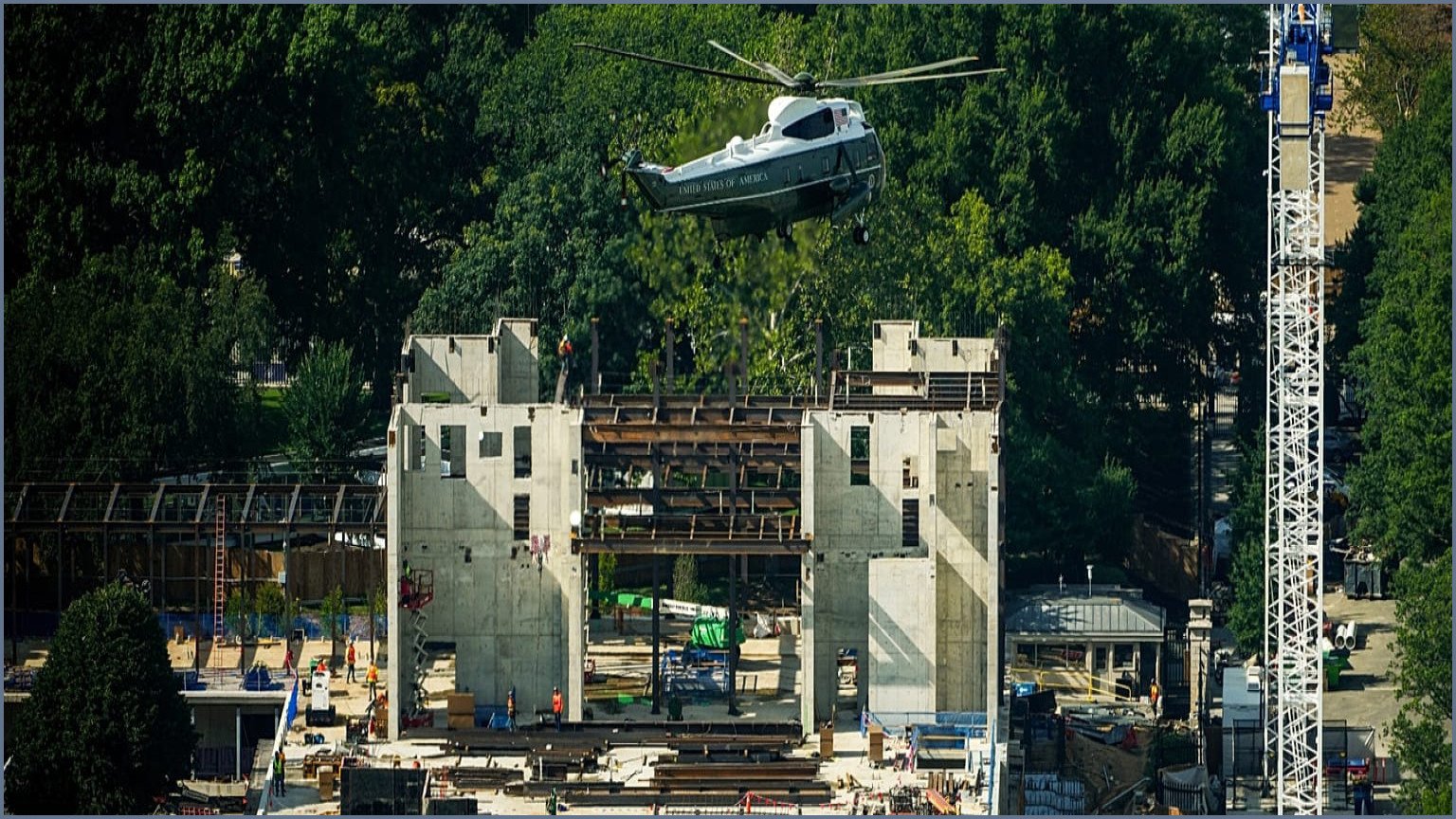
The White House has secured approval from the U.S. Supreme Court to proceed with a massive $400 million ballroom project. Championed by President Donald Trump, the new structure will replace the traditional East Wing of the official presidential residence. Details of the lavish construction have been outlined by Joshua Fisher, the director of White House Management and Administration, following a public broadcast by CBS. Among the most striking aspects of the development is the decision to ship high-quality limestone quarried in Indiana to Italy, where some of the world's finest artisans will carve columns for the building's colonnade.
The project's legal hurdle was cleared after the National Trust for Historic Preservation in the United States filed a request to halt the construction. Documents submitted to the Supreme Court by federal authorities during that dispute highlight the sheer scale of the undertaking. Spanning more than 8,000 square meters, the planned ballroom is designed to be larger than the main White House building itself. The structure will stand over 20 meters tall and is built to accommodate up to 1,000 guests. Trump, utilizing his background as a former property developer, aims to have the mega-project finished before the conclusion of his second presidential term.
Currently, the construction site employs approximately 200 workers. The build will consume tons of steel and concrete, alongside marble and gold. Gold, a signature aesthetic of Trump the builder, has already been integrated into the Oval Office, visible behind the president during his press briefings. Beyond its opulent finishes, the ballroom will incorporate advanced security and operational infrastructure. The White House confirmed the facility will feature air-raid shelters, medical facilities, secure rooms for top-secret meetings, bulletproof windows, drone-proof ceilings, and a rooftop landing pad capable of handling both drones and helicopters.
Despite its high cost, the White House has emphasized that the project is funded entirely through private donations. To date, approximately $355 million of the projected $400 million budget has already been raised. According to Fisher, the building's exterior façade is scheduled to be "virtually completed" by April 2028, which is when the Italian-carved stonework will be integrated. The design features a Corinthian colonnade that mirrors the architecture of the nearby Supreme Court and the U.S. Capitol. This architectural choice echoes a historical precedent from 1815, when President Thomas Jefferson brought Italian craftsmen to Washington to carve the Capitol's capitals, which were later crafted by Giovanni Andrei in the famous marble city of Carrara.
While the administration has not officially named the Italian firms selected for the carving work, industry experts have pointed to potential candidates. The Tuscan city of Carrara, famously associated with Michelangelo, has a history of working with Trump. In 2010, years before his presidency, Trump commissioned Carrara-based MTStone Carrara S.r.l. to produce 150 square meters of white onyx panels for a ballroom at the Trump International Hotel. However, because MTStone does not specialize in sculpture, another likely candidate is Pietrasanta, a town located 20 kilometers south of Carrara. Pietrasanta has its own history of American commissions; in 2008, local sculptor Giancarlo Buratti created statues for the Thomas Aquinas College chapel in California.