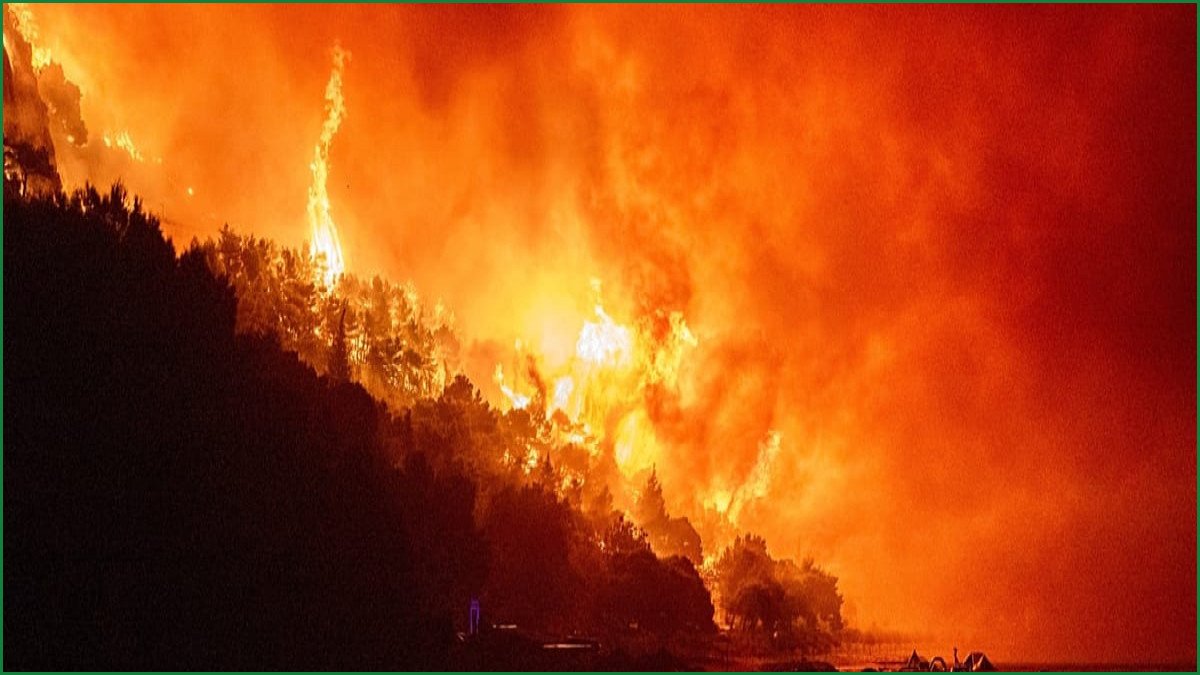
Europe is currently contending with a surge of wildfires fueled by historically high temperatures and drought conditions. Experts have linked the increased frequency and intensity of these heatwaves to human-caused climate change, which has already been associated with thousands of deaths across the continent this summer.
In Belgium, water-dropping aircraft and farmers' tractors have been helping firefighters battling Belgium's largest modern-day wildfire at an inaccessible area near Germany. Located in a hard-to-access nature reserve, the blaze has expanded significantly, growing from 80 hectares on Friday to nearly 3,000 hectares by Sunday. The situation prompted the German border town of Monschau to order a partial evacuation because of the growing threat. Conditions in Belgium remain precarious, with temperatures reaching 37C in some areas on Friday.
Meanwhile, Greece has been struggling with several major wildfires since late July, exacerbated by strong winds. According to the fire department, thirty-six blazes have broken out over the past 24 hours around the country. In Portugal, hundreds of firefighters are working to contain multiple fires, including incidents near the Spanish border. Near the village of Dine, five firefighters sustained minor injuries when their vehicle was engulfed by flames. The civil protection agency ANEPC also confirmed ongoing efforts in the areas of Boticas and Chavez.
Tragedy struck in Spain, where a soldier died on Sunday while assisting with firefighting operations in the northeastern region of Aragon. Authorities in the region have deployed the largest firefighting arsenal in their history, with French reinforcements expected to arrive to help protect a 1,000-year-old monastery threatened by the fire, which began on Monday.
In France, a fire that scorched 1,700 hectares in the Landes department has been stabilized following three days of intensive aerial and ground operations. Local official Gilles Clavreul noted that the situation is evolving favourably as temperatures have dropped to 28C, down from the 40C recorded when the blaze started on Thursday. The local prefect announced that some of the 650 evacuated residents would be permitted to return to their homes on Sunday evening.
Elsewhere, Croatian authorities have arrested four individuals suspected of starting wildfires that have impacted pine forests and olive groves along the Adriatic coast, adding to the regional struggle against drought-fueled blazes.
Scientists blame ever hotter and more frequent heatwaves on human-caused climate change.
"Over 570 people were evacuated on coast guard patrol boats and other vessels," a coastguard spokesperson told the AFP news agency.