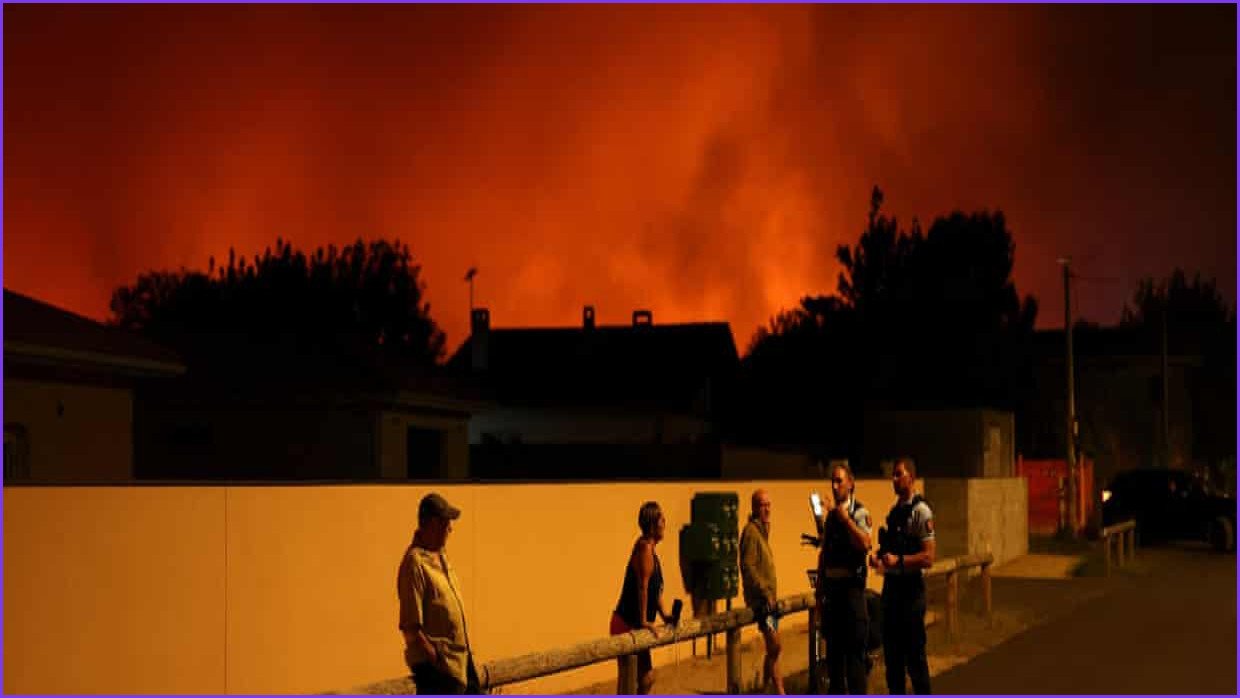
More than 80,000 individuals have been forced to flee their homes as massive wildfires sweep through parts of France and Spain. In France, officials ordered the total evacuation of the Cap Ferret peninsula, a popular Atlantic coast holiday destination, as an unpredictable blaze consumed over 10,000 hectares of land. Meanwhile, the Spanish government declared its first national emergency for a wildfire as multiple fires converged near Madrid.
French interior minister Laurent Nuñez confirmed that 40,000 people were being evacuated from the Cap Ferret area, including thousands of tourists staying in campsites and rentals. As the fire threatened to sever the peninsula's only access road, boats were deployed on Friday to ferry hundreds of people from local piers. Currently, 800 firefighters, supported by four water-bombing aircraft, are working to contain the Gironde blaze, which originated near the village of Saumos on Wednesday.
Jean Mazodier, 86, described the destruction of his 150-hectare forest property as heartbreaking, noting the unprecedented intensity of the flames. Across France, 32 separate wildfires are currently active, with 50,000 hectares burned so far this year—a figure four times higher than at this point in 2025. President Emmanuel Macron has activated the EU’s civil protection mechanism, securing aerial support from Croatia, Portugal, the Czech Republic, and Slovakia to bolster firefighting efforts.
In Spain, the situation has been described as a "perfect storm" by Madrid’s regional leader, Isabel Diaz Ayuso, citing extreme heat and relentless winds. The national emergency declaration allows the central government to take control of resources across various regions. Prime Minister Pedro Sánchez convened an emergency response meeting at the Moncloa palace, promising full government support for recovery efforts. Data from the Spanish environment ministry indicates 29 major forest fires have occurred this year, compared to an annual average of nine over the last decade, with 114,796 hectares already scorched.
Scientists say climate breakdown is triggering more frequent and more extreme weather events, evaporating soils and waterways, fuelling wildfires and leading to thousands of excess deaths. Europe is heating at about twice the global average rate. The European Forest Fire Information System reports that the total land area burned across the EU by July 22 is nearly double the two-decade average for that date. As the fires remain uncontained, thousands of residents, such as those near Madrid, continue to face hazardous air quality and displacement. More than 600 firefighters were struggling to contain that blaze, Clavreul said. “The fire front looks very bad,” he added. “There are a great many new fire starts ahead of the main blaze. The situation is highly dynamic and unfavourable.”